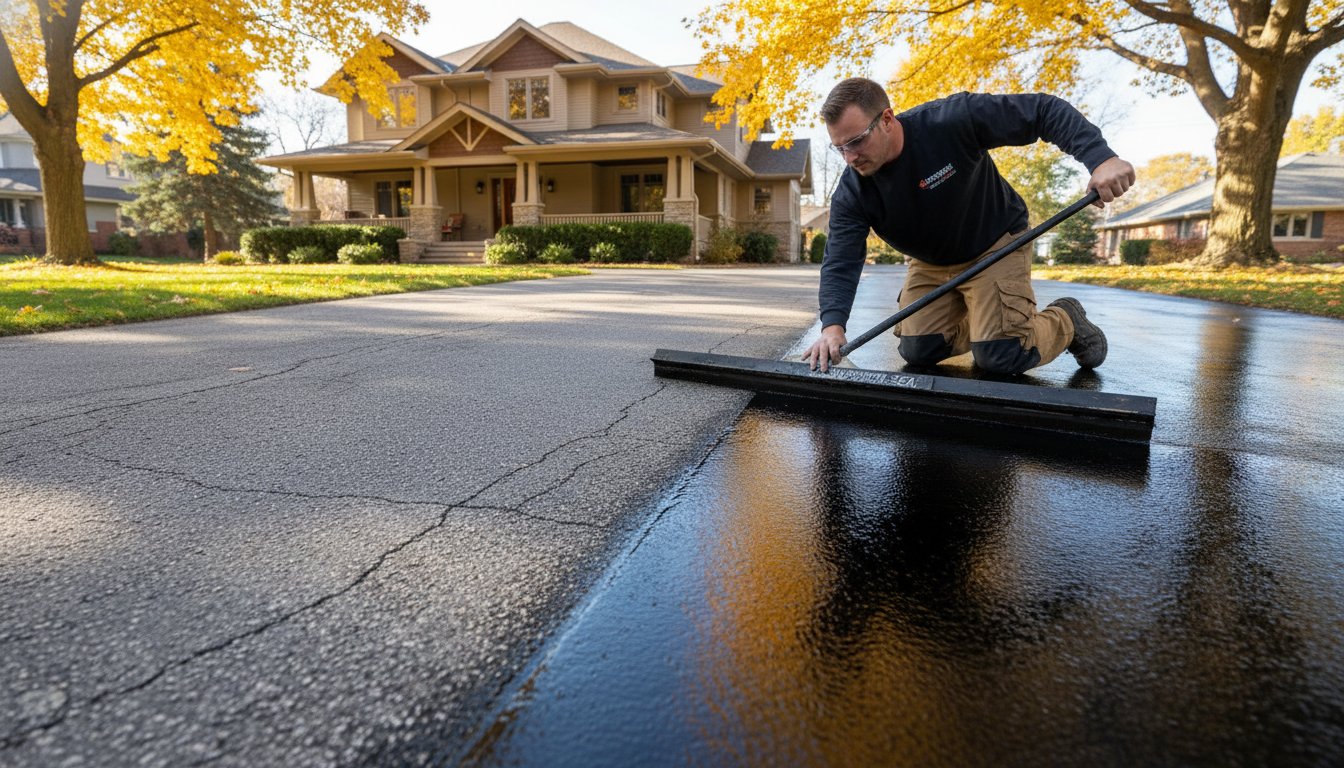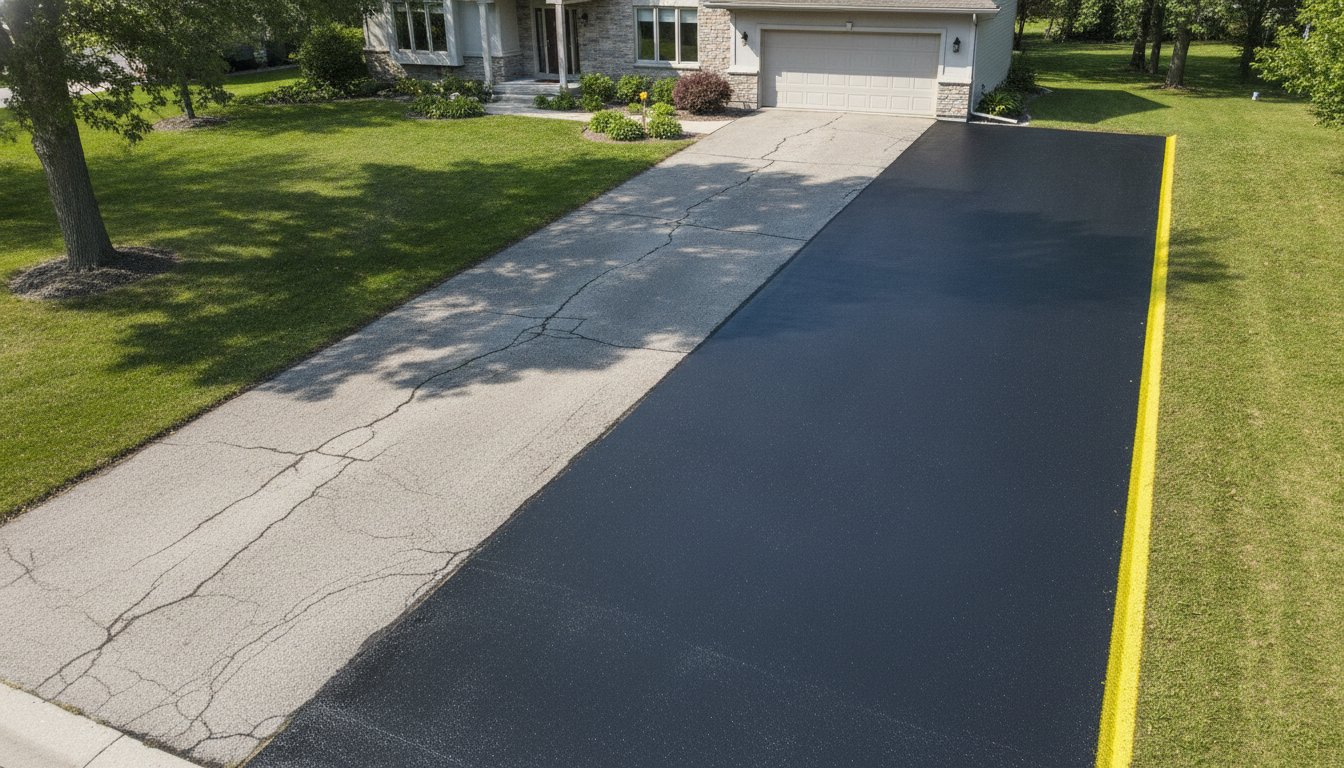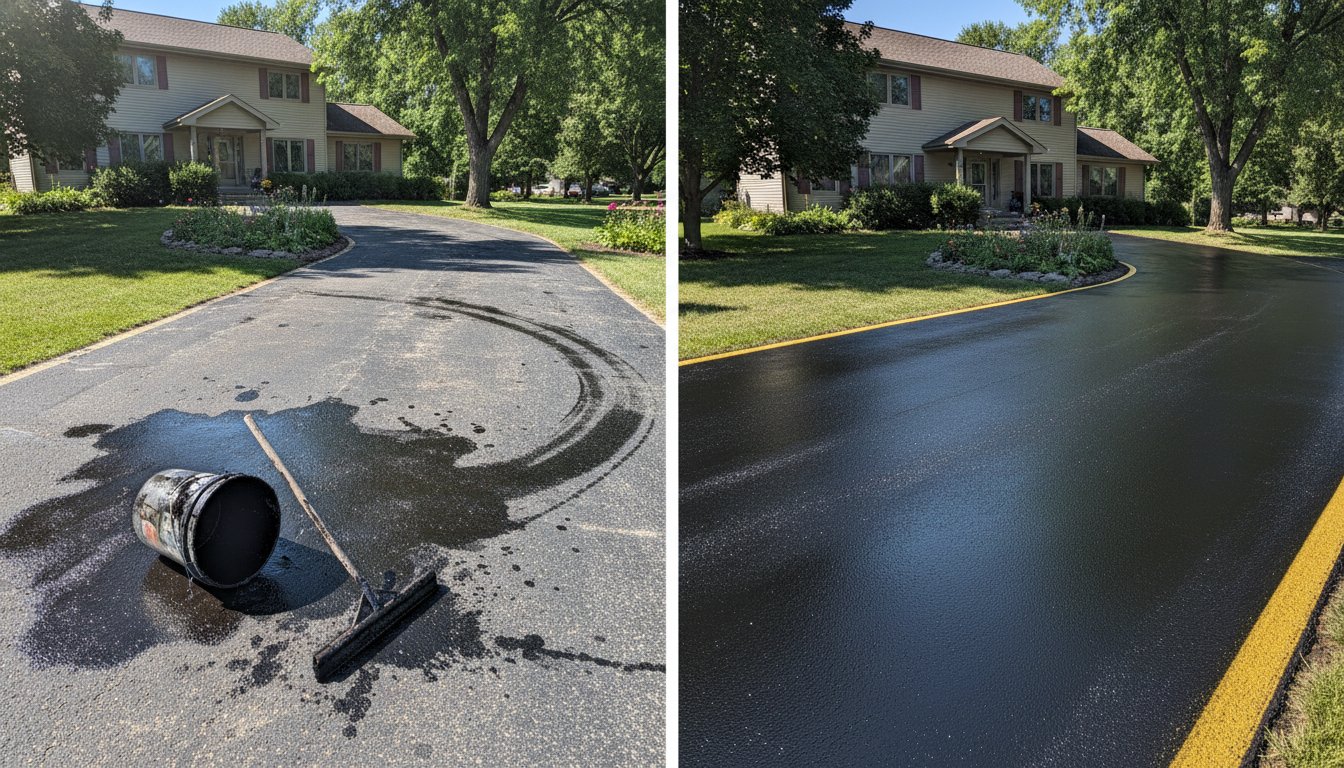
If you think a Saturday spent with a hardware store squeegee is the cheapest way to protect your driveway, you might be overlooking the hidden costs of a Minnesota winter. We understand the appeal of saving a few dollars by tackling the job yourself. It's frustrating to watch your asphalt grey and crumble under the weight of road salt and snow plows. You want a solution that works without breaking the bank, but the mess and confusion of retail sealers often lead to more questions than answers.
This guide breaks down the critical differences in sealcoating diy vs professional to help you understand what actually keeps your driveway black and crack-free for years. We'll examine why the 2014 Minnesota ban on coal tar sealants changed the game for homeowners and how professional-grade asphalt emulsion provides the chemical defense needed to survive our state's brutal freeze-thaw cycles. We will compare the durability of various materials and the precision of application techniques. By the end, you'll have the facts needed to preserve your property's value through logic and foresight rather than just a quick cosmetic fix.
Key Takeaways
- Learn why sealcoating acts as a vital sacrificial layer to defend your asphalt binder against Minnesota's destructive freeze-thaw cycles.
- Understand the chemical differences between standard retail buckets and industrial-grade asphalt emulsions designed for superior long-term preservation.
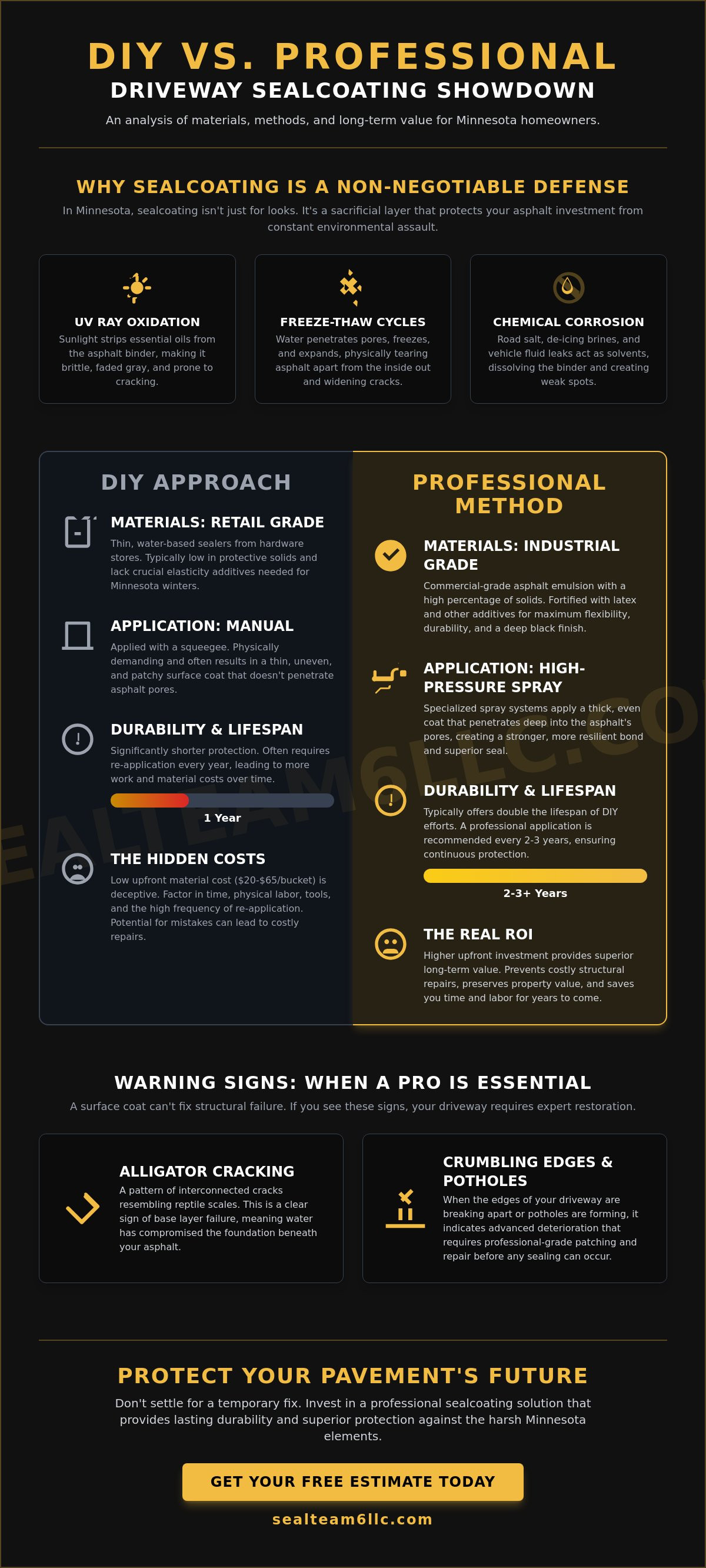
- Compare the real ROI of sealcoating diy vs professional, including why professional applications typically offer double the lifespan of DIY efforts.
- Discover how high-pressure spray systems and latex additives ensure deeper material penetration than manual squeegee methods can achieve.
- Identify the specific physical signs, such as crumbling edges or alligator cracking, that indicate your driveway requires expert restoration rather than a simple surface coat.
Understanding Asphalt Stewardship: Why Sealcoating Matters in Minnesota
Stewardship of your property begins with the realization that asphalt isn't a static, permanent surface. It's a complex mixture of stone and sand held together by a liquid petroleum binder. Think of Sealcoating as a sacrificial skin for your driveway. It's designed to take the brunt of the weather so your actual pavement doesn't have to. When homeowners weigh the choice of sealcoating diy vs professional, the primary goal is always the same: preserving that binder before it loses its ability to hold the driveway together.
The Science of Asphalt Decay
UV rays from the sun are the constant enemy of new asphalt. These rays trigger a chemical reaction that strips away the vital oils in the petroleum binder. As these oils evaporate, the pavement loses its essential flexibility and transitions from a deep, rich black to a brittle, faded gray. Oxidation is the primary cause of asphalt brittleness. Without this natural flexibility, the pavement cannot safely expand and contract, leading to the first hairline cracks that allow moisture to seep into the base layers.
Minnesota Environmental Stressors
Our local climate presents challenges that standard maintenance guides often overlook. Minnesota's sub-zero temperatures cause the ground to shift and heave, putting immense pressure on the asphalt structure. This environment demands a proactive defense strategy. Consider these specific local stressors:
- Snow melt and refreeze cycles: Water enters tiny surface pores during the day, freezes at night, and expands. This expansion physically tears the asphalt apart from the inside, turning small fissures into large gaps.
- Corrosive de-icing chemicals: The road salt and liquid brines used throughout the Twin Cities to manage ice are highly corrosive. They accelerate the breakdown of the pavement's surface binder.
- Petroleum spills: Gasoline and oil dripped from vehicles act as solvents. They dissolve the asphalt binder on contact, creating soft spots that eventually turn into potholes.
Once water penetrates the surface, it eventually compromises the compacted gravel base underneath. This leads to "alligator cracking," a pattern of interconnected cracks that resemble reptile scales. This isn't just a cosmetic issue; it's a clear sign of structural failure that a simple surface coat cannot fix. Whether you opt for sealcoating diy vs professional, the timing of your maintenance is critical. Applying a protective layer every 2 to 3 years prevents these environmental stressors from turning a manageable maintenance task into a total driveway replacement. Proper defense ensures the asphalt remains waterproof and resilient against the harsh chemicals and extreme temperature swings we face every year.
The DIY Sealcoating Reality: Buckets, Brushes, and Hidden Hurdles
Many homeowners view a driveway refresh as a simple weekend project. It seems straightforward: buy a few buckets at the local home center, grab a squeegee, and pour. However, the reality of sealcoating diy vs professional often involves a significant investment in time and physical labor that isn't always reflected in the final results. While the upfront material cost of a five-gallon bucket ranges from $20 to $65, the hidden hurdles of application can quickly complicate your Saturday plans.
The DIY Process Step-by-Step
Preparation is the most critical stage of the job. It starts with power washing and deep-cleaning the asphalt surface to remove dirt, oil stains, and vegetation. If the surface isn't perfectly clean, the sealer simply won't bond. Next comes manual crack filling. Homeowners typically use consumer-grade cold-pour products. These are easy to apply but often lack the high elasticity needed to survive Minnesota's temperature swings. The physical toll of the work is also real. Hand-applying thick sealer with a squeegee is back-breaking labor that requires constant bending, heavy lifting, and precise movements to avoid a patchy finish.
The Quality Gap in Retail Materials
The performance difference between retail and industrial materials is vast. Most hardware store products are thin, water-based sealers. They lack the high percentage of solids and specialized additives found in industrial-grade asphalt emulsions. This is why DIY coats often peel or flake after just one Minnesota winter. Additionally, understanding the environmental and health impacts of different sealants is vital. While Minnesota banned coal-tar based sealants on January 1, 2014, retail asphalt-based alternatives vary wildly in their resistance to gasoline and road salt. Professional mixtures include specific hardening agents that consumer buckets simply don't provide.
Achieving a uniform, professional-looking finish is incredibly difficult with a manual brush. It's common to see "lap marks" or uneven thick spots that take much longer to dry. This creates a high risk of "tracking" wet sealer into your house on your shoes or onto your car tires. If you aren't prepared for the meticulous cleanup and strict drying times required, the frustration can quickly outweigh the initial savings. For those who prefer to avoid the mess and ensure a lasting bond, opting for professional sealcoating provides a cleaner process and a more durable shield for your driveway investment. Choosing sealcoating diy vs professional ultimately comes down to whether you value a quick cosmetic fix or a deep-penetrating defense that stays black and crack-free for years.
The Professional Edge: Industrial Materials and Precision Application
While DIY projects rely on retail buckets, professional crews utilize industrial-grade materials that aren't available at local hardware stores. When evaluating sealcoating diy vs professional, the primary difference lies in the chemistry of the sealant and the power of the application equipment. Professionals don't just "paint" the driveway; they apply a scientifically formulated shield designed for long-term preservation. This process involves specialized additives and high-pressure delivery systems that ensure the material actually bonds with the asphalt rather than just sitting on top of it.
Commercial-Grade Sealer Composition
Professional asphalt emulsions are far more complex than standard consumer products. We mix specific amounts of silica sand into the emulsion to provide essential traction and create a durable wear-layer. Without sand, a sealed driveway becomes dangerously slippery when wet or icy. We also include latex modifiers to improve the material's flexibility. This allows the sealant to stretch and contract during Minnesota's extreme 100-degree temperature swings without cracking. Agitated tanks are necessary for material consistency because they keep sand and additives from settling at the bottom of the drum. This constant mixing ensures that every square inch of your driveway receives the same level of protection and the same deep black finish.
Advanced Crack Repair Techniques
Surface protection is only half the battle; structural integrity depends on how you handle the gaps. Professionals utilize a "clean and seal" method that involves high-pressure air or heat lances to remove debris and vegetation from cracks. This preparation is vital for adhesion. We then use hot-rubberized crack filler, which is heated to approximately 400 degrees. Unlike cold-pour DIY kits, hot-rubberized filler creates a thermal bond with the sidewalls of the asphalt. It remains flexible for years, effectively preventing water from reaching the gravel base. This approach aligns with the environmental standards set by the Minnesota Pollution Control Agency, focusing on safe, high-performance asphalt emulsions.
The application method itself is a major differentiator. High-pressure spray systems force the sealer deep into the pavement pores, filling tiny fissures that a manual squeegee often misses. This creates a waterproof seal that is much more resilient against the friction of snow plows and the corrosive effects of road salt. Additionally, an expert crew provides a professional assessment of drainage issues. If water pools in specific areas, it will eventually cause the asphalt to soften and fail. A knowledgeable specialist identifies these structural risks early, offering a rationale for maintenance that goes beyond simple aesthetics. It's about providing a diligent defense for your investment.
Calculating the Real ROI: Long-Term Costs of DIY vs. Professional Care
Deciding between sealcoating diy vs professional often starts with a look at the immediate expense. It's true that purchasing a few buckets at a local retailer is the least expensive way to get material on the ground. A 5-gallon bucket of sealer typically costs between $20 and $65 depending on the quality. This upfront saving is tempting for many homeowners. However, a pragmatic homeowner must look past the initial material cost to understand the true cost of stewardship over the life of the driveway.
The durability gap is the most significant factor in this calculation. While a DIY application typically lasts only 1 to 2 years before it begins to flake or wear thin, a professional application provides a resilient shield for 3 to 5 years. In the harsh Minnesota climate, this difference is magnified. Retail products often struggle to maintain their bond during the first major freeze-thaw cycle. Beyond the sealer itself, there are the hidden costs of DIY: ruined work clothes, the time spent cleaning equipment, and the logistical headache of disposing of leftover chemical waste.
The 10-Year Maintenance Outlook
When you map out a decade of driveway care, the math shifts in favor of expert service. Over ten years, a DIY approach requires five to ten separate applications to maintain adequate protection. A professional schedule only requires two or three visits. This efficiency reduces the total material used and significantly lowers the cost-per-year of ownership. More importantly, consistent professional maintenance delays the need for a full asphalt overlay. By keeping the binder flexible and the surface waterproof, you extend the functional life of the pavement by years.
Value Beyond the Invoice
Your time has a specific value. Spending two full weekends every other year on driveway prep and cleanup is a high price to pay for modest savings. There is also the matter of long-term risk management. Professional crack filling and sealing protect the underlying sub-base from water saturation. If the sub-base fails, you face total structural collapse and repaving costs that can easily exceed $10,000. Expert care offers the peace of mind that comes with a service guarantee, ensuring the job is done right the first time. To ensure your driveway remains a durable asset rather than a recurring chore, you should get a professional sealcoating quote today. High curb appeal in the Minneapolis and St. Paul market isn't just about a black surface; it's about the visible health and longevity of the property's entrance.
Choosing Your Path: When to DIY and Why Most Minnesotans Call a Pro
The decision regarding sealcoating diy vs professional ultimately hinges on the current health of your asphalt and your goals for the property. While every homeowner wants to save money, true savings come from preventing premature driveway failure. If your pavement is only a few years old and shows no signs of cracking, a DIY approach might seem like a manageable task. However, for most established driveways in our region, the complexities of professional-grade application offer a much higher return on investment.
When DIY is (Rarely) the Right Choice
A DIY project is most feasible for very small, flat driveways that are in near-perfect condition. If you choose this path, you must be prepared for the logistical requirements. Success depends on a narrow weather window. You need temperatures consistently above 50 degrees and low humidity to ensure the water-based retail sealer cures properly. You also need the physical ability to scrub the entire surface and the patience to apply the material evenly with a manual squeegee. It's a grueling process. If the preparation is even slightly flawed, the sealer will likely peel before the first snow falls.
The Seal Team LLC Difference
Most Minnesotans choose a professional because they want a result that lasts more than a single season. We understand the specific environmental stressors of the Twin Cities. Our approach focuses on long-term stewardship rather than a quick cosmetic fix. We look for critical signs that a driveway needs more than just a surface coat, such as crumbling edges or deep alligator cracks that require hot-rubberized filling. Vetting a contractor is about finding a partner who uses the right materials and takes pride in the technical nuances of the trade.
Our commitment to high-quality, sand-loaded asphalt emulsions ensures your driveway has the traction and flexibility needed for a Minnesota winter. We provide free estimates and professional site assessments to help you understand exactly what your pavement needs to survive another decade. We don't just offer a service; we offer a rationale based on experience and science. Protect your investment with a free estimate from Seal Team LLC and ensure your driveway remains a durable, high-value asset for years to come.
Secure Your Driveway's Future Performance
Choosing between sealcoating diy vs professional is a decision that impacts your property's value and curb appeal for years. We've explored how industrial-grade asphalt emulsions and high-pressure application methods create a protective barrier that retail buckets simply can't match. While a DIY project might offer minor upfront savings, the superior durability of a professional application ensures your driveway survives the brutal Minnesota freeze-thaw cycles without the need for constant re-application every single summer.
By prioritizing proactive stewardship today, you prevent the deep-seated structural failure that leads to expensive repaving costs. Our local Minnesota expertise allows us to provide a defense specifically tailored to our extreme climate. We utilize industrial-grade hot-pour crack filling and specialized emulsions reinforced with sand and latex to keep your pavement resilient against heavy snow plows and corrosive road salts. Don't leave your asphalt's health to chance. Get Your Free Sealcoating & Crack Filling Estimate today. We look forward to helping you maintain a driveway that stays black, flexible, and crack-free for the long haul.
Frequently Asked Questions
Is it cheaper to sealcoat a driveway yourself?
Yes, in terms of immediate upfront costs, but it's often more expensive over time. DIY materials generally cost 40% to 60% less than professional service fees. However, because professional applications last significantly longer, the cost-per-year is often lower when you hire an expert. You also avoid the expense of buying specialized tools like blowers, brooms, and squeegees that you'll only use occasionally.
How long does professional sealcoating last compared to DIY?
Professional sealcoating typically lasts 3 to 5 years, while DIY applications often only last 1 to 2 years. This durability gap exists because industrial-grade asphalt emulsions contain a higher percentage of solids and specialized latex additives. These components allow the sealer to remain flexible and bonded during extreme temperature shifts. When comparing sealcoating diy vs professional, longevity is the most significant factor for long-term property protection.
What is the best temperature for sealcoating in Minnesota?
The ideal window is when temperatures are consistently above 50°F and rising. In Minnesota, the most reliable season for proper curing is from late spring to early fall. You should avoid application if rain is expected within 24 hours or if the overnight temperature is projected to drop below 50°F. Proper temperature ensures the material bonds correctly rather than just drying on the surface.
Do I need to fill cracks before sealcoating my driveway?
Yes, filling cracks is a vital step that must be completed before applying any sealer. Sealcoating is a surface-level protective layer; it isn't designed to bridge structural gaps or stop water from reaching the base. Professional crack filling using hot-rubberized material is necessary to prevent vegetation growth and stop the freeze-thaw cycle from widening small fissures into major potholes. This is a key differentiator in the sealcoating diy vs professional debate.
Can I drive on my driveway immediately after sealcoating?
No, you should generally wait 24 to 48 hours before driving a vehicle on the new surface. While the sealer might feel dry to the touch within a few hours, it takes much longer to fully cure and harden. Walking on the driveway is usually safe after 4 to 8 hours, but heavy vehicle tires can cause "power steering marks" or scuffing if the material hasn't reached its full structural strength.
Why does DIY sealcoating often peel after one winter?
DIY peeling is usually caused by inferior material quality or inadequate surface preparation. Many retail products are thin, water-based sealers that lack the bonding agents found in professional emulsions. If the asphalt isn't deep-cleaned of all dirt and oil stains before application, the sealer cannot form a mechanical bond. Minnesota's harsh winter salt and snow plows quickly strip away these poorly bonded surface layers.
What should I look for in a professional sealcoating estimate?
A comprehensive estimate should specify the type of sealer used and the method of crack repair. Look for mentions of asphalt emulsion and hot-pour crack filler rather than cold-pour alternatives. The estimate should also detail the preparation process, including cleaning and edging. Transparency about these technical steps ensures you're paying for long-term restoration rather than just a cosmetic "black-out" of the surface.
Does sealcoating fix existing potholes or large cracks?
No, sealcoating is a preventative maintenance tool, not a structural repair for failed asphalt. It cannot fill potholes or stabilize "alligator" cracking where the sub-base has already collapsed. These issues require specific patching or more intensive restoration. Sealcoating's primary role is to protect healthy asphalt from the elements to prevent these severe structural problems from developing in the first place.