If you knew that a small investment today could prevent a $10,000 driveway replacement next season, would you still wait until spring to fix those growing gaps? Most Minneapolis homeowners look at a hairline fracture and see a minor eyesore, but you likely realize it is actually a gateway for moisture. You're right to be concerned. In our climate, water trapped beneath the surface expands during the freeze-thaw cycle, turning simple maintenance into a structural failure by the time the snow melts.
Understanding the asphalt crack repair cost Minneapolis property owners face in 2026 is the first step toward protecting your investment. It is common to feel overwhelmed by different repair methods or worry about being overcharged for a temporary fix. This guide provides a clear look at the variables that dictate pricing and why professional-grade materials are essential for durability in the Twin Cities. You'll learn how to distinguish between a quick patch and a long-term solution, ensuring your pavement remains resilient against the elements for years to come.
Key Takeaways
- Learn how contractors determine the asphalt crack repair cost Minneapolis homeowners pay by evaluating crack density and the total linear footage of the damage.
- Discover why every dollar spent on proactive crack filling can save up to six dollars in future structural repairs and driveway replacements.
- Understand the specific impact of the Twin Cities' freeze-thaw cycles and why professional-grade hot-pour fillers are necessary for lasting protection.
- Compare the long-term value of professional maintenance against retail DIY kits to avoid the hidden costs of fillers that fail during the first Minnesota winter.
The True Cost of Asphalt Cracks in Minneapolis: Why Timing Matters
Think of asphalt crack repair as a protective seal for your property's foundation. It is a proactive barrier designed to keep water, ice, and debris from reaching the sub-base of your pavement. Managing your long-term asphalt crack repair cost Minneapolis starts with understanding that pavement isn't static. In the Twin Cities, our soil is often heavy with clay, which holds moisture longer than sandy soils found further south. When this moisture gets trapped under Asphalt concrete, it creates a ticking time bomb for your driveway or parking lot.
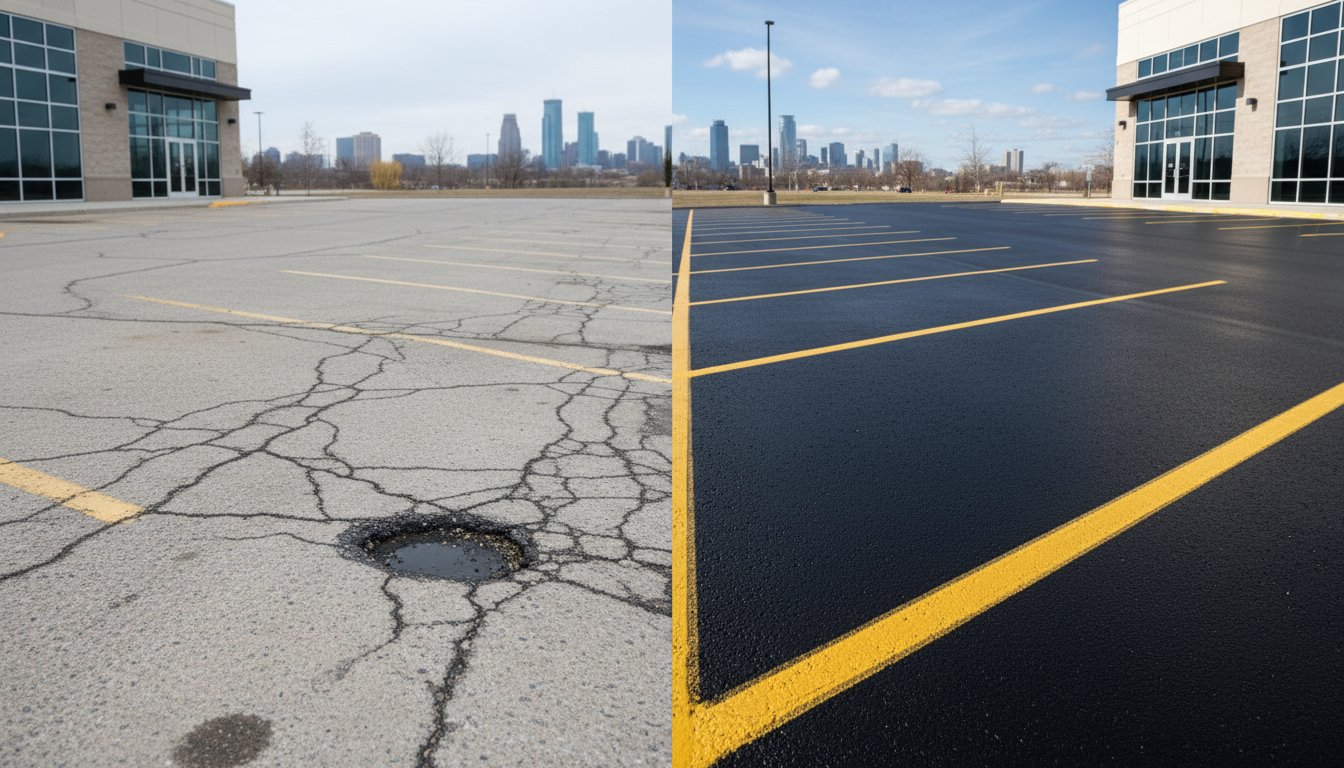
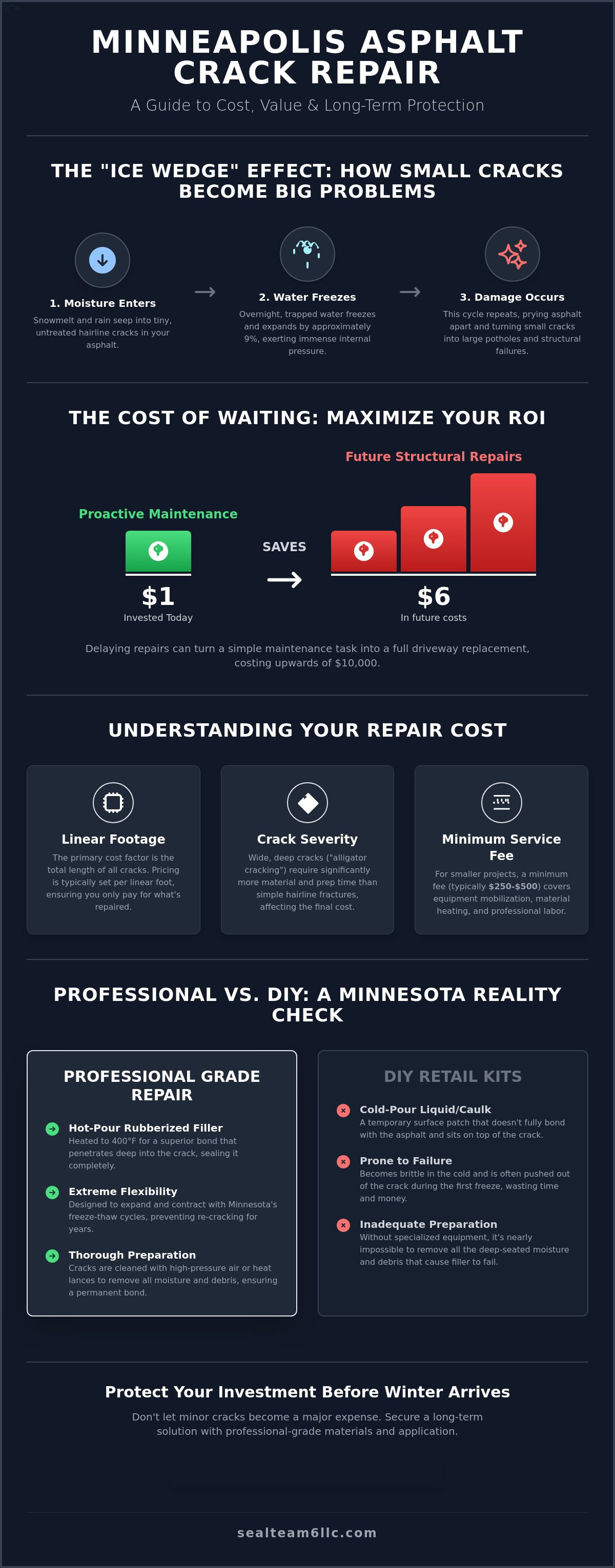
We call this the "Ice Wedge" effect. A tiny crack, barely wide enough for a credit card, allows snowmelt to seep in during the day. When temperatures drop overnight, that water expands by roughly nine percent. This physical expansion exerts immense pressure, literally prying the asphalt apart from the inside out. This is how a small crack can evolve into a large pothole in just one season. By the time spring arrives, what was once a simple maintenance task has often turned into a structural failure. At this stage, crack filling is no longer a viable option, and you're looking at much more expensive repairs.
Minnesota’s Freeze-Thaw Cycle and Your Wallet
Our local environment is particularly harsh on pavement. Minneapolis and Saint Paul experience dozens of freeze-thaw cycles every winter. This constant movement is compounded by the frequent use of road salt. While salt keeps our tires on the road, it also draws more moisture into the pavement through brine. This brine penetrates deeper than plain water, accelerating the degradation of untreated cracks. Property owners in the northern metro often see damage progress faster than those in southern regions because our frost line stays in the ground longer, causing significant movement that stresses the asphalt surface.
The "Cost of Delay" vs. Immediate Maintenance
Adopting a mindset of pavement stewardship is the most effective way to manage your asphalt crack repair cost Minneapolis. Waiting until a crack is "big enough to notice" is a gamble that rarely pays off. Industry data suggests that every dollar invested in timely maintenance can prevent six dollars in structural repair costs later. For local businesses, the stakes are even higher. Cracks that turn into uneven surfaces aren't just maintenance issues; they are liability risks. A proactive approach ensures your pavement remains safe and functional, extending its total lifespan by years while avoiding the high costs of reactive fixes.
Calculating Asphalt Crack Repair Costs: Linear Feet and Material Factors
Determining your asphalt crack repair cost Minneapolis requires looking beyond a single flat rate. Most reputable contractors in the Twin Cities utilize a price per linear foot model. This approach ensures you only pay for the specific amount of material and labor required for your unique layout. However, the severity of the cracks plays a major role in the final estimate. A deep, wide fissure requires significantly more specialized sealant than a shallow hairline crack. Beyond material volume, the preparation phase is the most critical factor in the final quote. Contractors must use high-pressure air or heat lances to remove debris and moisture. Without this thorough cleaning, the sealant cannot bond properly, leading to premature failure when the first frost hits.
For smaller residential projects, homeowners should be aware of mobilization fees. It takes a significant amount of energy and time to heat a professional-grade kettle to 400 degrees and transport heavy equipment to a job site. Because of this, many local specialists have a minimum call-out fee. This ensures the crew can provide a high-quality, professional result even on smaller driveways where the linear footage alone wouldn't cover the operational overhead. If you're unsure how to calculate your specific needs, reaching out for a professional estimate from Seal Team LLC can provide the clarity you need before the season ends.
Linear Foot Pricing vs. Minimum Service Fees
While large commercial parking lots might see lower rates per foot due to scale, residential jobs often fall under a minimum service fee, typically ranging from $250 to $500 in the Minneapolis area. You can get a ballpark estimate for your own property by using a walking wheel or tape measure to total the length of all cracks wider than a quarter-inch. Remember that proactive maintenance is a form of stewardship that helps you save up to six dollars in the future for every dollar spent on preservation today.
Hot-Applied vs. Cold-Applied Fillers
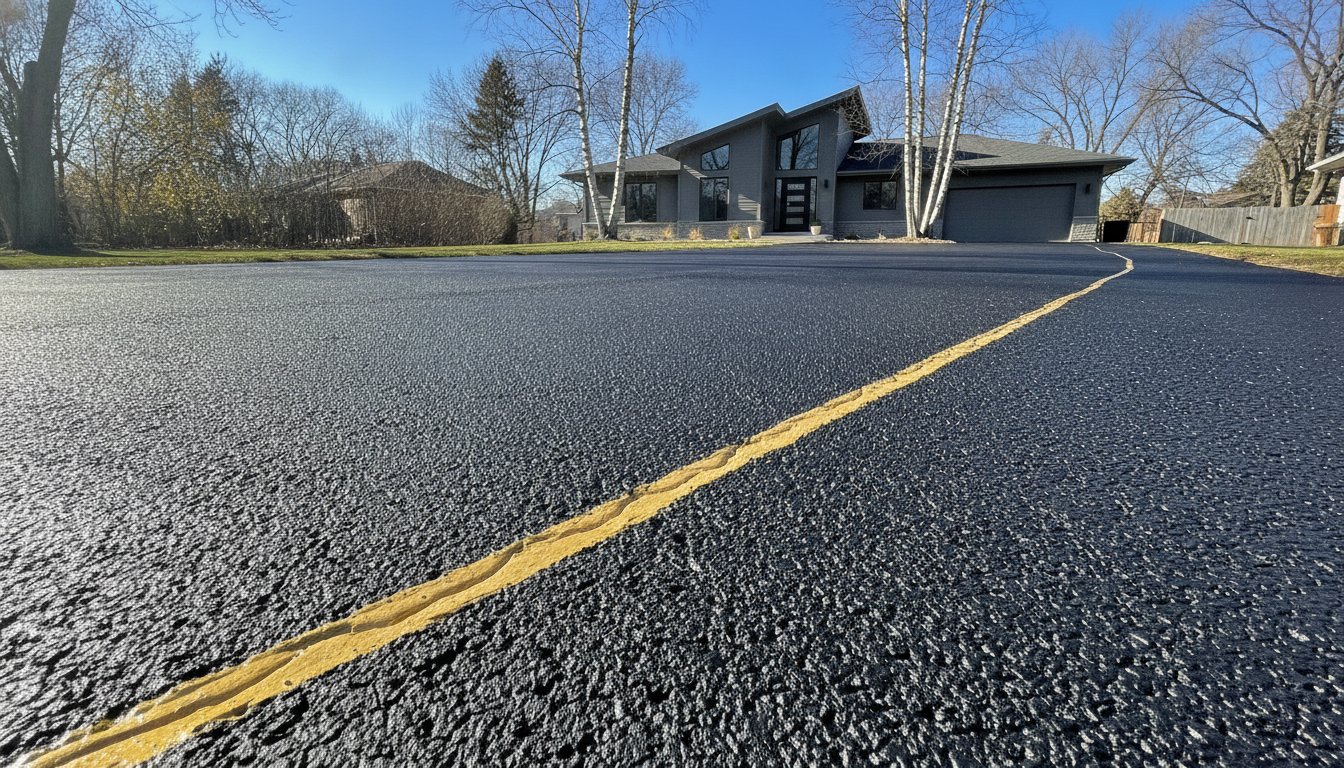
The choice of material is the single biggest variable in the long-term value of your repair. Cold-applied fillers found at big-box retailers are often liquid-based and shrink as they dry, which frequently leads to them popping out during a Minnesota winter. Professional hot-pour rubberized asphalt is heated to a liquid state and poured directly into the crack, where it forms a thermal bond with the existing pavement edges. Hot-applied rubberized crack filler is the gold standard for Minnesota because its flexible properties allow it to expand and contract alongside the asphalt during extreme temperature shifts. This durability means you won't have to pay for the same repair again next year.
Professional Crack Filling vs. DIY: A Twin Cities Value Comparison
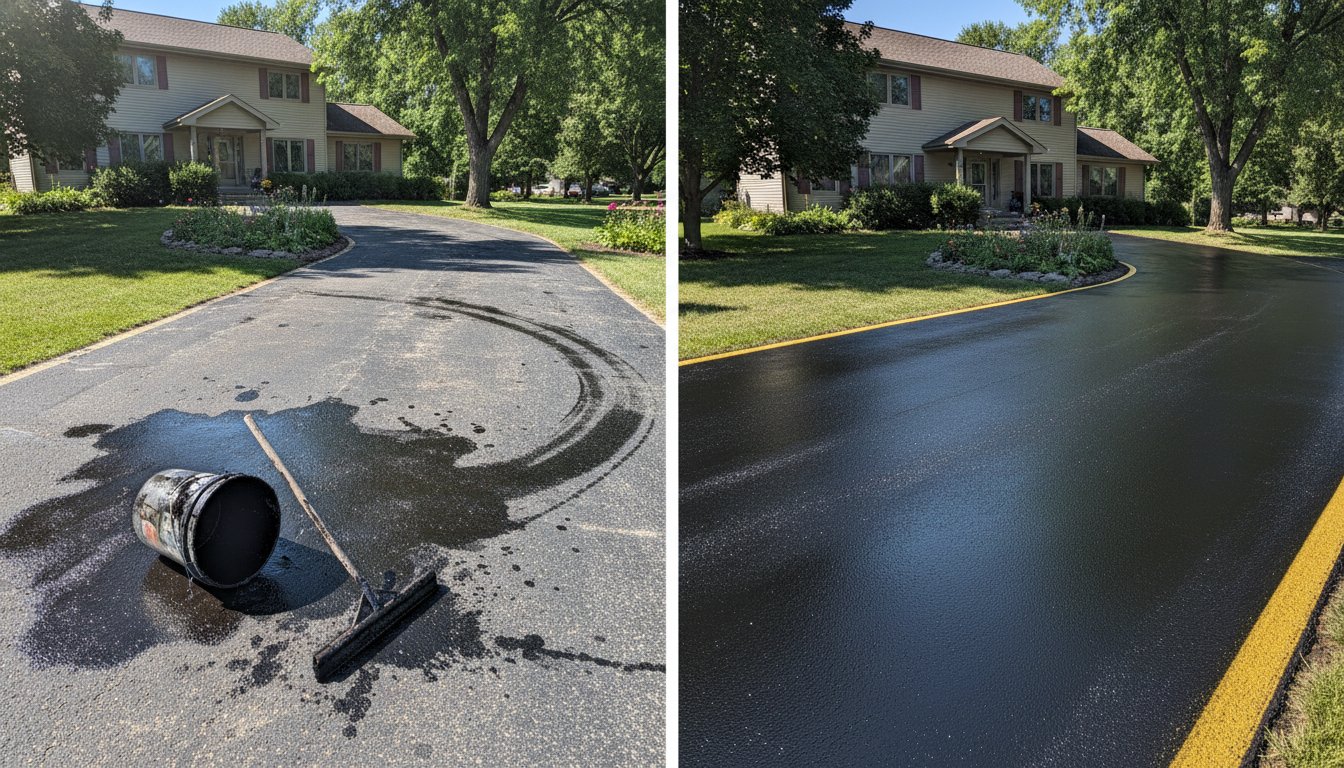
Many homeowners look at the estimated asphalt crack repair cost Minneapolis contractors provide and wonder if a trip to the local hardware store is a better alternative. At first glance, the math seems simple. A few jugs of liquid crack filler from a big-box retailer might cost less than fifty dollars. However, this calculation ignores the high failure rate of consumer-grade products in the Upper Midwest. DIY kits generally consist of cold-applied, water-based emulsions that evaporate as they cure. This process causes the material to shrink and become brittle. When the first deep freeze hits Hennepin County, these rigid plugs often lose their bond and pop out, leaving your pavement vulnerable once again.
The real difference lies in the preparation and equipment. A professional crew uses a heat lance to blast away moisture and vegetation while simultaneously heating the asphalt edges. This creates a "thermal bond" that a homeowner with a garden hose and a wire brush simply cannot replicate. Without this deep cleaning and heat treatment, even the best materials will sit on top of the debris rather than sealing the gap. Professional contractors also provide a level of accountability and peace of mind that a plastic bottle of filler cannot match. When you hire a specialist, you aren't just buying material; you are buying a guarantee that the work was done to withstand the specific stressors of our local climate.
Why DIY Fillers Struggle in Minnesota
Most consumer fillers lack the polymer-modified elasticity required to survive a Minneapolis winter. Our temperatures can swing sixty degrees in a single week, requiring a sealant that can move without cracking. Professional hot-pour rubberized asphalt is engineered to stretch and contract during these radical shifts. Beyond material science, the time commitment for a non-specialist is significant. What takes a professional crew an hour can take a homeowner an entire weekend of back-breaking labor, often with results that won't last until the next spring thaw.
The Longevity Factor: 1 Year vs. 5+ Years
Choosing professional application changes your maintenance cycle from an annual headache to a long-term strategy. While DIY fixes rarely survive twelve months, a professional hot-pour application typically lasts between three and eight years. This durability is essential for cost-effective pavement preservation, as it prevents the base-layer saturation that leads to total driveway failure.
Proper crack filling is also the prerequisite for other protective measures. If you're planning on following the Sealcoating Services in Minnesota Guide, you must ensure your cracks are professionally filled first. A sealcoat layer is only as strong as the surface beneath it. By investing in professional crack filling now, you ensure that future maintenance layers bond correctly, maximizing the total lifespan of your asphalt and keeping your long-term asphalt crack repair cost Minneapolis as low as possible over the life of your property.
Maximizing Your ROI: Why $1 in Maintenance Saves $6 in Repairs
Viewing your driveway as a depreciating asset is a common mistake. Instead, consider it a structural component of your home that requires periodic stewardship to maintain its value. The industry-standard 1:6 ratio isn't just a marketing slogan; it is a calculation of risk based on the cost of prevention versus the price of failure. For every dollar you allocate toward professional crack filling, you effectively prevent six dollars in future reconstruction costs. When moisture is allowed to reach the sub-grade, the resulting base failure eventually requires a full replacement. By managing your asphalt crack repair cost Minneapolis through small, frequent interventions, you bypass the massive financial burden of a total repave.
This financial logic applies to both residential and commercial properties across the metro area. A well-maintained surface signals to the world that the property is cared for, which directly influences market perception and appraisal values. If you are looking for a professional assessment of your pavement's current condition, you can request a quote from Seal Team 6 LLC to start your maintenance plan today.
Asphalt as a Property Investment
Curb appeal is a significant factor in the Twin Cities real estate market. A driveway riddled with open cracks and weeds creates an immediate negative impression for potential buyers; it often leads them to wonder what other structural maintenance has been neglected. Beyond aesthetics, there is a clear safety benefit for your family and guests. Smooth, sealed pavement reduces trip hazards and simplifies snow removal during our long winters. Preventing a $10,000 replacement job by spending a fraction of that on maintenance is simply sound financial planning for any property owner.
Creating a Long-Term Maintenance Schedule
Consistency is the secret to pavement longevity in our harsh climate. We recommend an "inspect every spring, repair every fall" philosophy. Spring inspections allow you to see the damage caused by the previous winter's freeze-thaw cycles, while fall repairs ensure the surface is sealed tight before the next round of snow and ice arrives. This cycle should be integrated with regular sealcoating every two to three years to provide a complete defensive layer against UV rays and chemicals. A well-maintained driveway in Minnesota can easily reach a total lifespan of 25 to 30 years, nearly doubling the life of a neglected surface.
Choosing Seal Team 6 LLC for Your Minneapolis Crack Repair
Selecting a contractor who understands the unique geological and climatic pressures of the Twin Cities is essential for protecting your property. At Seal Team 6 LLC, we view ourselves as more than just a service provider. We act as diligent guardians of your pavement's integrity. Our deep familiarity with the Minneapolis-St. Paul freeze-thaw environment allows us to provide solutions that are rooted in local experience rather than national averages. When you evaluate your asphalt crack repair cost Minneapolis, the value of local expertise becomes clear through the longevity of the results we deliver. We don't believe in temporary fixes that fail after the first frost; we believe in restoration that lasts.
We remain committed to using professional-grade hot-pour crack filling because it is the only material that truly stands up to a Minnesota winter. While others might offer cheaper, temporary alternatives, our focus on stewardship means we prioritize long-term pavement health over quick fixes. This approach ensures that your driveway or parking lot remains a resilient asset rather than a recurring expense. By choosing a specialist who understands the technical nuances of material degradation, you are making a sensible choice for the future of your property.
Our Professional Crack Repair Process
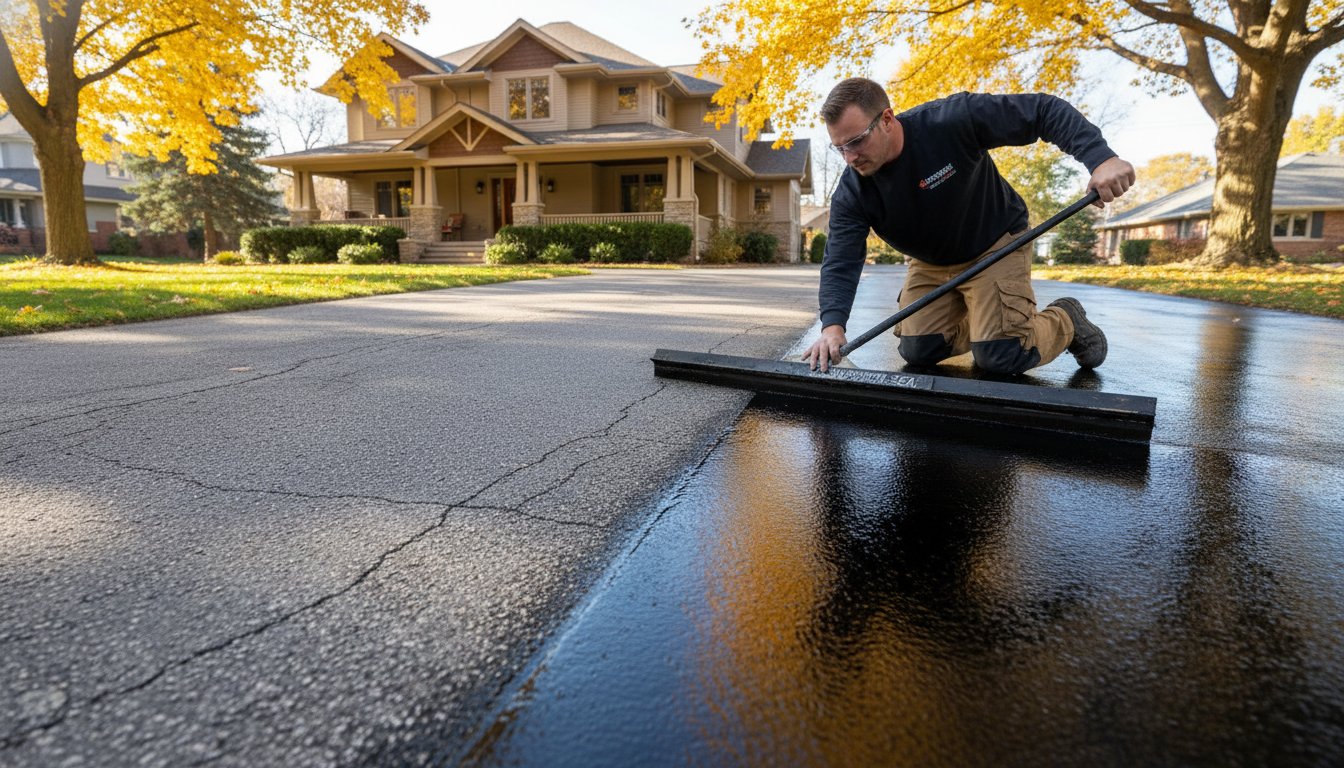
A successful repair starts with meticulous preparation. We don't just pour material into a gap. Our crew uses high-pressure air and specialized heat lances to ensure every crack is free of moisture, dirt, and vegetation. This step is non-negotiable for creating a lasting bond. Once the surface is prepared, we apply high-quality rubberized asphalt that has been heated to the precise temperature required for maximum penetration. This method is equally effective for residential driveways and large commercial lots, providing a uniform barrier against the elements. It is a methodical, step-by-step progression designed to ensure the sealant remains flexible and intact through dozens of temperature swings.
Get Started with Your Free Estimate
Taking the first step toward preserving your pavement is straightforward. You can contact Seal Team 6 LLC for your free crack repair estimate to schedule a professional assessment for the 2026 season. During this visit, we conduct a thorough pavement assessment to identify active cracks and potential weak spots. We provide a clear, transparent explanation of our findings so you can make an informed decision based on logic and long-term value. Our goal is to provide you with the knowledge and service needed to avoid future headaches through proactive, expert-led care. We take pride in helping our neighbors maintain safe, durable surfaces that stand the test of time.
Secure Your Property’s Future Before the Next Freeze
Focusing on the long-term value of your pavement ensures you avoid the high financial burden of emergency reconstruction. By understanding the real factors behind the asphalt crack repair cost Minneapolis residents face, you can transition from reactive fixing to proactive preservation. It's clear that professional-grade hot-pour materials and thorough thermal cleaning are the only reliable ways to survive our local freeze-thaw cycles. These methods create a lasting bond that simple retail kits cannot match, saving you from the cycle of annual repairs.
Stewardship of your property doesn't have to be a source of stress. Our team specializes in Minnesota freeze-thaw protection, using professional-grade hot-pour materials to provide a durable barrier for your home or business. We offer free estimates for Twin Cities residents to help you plan your maintenance with confidence and clarity. We are ready to help you defend your investment against the harsh seasonal shifts of the Upper Midwest.
Get a Free Crack Repair Estimate from Seal Team LLC and protect your driveway today. Taking action now is the most sensible way to ensure your surface remains safe, smooth, and functional for years to come.
Frequently Asked Questions
Is it better to fill or seal asphalt cracks in Minneapolis?
Filling is the superior choice for active cracks that expand and contract during our local seasonal shifts. While crack sealing is often used for non-working cracks, filling uses thicker materials designed to bond deeply with the pavement edges. This creates a more substantial barrier against water infiltration, which is the primary cause of structural decay in the Twin Cities.
How much does it cost to fix a driveway crack per foot in 2026?
Most contractors determine the asphalt crack repair cost Minneapolis homeowners pay by using a linear foot model. For professional services in 2026, industry averages typically range from $1.00 to $3.00 per linear foot. This rate varies based on the width of the damage and the total volume of material required to achieve a flush, durable finish that withstands the winter.
Can I fill asphalt cracks myself in the winter?
Attempting a DIY repair during a Minnesota winter is generally ineffective. For any filler to bond correctly, the asphalt must be dry and the ambient temperature should be well above freezing. Applying material to cold, damp cracks leads to immediate adhesion failure. Professional crews use heat lances to prep surfaces, but even then, most work is best reserved for warmer months.
How long does professional crack filling last in Minnesota?
A high-quality professional application typically lasts between three and eight years. This longevity is significantly higher than retail DIY fixes, which often fail after a single season. The exact lifespan depends on the intensity of the freeze-thaw cycles and how well the surrounding pavement is maintained through regular sealcoating and debris removal.
What happens if I ignore the cracks in my driveway until next year?
Ignoring cracks allows water to reach the gravel base of your driveway. Once the base saturates and freezes, it heaves the asphalt upward, leading to alligator cracking and potholes. What starts as a minor maintenance task this year can quickly evolve into a structural failure requiring a full replacement costing thousands of dollars by next spring.
Does sealcoating fix cracks in the asphalt?
Sealcoating is a protective surface treatment, not a structural repair for gaps. While it provides an essential UV barrier, it is too thin to bridge or fill existing cracks. You must have cracks professionally filled before applying a sealcoat. Attempting to hide cracks under a layer of sealer will only lead to the sealer cracking in those same spots within weeks.
Is hot-pour crack filler better than cold-fill for MN weather?
Hot-pour rubberized filler is the gold standard for our climate. Unlike cold-fill products that remain rigid and brittle, hot-pour materials stay flexible after they cure. This elasticity is critical in Minneapolis, as it allows the filler to stretch and compress alongside the asphalt as temperatures fluctuate between summer heat and sub-zero winter nights.
When is the best time of year to repair asphalt cracks in the Twin Cities?
The ideal window for repair is from late spring through early fall. Specifically, late summer provides the best conditions because the pavement is thoroughly dry and the ground temperatures are warm enough to facilitate a perfect thermal bond. Completing these repairs before the first frost ensures your driveway is sealed and protected before the snow begins to fly.