Did you know that a neglected parking lot in Minnesota can fail in less than ten years, while a proactive preservation plan can extend that same surface's life to thirty years? It's a staggering difference that directly impacts your bottom line. As a property manager, you likely feel the stress of unpredictable repair costs every time the spring thaw reveals fresh potholes and liability risks. You want your property to look its best for tenants, but the looming threat of a six-figure replacement cost is a heavy burden to carry.
This guide explains how professional asphalt maintenance for property managers acts as a shield for your investment, effectively doubling the lifespan of your pavement through local expertise. You'll learn how to stabilize your budget with a predictable five-year plan and avoid the massive expense of full reconstruction. We'll walk through the strategic benefits of crack filling and seal coating, showing you how to transform your asphalt from a depreciating liability into a well-guarded financial asset.
Key Takeaways
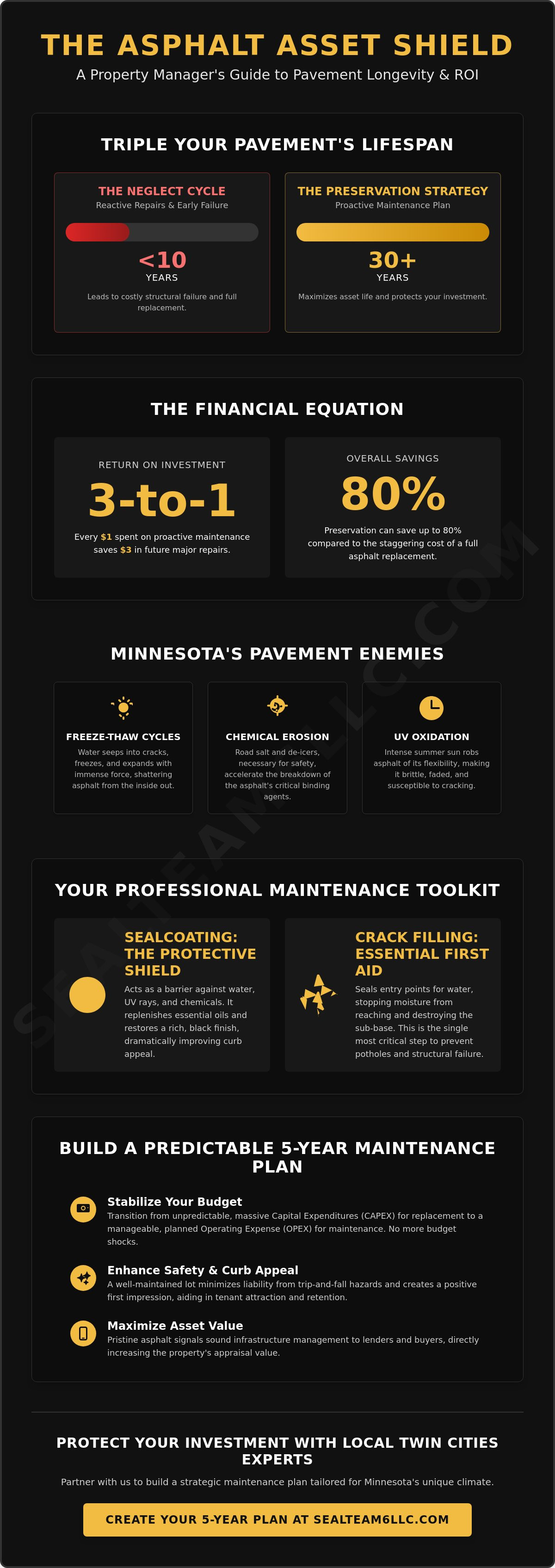
- Learn how to transition from a 10-year neglect cycle to a 30-year preservation strategy, saving up to 80% compared to the cost of full asphalt replacement.
- Discover why professional asphalt maintenance for property managers provides a 3-to-1 return on investment, where every dollar spent on seal coating saves three on reactive repairs.
- Understand how seal coating and crack filling act as a protective barrier against water penetration and the specific stressors of the Minnesota freeze-thaw cycle.
- Master a two-step framework for creating a predictable five-year maintenance budget that prioritizes high-traffic safety and tenant retention.
- Identify why local expertise in managing the unique soil and climate conditions of the Twin Cities is vital for long-term pavement health.
The Property Manager’s Pavement Challenge: Why Maintenance Can’t Wait
Pavement is often the single most expensive physical asset on a commercial property, yet it's frequently the most neglected. It's easy to fall into the "out of sight, out of mind" trap. If the lot looks okay from a distance, it's tempting to push maintenance to next year's budget. However, waiting for a visible pothole to appear means you're already too late. By that point, the damage has moved beneath the surface. Consistent asphalt maintenance for property managers isn't just about aesthetics; it's about protecting a capital investment that can cost six figures to replace.
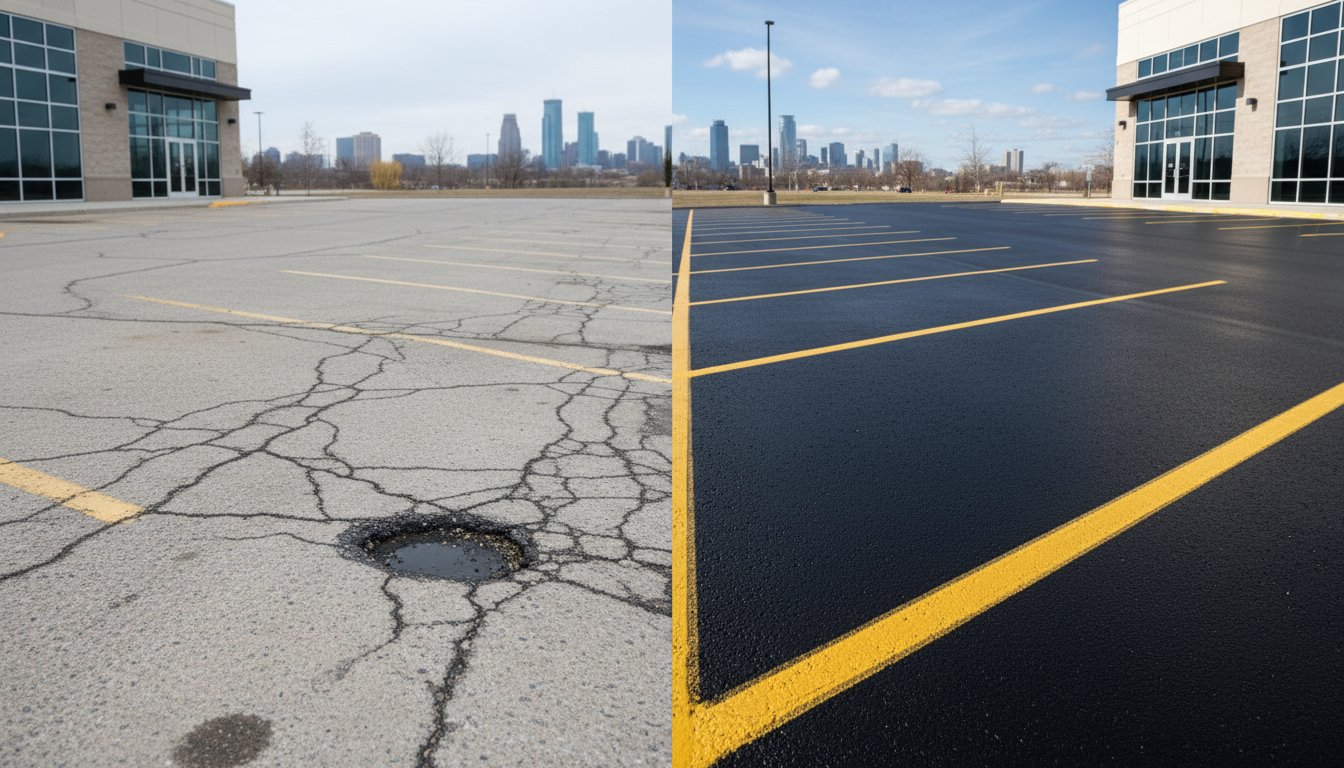
Your parking lot is the first thing a prospective tenant sees. It sets the tone for the entire property. Cracked, grey, or crumbling asphalt suggests a lack of stewardship, which can lead to lower lease rates and higher tenant turnover. Beyond aesthetics, there is the critical issue of safety. Neglected asphalt creates significant liability. Uneven surfaces and potholes are prime locations for slip-and-fall incidents. A well-maintained lot signals to everyone that the property is managed with care and foresight. For managers who prioritize this level of professionalism for their clients, you can also check out MSP Car Service for premium transportation solutions in the Minneapolis–St. Paul metropolitan area.
The Hidden Costs of Deferred Asphalt Care
The financial impact of deferring care goes far beyond the repair bill. Legal risks are a harsh reality in property management. A single trip and fall lawsuit can dwarf the cost of a decade of preventive care. Additionally, tenants may file claims for vehicle damage, such as blown tires or suspension issues caused by deep ruts. Understanding an Asphalt Concrete Overview reveals that what starts as a minor surface crack quickly allows water to reach the sub-base. Once that foundation collapses, you are no longer looking at a simple fix; you are facing a total structural failure.
Minnesota’s Climate: The Ultimate Pavement Stress Test
In the Twin Cities, our environment is particularly aggressive toward pavement. The freeze-thaw cycle is the primary enemy. Water seeps into tiny pores, freezes, and expands with incredible force, shattering the asphalt from the inside out. This cycle can happen dozens of times in a single winter. Chemical erosion also plays a role. Road salt and ice melt are necessary for safety, but they accelerate the breakdown of the bitumen binder that holds the aggregate together. Even the summer brings challenges. Intense UV oxidation from the Minneapolis sun robs the asphalt of its oils and flexibility, making it brittle and grey. Without regular asphalt maintenance for property managers, these local stressors will cut your pavement's life in half.
Calculating the ROI: Preventive vs. Reactive Maintenance
Professional asphalt maintenance for property managers shifts the focus from emergency repairs to strategic investment. The most compelling data for any board or owner is the 3-to-1 ratio. Industry research consistently shows that every dollar invested in timely seal coating and crack filling saves approximately three dollars in future reactive repairs. By choosing preservation, you aren't just spending money; you're preventing the inevitable financial shock of a full repave. Maintenance can save between 60% and 80% compared to the cost of full replacement, making it a cornerstone of responsible property stewardship.
A well-maintained parking lot follows a 30-year preservation cycle rather than a 15-year replacement cycle. This extension effectively doubles the life of your asset. Beyond the direct repair savings, a pristine exterior increases property appraisal value. It signals to lenders and buyers that the infrastructure is sound. When your asphalt looks new, it reflects a high standard of management that justifies higher lease rates and improves tenant retention.
Preventive Stewardship vs. Reactive Repair
The Pavement Condition Index (PCI) helps managers understand where their lot sits on the degradation curve. Official standards, such as the Caltrans Pavement Guidelines, emphasize that early intervention is the most cost-effective way to manage asphalt assets. Maintenance is a predictable operating expense (OPEX) that keeps your PCI high, whereas a full replacement is a massive capital expenditure (CAPEX) shock that often requires special assessments or loans. Staying ahead of the curve ensures your budget remains stable and your lot remains safe.
Maximizing the Lifespan of Your Asphalt Investment
Regular seal coating acts as a protective shield, while crack filling serves as the first line of defense for the expensive gravel sub-base. Without these interventions, water intrusion quickly turns small fissures into deep structural failures. For HOA boards and commercial owners, long-term financial modeling proves that small, frequent investments are far superior to rare, massive overhauls. Developing a proactive asphalt maintenance plan with a specialist ensures that your property remains a high-value asset for decades, not just years. This methodical approach transforms a depreciating liability into a stable, long-term financial asset.
The Professional Maintenance Toolkit: Sealcoating and Crack Filling
Effective asphalt maintenance for property managers relies on two primary defensive measures: seal coating and crack filling. While these might seem like simple aesthetic upgrades, they are actually sophisticated chemical and structural interventions. Using residential-grade products from a big-box store often leads to premature failure in commercial settings. High-traffic lots require professional-grade, high-solids sealants that can withstand the weight of delivery trucks and the constant friction of turning tires. These industrial materials are designed to bond at a molecular level, providing a durability that DIY alternatives simply cannot match.
Professional Sealcoating: More Than Just a Black Surface
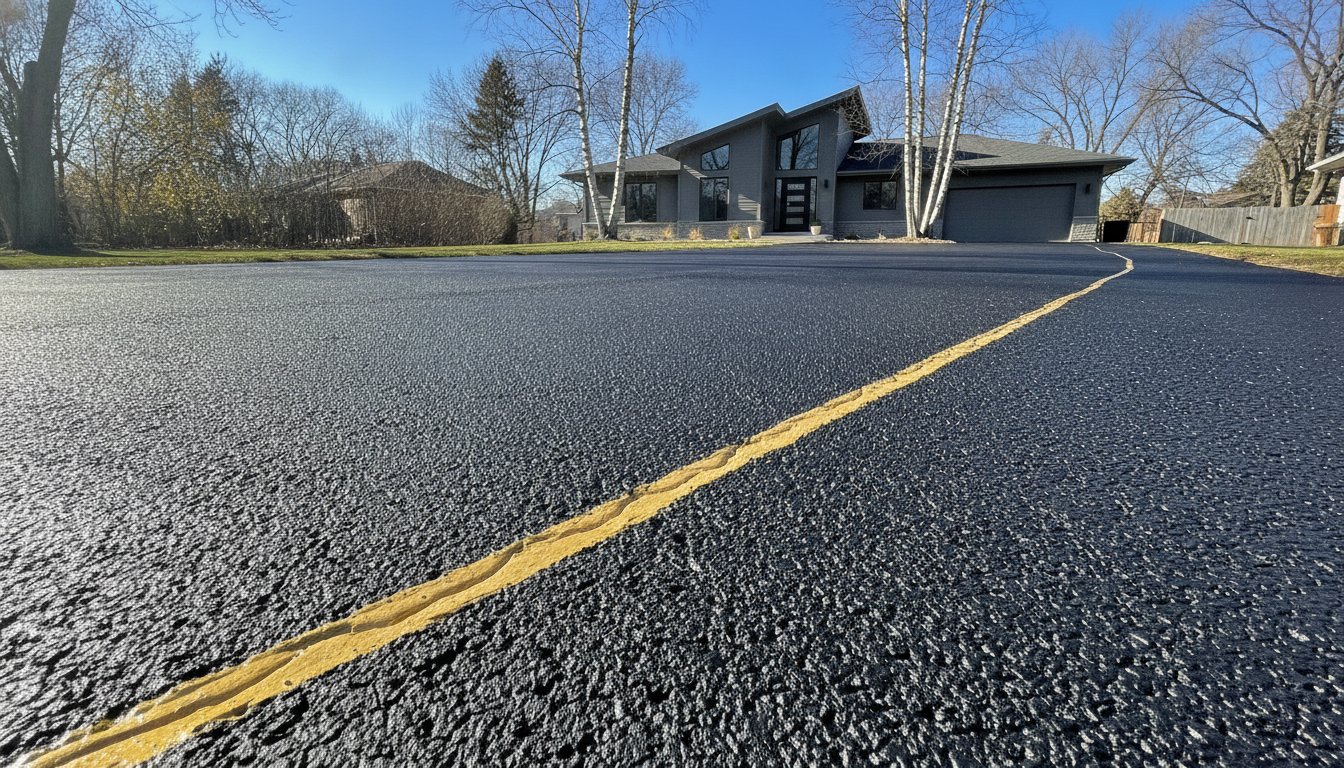
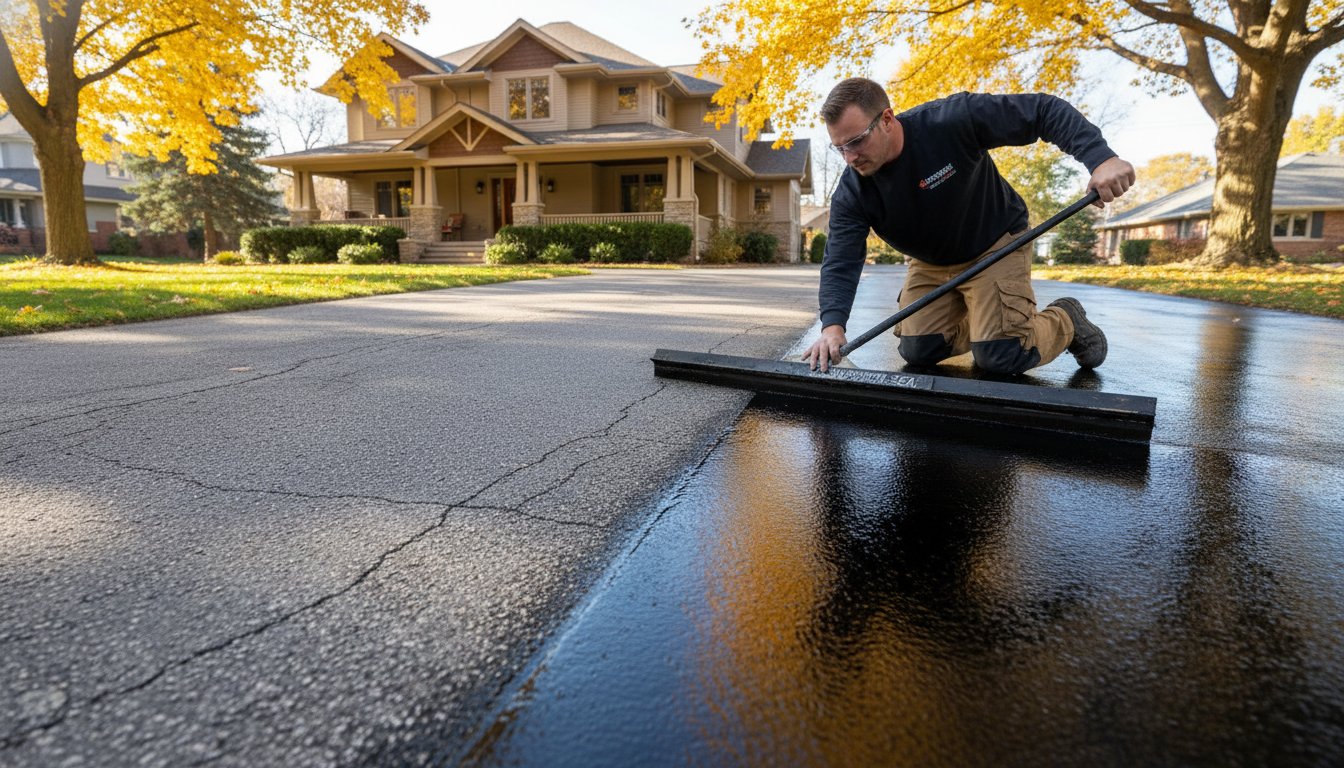
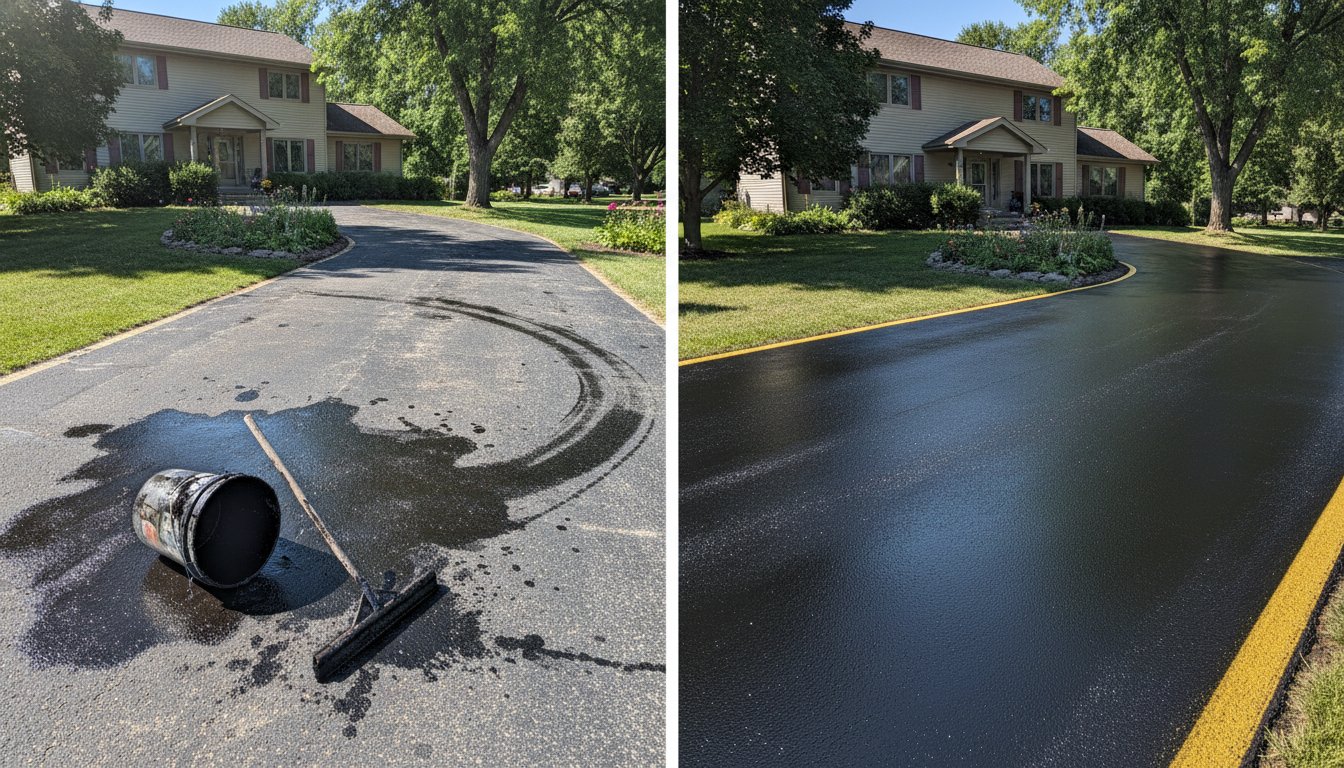
Think of seal coating as the "sunscreen" for your property's pavement. Over time, UV rays and oxygen leach the essential oils out of the asphalt, leaving it brittle. This process, known as oxidation, is why old asphalt turns grey and begins to ravel. A professional seal coat restores these lost oils and creates a waterproof barrier. We utilize specific application methods to ensure the material bonds deeply with the existing surface. Squeegee applications are often used for the first coat to work the material into the pores, while spray applications provide a uniform, slip-resistant finish. This doesn't just protect the infrastructure; it restores that deep, jet-black finish that attracts high-value tenants and elevates the entire property's profile.
Crack Filling: Stopping the Rot Before It Starts
If seal coating is the sunscreen, crack filling is the bandage that prevents a minor wound from becoming a systemic infection. In the Twin Cities, we exclusively recommend hot-applied rubberized crack filler. Unlike the cold-pour liquids found in hardware stores, hot-pour material is heated to approximately 400 degrees. It stays flexible. It remains pliable even when the ground freezes and shifts, which is essential for surviving a Minnesota winter. It is the first line of defense against the sub-base saturation that leads to potholes.
The process is methodical and requires professional equipment. We first clean the cracks of all debris, vegetation, and moisture using high-pressure air or heat lances. This preparation is vital; the sealant won't bond to dirt. Once the rubber is applied, it creates a watertight seal that stops the rot before it starts. If a crack has expanded beyond an inch or the surrounding pavement is "alligatoring," it may be beyond the scope of simple filling. Catching these fissures early is the secret to successful asphalt maintenance for property managers, ensuring you never have to deal with the foundation collapse discussed in previous sections.
Building a 5-Year Asphalt Maintenance Plan
A strategic five-year plan transforms asphalt maintenance for property managers from a stressful chore into a predictable budget line item. This methodical approach begins with a professional pavement audit. We walk the property to identify areas of fatigue, material loss, and sub-base instability. By documenting the current state of the lot, we can prioritize repairs based on safety and traffic volume. High-traffic entrances and ADA-compliant pathways always take precedence to minimize liability and ensure smooth access for all visitors.
Scheduling is the next critical step. For most commercial properties in the Twin Cities, we recommend a phased approach. Closing a parking lot entirely is rarely feasible for a business. By working in sections, we keep your complex accessible while the seal coat cures. Communicating this plan to stakeholders, such as HOA boards or property owners, is essential. When they understand that this stewardship prevents a six-figure repaving bill, budget approval becomes much simpler. Finally, annual inspections ensure that new cracks are caught and filled before the winter moisture can do its worst.
The Ideal Maintenance Schedule for Minnesota Properties
Our local climate dictates a specific rhythm for care. High-traffic commercial lots generally require seal coating every three years to maintain their protective barrier. We suggest conducting audits in the spring. This timing allows us to identify damage caused by snowplows and ice before the heavy spring rains begin. A fall preparation check is also vital. Ensuring all cracks are filled before the first freeze-thaw cycle prevents water from expanding inside the pavement, which is the leading cause of potholes in Minneapolis and Saint Paul.
Logistics and Tenant Management
Success in asphalt maintenance for property managers often comes down to clear communication. We provide guidance on notifying tenants of parking changes well in advance. Phased work ensures that customers always have a place to park, even during active service. Once the seal coat is applied, clear striping is the final touch. High-visibility markings are crucial for safety and traffic flow, especially in busy retail or multi-family environments. If you're ready to stabilize your budget and protect your pavement, contact us for a professional pavement audit to begin your five-year plan today.
Partnering with Seal Team LLC: Local Expertise for Twin Cities Managers
Choosing a partner for asphalt maintenance for property managers requires more than just looking at a quote. It requires finding a team that understands the specific geological and environmental challenges of the Twin Cities. Minneapolis and Saint Paul sit on varied soil types that react differently to our extreme temperature swings. We've seen how frost heaves can devastate a lot if the maintenance plan doesn't account for local moisture retention. Our team evaluates the specific ruts and wear patterns unique to your location to ensure the sealant bonds correctly.
Our approach is rooted in stewardship. We aren't here to push for a total repave when a strategic preservation plan can save you tens of thousands of dollars. We believe in transparent, project-based pricing. You won't find hidden fees or surprise add-ons halfway through the job. By focusing exclusively on seal coating and crack filling, we've refined our process to deliver maximum durability. We utilize high-solids materials that are specifically formulated to resist the heavy road salt and ice melt common in our region.
A Knowledgeable Local Specialist You Can Trust
As specialists in asphalt maintenance for property managers, we focus on the science of preservation. Minnesota's environment is notoriously hard on bitumen binders. Between the intense UV rays of July and the sub-zero thaws of March, your pavement is under constant attack. A general paving contractor often views these issues as inevitable steps toward a full replacement. We take the opposite view. We help you defend the sub-base and keep the surface flexible. This focus on restorative care allows you to avoid the massive capital expenditure of new paving while maintaining a lot that looks and performs like new.
Getting Started with a Free Professional Estimate
The first step in our process is a thorough property assessment. We don't just glance at the surface; we perform a detailed audit to identify the root causes of degradation. During this assessment, we look for drainage issues, sub-base instability, and high-stress areas that need extra attention. You'll receive a customized set of recommendations based on your specific budget and the current condition of your lot. This roadmap gives you the clarity needed to plan for the next five years with confidence. Protect your property investment. Contact Seal Team LLC for a free estimate today!
Secure Your Pavement’s Future Today
Stewardship of a commercial property requires foresight and a commitment to long-term value. By moving from a reactive "fix it when it breaks" mindset to a proactive preservation strategy, you can effectively double the lifespan of your pavement. Every dollar invested in timely care prevents the need for a massive six-figure replacement bill down the road. This strategic approach to asphalt maintenance for property managers ensures your lot remains safe, attractive, and financially sustainable through every Twin Cities winter.
Our team specializes in the unique freeze-thaw protection required for Minnesota's climate. We utilize high-durability hot-pour crack filling to stop water penetration before it destabilizes your foundation. Don't let another season of oxidation and moisture erosion chip away at your investment. Take the first step toward a predictable five-year budget and a safer property for your tenants.
Get Your Free Commercial Asphalt Maintenance Estimate and schedule your professional property audit today. Your pavement is one of your most expensive assets; let's work together to protect it for decades to come.
Frequently Asked Questions
How often should a commercial parking lot be sealcoated in Minnesota?
Commercial parking lots in the Twin Cities should generally be sealcoated every two to three years. This frequency is necessary to combat the aggressive wear from snowplows and the chemical erosion caused by road salt. Properties with exceptionally high traffic volume may require more frequent applications to maintain a strong defensive barrier against the elements.
Will sealcoating fix existing potholes in my parking lot?
Sealcoating is a preventive surface treatment and won't fix existing potholes or structural failures. Its primary purpose is to seal the "pores" of the asphalt to keep out water and air. If your lot already has potholes, they must be repaired with patching materials before the sealcoating process begins to ensure the rest of your pavement remains protected.
How long does a parking lot need to be closed after sealcoating?
You should plan to keep your parking lot closed to vehicle traffic for 24 to 48 hours. While the material may appear dry within a few hours, it requires a full curing period to harden enough to withstand the friction of turning tires. We often work in phases to ensure your tenants and customers still have access to the property during this window.
What is the best time of year to schedule asphalt maintenance in the Twin Cities?
The ideal window for asphalt maintenance for property managers in our region is between May and September. The materials require consistent temperatures above 50 degrees Fahrenheit and a dry surface to bond correctly. Scheduling during the warmer months ensures the sealant and crack filler can cure properly before the first freeze-thaw cycle of the late fall.
How much does professional asphalt maintenance cost per square foot?
The cost of maintenance varies based on the size of the lot, the volume of cracks that need filling, and the amount of surface preparation required. Because every commercial property has different wear patterns, we don't provide a flat per-foot rate. Instead, we perform a professional property audit to give you an accurate, project-based estimate tailored to your specific lot condition.
What is the difference between crack filling and crack sealing?
Crack filling involves placing a sealant into non-moving cracks to reduce water infiltration and prevent debris from entering the fissure. Crack sealing uses specialized, flexible rubberized materials designed to expand and contract with the pavement during extreme temperature shifts. We utilize high-durability materials that are specifically engineered to stay bonded during Minnesota's harsh winters.
Can sealcoating be applied to new asphalt immediately?
No, you should wait at least six to twelve months before sealcoating new asphalt. New pavement needs time to cure and allow its internal oils to evaporate. If you apply a seal coat too early, it can trap those oils, which prevents the asphalt from hardening properly and leads to a soft, easily damaged surface.
How does regular maintenance affect my property’s overall valuation?
Proactive asphalt maintenance for property managers directly increases property valuation by preserving a major physical asset and enhancing curb appeal. It signals to lenders and prospective buyers that the property is under professional stewardship. Most importantly, it eliminates the threat of a massive capital expenditure shock, making the property's financial outlook much more stable and attractive.