What if the greatest risk to your property's value isn't a market shift, but the silent expansion of moisture beneath your parking lot? For many Minnesota property managers, the sight of fresh cracks after a hard freeze feels like an inevitable, expensive headache. You've likely felt the sting of surprise repair costs or the worry of a customer tripping on a neglected pothole. It's a frustrating cycle that makes budgeting feel like guesswork.
This guide changes that narrative by helping you master a proactive commercial asphalt maintenance plan. You'll learn how to shift from reactive patching to a strategy of preservation that can extend your pavement's lifespan to 20 years or more. We'll walk through the essential timing for seal coating and crack filling, the importance of the Pavement Condition Index (PCI), and how to maintain professional curb appeal that protects your ROI against the harshest elements through 2026 and beyond.
Key Takeaways
- Transition from costly emergency repairs to a proactive stewardship model that preserves your asphalt's structural integrity over decades.
- Discover how to implement a commercial asphalt maintenance plan that specifically targets the environmental stressors and freeze-thaw cycles of the Minnesota climate.
- Identify the critical difference between minor surface oxidation and structural "alligator cracking" through a structured visual assessment framework.
- Master the strategic timing of essential treatments like crack filling and sealcoating to prevent water infiltration and road salt decay.
- Build a predictable multi-year budget that eliminates financial uncertainty while maintaining professional curb appeal for your tenants and customers.
The Core Components of a Commercial Asphalt Maintenance Plan
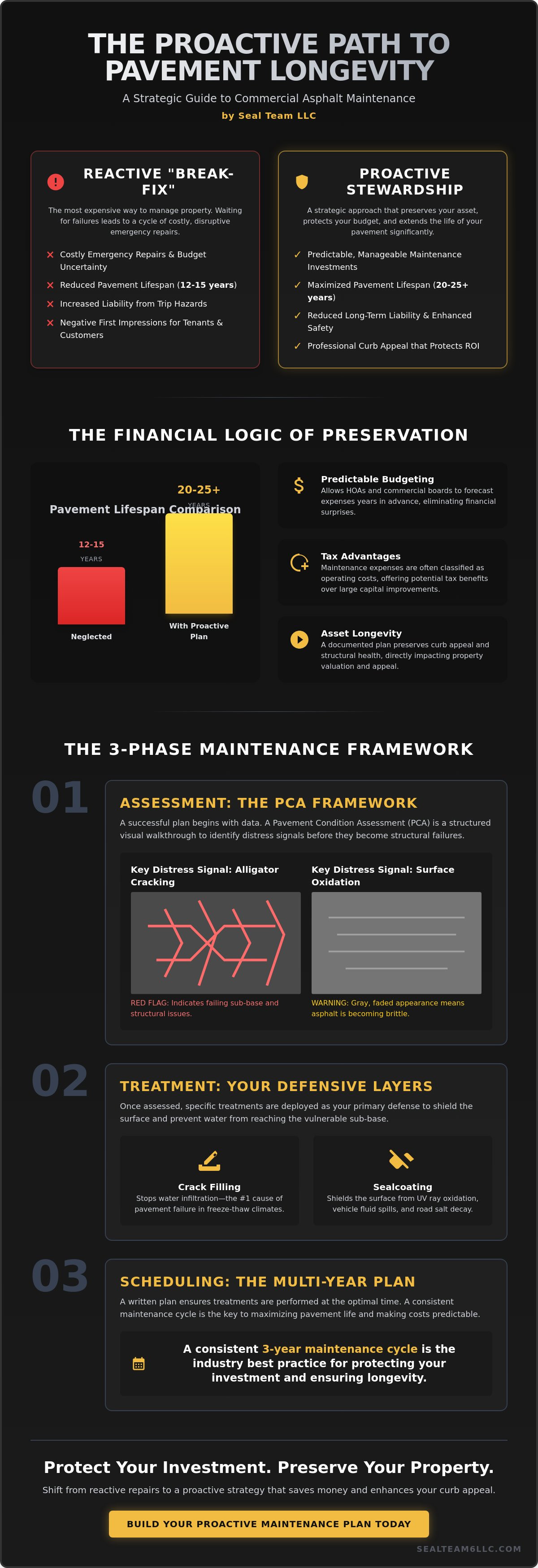
A commercial asphalt maintenance plan is more than a list of repairs; it's a comprehensive lifecycle management strategy designed to protect your investment through 2026 and beyond. Many property owners fall into the trap of reactive repairs, only calling for help when a pothole becomes a liability. This "break-fix" mentality is often the most expensive way to manage a property. In contrast, proactive preservation focuses on stopping damage before it starts. By treating your pavement as a vital asset rather than an afterthought, you can shift your budget from emergency spending to predictable, manageable investments.
Most parking lots are constructed of asphalt concrete, a durable but porous material that begins to degrade the moment it's exposed to the elements. Oxidation, moisture, and chemical spills from vehicles are constant threats. A written plan ensures that seal coating and crack filling are deployed as your primary defensive layers. These services work together to shield the surface from UV rays and prevent water from reaching the vulnerable sub-base. Without these protections, the structural integrity of the entire lot is at risk.
Why Stewardship Matters for Your Pavement
Viewing your parking lot through the lens of stewardship changes how you prioritize your annual budget. Your pavement is a depreciating asset that requires active management to maintain its value. For high-traffic retail sites or professional office complexes, the "blacktop" aesthetic isn't just about looks; it's about first impressions. A dark, well-maintained surface signals to tenants and customers that the property is managed with care. This attention to detail often extends to the buildings themselves; for example, partnering with Hudson Line Painters for commercial exterior upkeep ensures the entire property looks its best. Perhaps most importantly, diligent maintenance reduces long-term liability. By keeping the surface smooth and free of trip hazards, you protect your business from the legal and financial fallout of onsite accidents.
The Financial Logic: ROI of Preservation
The financial argument for a structured plan is rooted in simple math. A consistent three-year maintenance cycle, which focuses on crack filling and seal coating, costs a fraction of the price of a full mill and overlay. When you prevent water from saturating the soil beneath your asphalt, you can effectively double the lifespan of the surface. Implementing asphalt maintenance for property managers directly impacts property valuation by preserving the curb appeal and structural health that lenders and buyers look for.
- Predictable Budgeting: A written plan allows HOAs and commercial boards to forecast expenses years in advance.
- Tax Advantages: Maintenance expenses are typically classified as operating costs, which can offer different tax benefits than large-scale capital improvements.
- Asset Longevity: Properties with a documented commercial asphalt maintenance plan often see their pavement last 20 to 25 years, compared to just 12 to 15 years for neglected lots.
By choosing preservation over reconstruction, you aren't just saving money today. You're ensuring that your property remains safe, attractive, and financially viable for the next generation of tenants.
Phase 1: The Pavement Condition Assessment (PCA) Framework
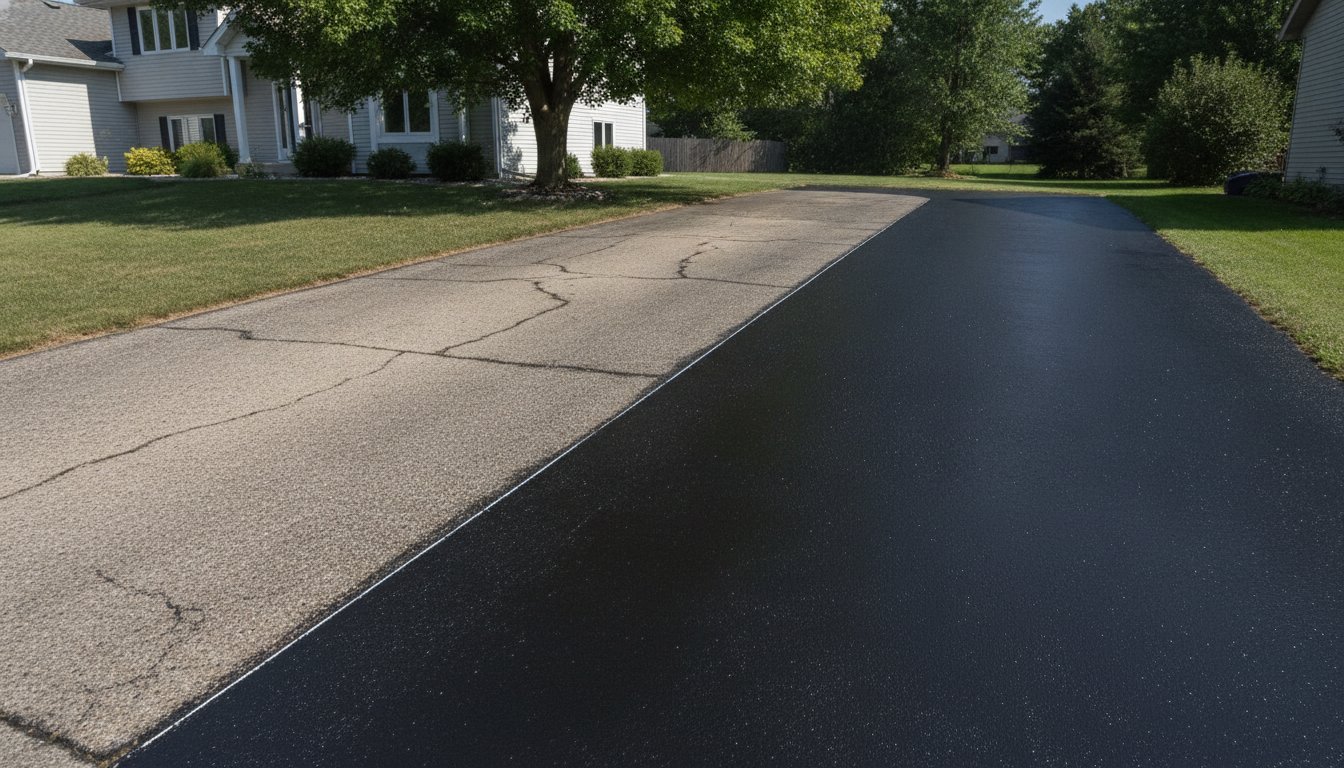
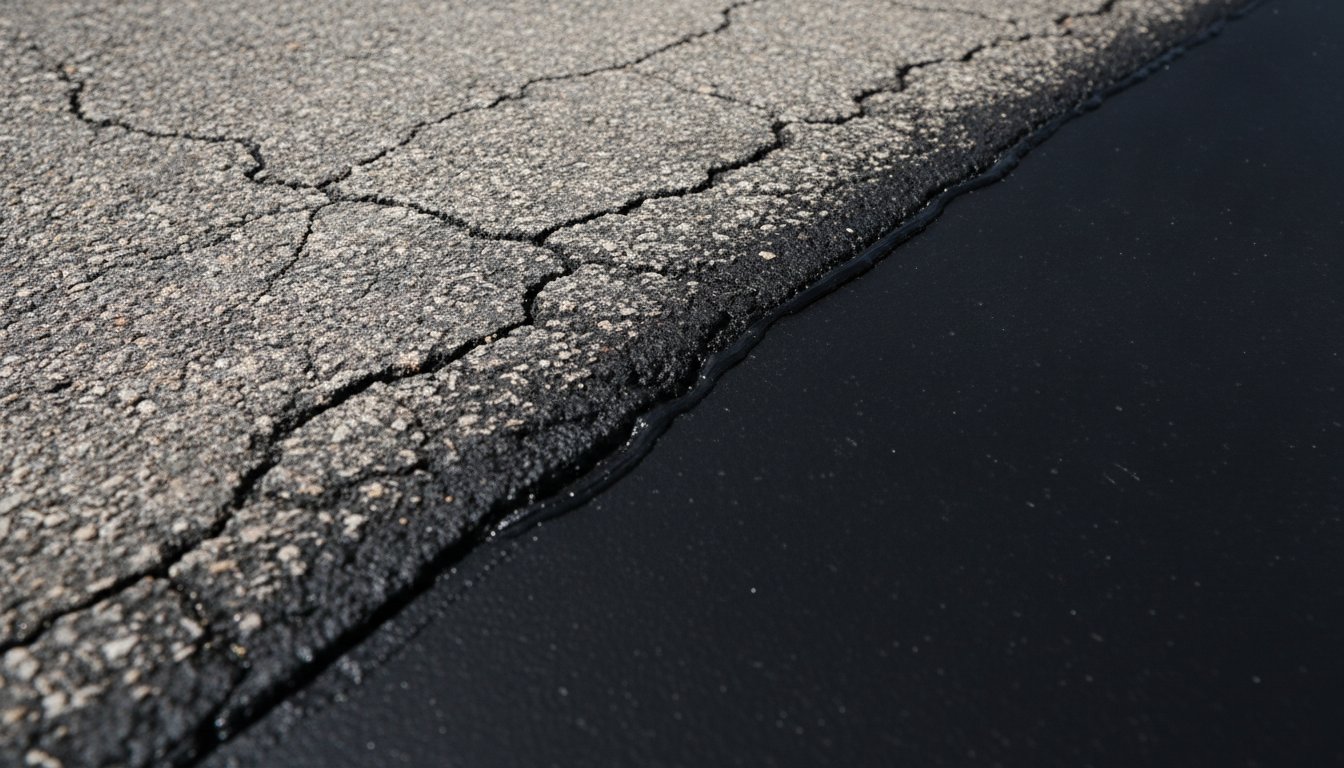
A successful commercial asphalt maintenance plan begins with data rather than guesswork. Before you can deploy a defense strategy, you must understand where your pavement's armor is thinning. A Pavement Condition Assessment (PCA) is a structured visual walkthrough that identifies specific distress signals before they evolve into structural failures. During this phase, we look for "alligator cracking," which are small, interconnected cracks that resemble reptile skin. These patterns are a red flag that the sub-base is failing. We also check for surface oxidation, easily identified by a gray, faded appearance that indicates the asphalt oils are drying out and becoming brittle.
Drainage evaluation is the next critical step. Standing water, often called "birdbaths," is the primary enemy of pavement longevity in the Midwest. If water cannot reach the catch basins, it will eventually saturate the sub-base, leading to soft spots and rapid degradation. For property managers adhering to rigorous industry standards, the Pavement Maintenance and Repair Manual provides a technical framework for identifying these specific distress types. Documenting high-stress areas, such as the approaches to dumpster pads and heavy-traffic entrance turn-ins, ensures your budget is allocated where the pavement works the hardest. Finalizing this assessment before the first November frost is essential to ensure your lot is "freeze-thaw" ready.
The Minnesota Inspection Checklist
Minnesota's climate requires a specialized eye during the inspection process. You should look for "heaving," which occurs when moisture in the soil freezes and pushes the asphalt upward. It's also vital to assess the integrity of any existing crack filler. If the material has pulled away from the edges of the crack after a harsh winter, it's no longer providing a watertight seal. If you're unsure how to interpret these signs, a professional site evaluation can help you distinguish between cosmetic wear and structural risk.
Documenting and Categorizing Distress
To make the data actionable for board meetings or stakeholder approvals, we recommend a simple "Good, Fair, Poor" rating system. This allows you to prioritize repairs based on safety and structural risk rather than just aesthetics.
- Good: Surface is black with minimal cracking; requires only preventative sealcoating.
- Fair: Visible oxidation and minor linear cracks; requires immediate crack filling to prevent sub-base damage.
- Poor: Deep alligator cracking or potholes; requires localized structural repair before maintenance can proceed.
Creating a photographic record of these categories helps justify maintenance costs and provides a baseline to measure the effectiveness of your 2026 strategy.
Phase 2: Selecting Treatments for Your Commercial Plan
Once the assessment is complete, the focus of your commercial asphalt maintenance plan shifts to tactical defense. This phase involves selecting specific treatments that address the vulnerabilities identified during your walkthrough. It's important to distinguish between preservation and reconstruction. While some lots may require a specialist's opinion to determine if they are "too far gone" for maintenance, most can be saved through a disciplined application of professional-grade materials. Avoiding the trap of "cheap" sealers is vital here; low-quality products often flake off within a single season, leaving your investment exposed to the elements.
The Critical Role of Crack Filling
Crack filling is the single most important task for preventing water from reaching the soil beneath your pavement. When water penetrates these gaps, it expands during Minnesota's relentless freeze-thaw cycles, effectively "heaving" the asphalt and destroying the sub-grade from the inside out. Hot-pour crack filling utilizes specialized equipment to bond a rubberized material to the asphalt walls, whereas cold-applied DIY products often lack the elasticity needed to survive thermal expansion. Any cracks larger than 1/4 inch require immediate professional attention to stop the cycle of decay before it leads to structural failure.
Commercial Sealcoating: More Than Just a Dark Surface
Sealcoating acts as a sacrificial barrier for your parking lot. It shields the surface against harsh UV rays and the corrosive effects of Minnesota road salt, which can eat away at the binder that holds the aggregate together. Beyond protection, sealcoating restores the flexible oils that prevent asphalt from becoming brittle and prone to cracking. For properties with heavy delivery traffic, we utilize industrial-grade additives to enhance the sealer's durability and skid resistance. Timing is everything for these applications. Because the material relies on evaporation to cure, sealcoating services minnesota are best performed during specific temperature windows, typically when the air and surface temperatures remain above 50 degrees for a full 24-hour period.
By focusing on these primary defensive layers, you ensure that your maintenance budget is spent on high-impact preservation rather than temporary cosmetic fixes. This disciplined approach is what separates a high-performing property from one plagued by constant, unplanned repair costs. Choosing high-quality materials today prevents the need for expensive, disruptive paving projects tomorrow.
Phase 3: The Multi-Year Scheduling Template
A commercial asphalt maintenance plan is most effective when it moves away from year-to-year guesswork and toward a structured, three-year cycle. This multi-year approach allows property managers to distribute costs evenly while ensuring the pavement never reaches a point of critical failure. By following a template, you can account for the inevitable wear caused by Minnesota's snowplows and heavy delivery traffic. The goal is to maintain a consistent baseline of protection so that you're never caught off guard by a massive, unplanned repair bill.
In Year 1, the focus is on establishing baseline protection. This typically involves major crack filling to seal the sub-base and a fresh application of industrial-grade sealcoat. Year 2 transitions into a routine monitoring phase. During this time, we perform "touch-up" crack sealing, specifically in high-traffic lanes where the weight of vehicles can cause new stress fractures. By Year 3, the lot undergoes a thorough cleaning and re-evaluation. We assess how the sealer has held up against winter salt and traffic friction to determine the exact timing for the next full sealcoat cycle. If you're ready to stop the cycle of reactive repairs, you can request a professional maintenance schedule tailored to your specific site needs.
Sample 3-Year Maintenance Calendar
To keep your property in peak condition, we recommend a seasonal cadence that aligns with our regional climate shifts. This ensures that maintenance happens during optimal weather windows.
- Spring: Conduct a post-winter assessment once the snow melts. Remove debris and salt buildup that can trap moisture against the asphalt surface.
- Summer: Execute major projects. This is the ideal window for crack filling and sealcoating because the warm, dry air allows for proper curing and bonding.
- Fall: Perform a final "winterization" inspection. Sealing any new cracks discovered in the fall prevents water from entering and freezing during the first frost.
Budgeting for Long-Term Success
One of the greatest benefits of a structured plan is the ability to create a "pavement reserve fund." For HOAs and commercial boards, this eliminates the need for unpopular special assessments. We recommend calculating your annual maintenance set-aside based on the total square footage and the age of your lot. Older lots or those with heavy freight traffic may require a slightly higher reserve to account for more frequent crack filling. Balancing your plan also means prioritizing high-visibility areas. Ensuring your main entrance and front-facing parking rows always look their best preserves the professional image of your property while the back-of-house areas focus primarily on structural stability.
Partnering with a Knowledgeable Local Specialist
Executing a commercial asphalt maintenance plan requires more than just the right equipment; it demands an intimate understanding of Minnesota’s unique geological and climatic challenges. Our local soil, often rich in clay or loam, reacts differently to moisture than the sandy soils found in other regions. When you combine these soil characteristics with the extreme frost heave common in the Twin Cities, it becomes clear why a one-size-fits-all approach to maintenance fails. A local specialist understands that a crack isn't just a surface flaw; it's a doorway for moisture to compromise the specific sub-base conditions of your property.
When selecting a contractor to manage your pavement stewardship, you should prioritize transparency and technical depth. A qualified partner must provide proof of comprehensive commercial insurance and a list of local references who can vouch for the durability of their work. Material quality is equally non-negotiable. You want a partner who uses industrial-grade sealants and hot-pour rubbers specifically formulated for high-traffic environments. Transitioning from a reactive owner to a proactive steward means choosing a contractor who values the long-term health of your lot over a quick, cosmetic fix.
The Seal Team LLC Difference in the Twin Cities
Our approach at Seal Team LLC is built on a foundation of professional authority and educational reassurance. We don't just perform a service; we help you understand the "why" behind every recommendation. We utilize high-quality sealants specifically designed to remain flexible during the extreme temperature swings of a Minnesota winter. This flexibility prevents the sealer from becoming brittle and cracking under the weight of heavy delivery trucks. We also recognize that your business can't stop for maintenance. Our team specializes in staged applications that minimize disruption, ensuring your tenants and customers always have access to your facility during the project.
Take the First Step Toward Pavement Preservation
The foundation of a successful 2026 strategy is a professional assessment of your current pavement condition. Whether you manage a retail center in Minneapolis or an industrial complex in Saint Paul, a detailed site walkthrough provides the data you need to build a predictable budget. This assessment identifies the immediate needs for crack filling and the optimal window for your next sealcoating application. It's the most effective way to eliminate financial uncertainty and protect your property’s ROI for years to come.
Ready to protect your investment? Contact Seal Team LLC for a commercial asphalt assessment today and begin the transition toward expert-led pavement stewardship.
Securing Your Property’s Future with Strategic Stewardship
Managing a commercial lot in the Twin Cities requires a shift in mindset from simple repairs to long-term preservation. You've seen how a structured commercial asphalt maintenance plan serves as a defensive shield against the relentless freeze-thaw cycles that define our region. By prioritizing expert crack filling and high-durability sealcoating, you don't just improve curb appeal; you actively extend the life of your pavement and eliminate budgeting uncertainty. This methodical approach protects your property’s ROI while providing a safe, professional environment for every visitor.
As specialists in Minnesota's harsh climate, we provide the technical expertise needed to restore and defend your asphalt through 2026 and beyond. Transitioning to a proactive schedule ensures that small surface issues never evolve into structural failures. Taking the first step today prevents the need for disruptive, expensive reconstruction in the future. We're proud to offer free estimates for Twin Cities property managers to help you identify exactly where your defenses need strengthening.
Request Your Free Commercial Asphalt Assessment to receive a detailed estimate and start building your foundation for pavement longevity. We look forward to helping you protect your investment with a strategy built to last.
Frequently Asked Questions
How often should a commercial parking lot be sealcoated in Minnesota?
Commercial lots in the Twin Cities typically require sealcoating every two to three years. This frequency accounts for the accelerated wear caused by heavy snowplow blades and the corrosive nature of road salt used throughout the winter. Regular applications are a cornerstone of a commercial asphalt maintenance plan, ensuring the surface remains flexible and protected against moisture and UV damage.
Can we perform asphalt maintenance while the business is open?
Yes, maintenance projects are frequently completed in phases to keep your business accessible to tenants and customers. We can divide your parking lot into sections, allowing one area to cure while traffic is diverted to another. This phased approach minimizes disruption and ensures your daily operations continue while the pavement receives necessary protection.
What is the difference between crack filling and crack sealing for commercial lots?
Crack filling involves placing material into non-moving cracks to prevent water infiltration, while crack sealing uses specialized rubberized materials for "working" cracks that expand and contract with the temperature. Both methods are vital for pavement preservation. Filling these gaps early stops the cycle of sub-base erosion before it leads to structural failure or expensive potholes.
How long does a commercial sealcoating application need to cure before traffic can return?
Most commercial applications require 24 to 48 hours of curing time before vehicles can safely return to the surface. The exact timing depends on Minnesota's humidity and air temperature during the application process. Pedestrian traffic can often return much sooner, but heavy vehicle traffic must wait until the sealer has fully bonded to prevent tracking or scuffing.
Will sealcoating fix existing potholes in my parking lot?
Sealcoating is a preventative treatment and will not repair existing potholes. Potholes indicate a structural failure in the sub-base that requires patching before a protective sealer can be applied. Think of sealcoating as a defensive shield; it preserves healthy asphalt by blocking moisture, but it cannot restore pavement that has already reached the point of structural collapse.
What happens if we ignore cracks in the asphalt over the winter?
Ignoring cracks before winter allows water to penetrate the sub-base, where it freezes and expands. This expansion, known as frost heave, pushes the asphalt upward and creates larger cracks or potholes by spring. A proactive commercial asphalt maintenance plan identifies these gaps in the fall to prevent the destructive freeze-thaw cycle from ruining your investment.
Is a commercial asphalt maintenance plan tax-deductible?
Maintenance expenses like sealcoating and crack filling are generally treated as tax-deductible operating costs for commercial properties. Unlike a full repaving project, which is often a capitalized improvement depreciated over many years, routine maintenance can often be deducted in the year the work is performed. You should consult with a qualified tax professional to confirm how these rules apply to your property.
How does road salt affect the lifespan of my commercial sealcoat?
Road salt is highly corrosive and can break down the binders that hold your asphalt aggregate together. Sealcoating provides a sacrificial barrier that prevents salt and chemical de-icers from directly reaching the asphalt surface. Without this protective layer, salt accelerates oxidation and makes the pavement more brittle, leading to premature cracking and surface raveling.