Your driveway isn't just a place to park; it's a significant investment that the Minnesota climate tries to dismantle every single year. Most people believe heavy snow is the primary culprit for driveway damage, but winter doesn't actually create new cracks. It simply exploits the small moisture-entry points that weren't addressed before the first frost. With the 2025-2026 winter proving to be more severe than the last few years, the risk of rapid deterioration is higher than usual.
It's frustrating to watch a minor hairline fracture grow into a deep, tire-jarring pothole while you're stuck waiting for the spring thaw. You shouldn't have to fear an expensive full replacement just because of a few seasonal temperature swings. This guide focuses on preventing asphalt cracks from worsening in winter by shielding your pavement from the relentless freeze-thaw cycle. You'll learn how to identify which cracks pose the greatest risk, how to plow or salt safely to avoid surface damage, and exactly how to winterize your property to stop minor issues from becoming major repair bills.
Key Takeaways
- Understand how the Minnesota freeze-thaw cycle expands trapped moisture to turn small hairline fractures into expensive structural failures.
- Learn a simple triage method for preventing asphalt cracks from worsening in winter by identifying high-risk damage like alligator cracking before the first snowfall.
- Discover the specific "Temperature Window" requirements for sealcoating and why crack filling offers more flexibility for late-season repairs.
- Identify safe plowing and salt management techniques to avoid the "Snowmelt Trap" that accelerates pavement decay during mid-winter thaws.
- Establish a proactive stewardship plan using industrial-grade materials to shield your property investment from the unique environmental stressors of the Twin Cities.
Understanding the Minnesota Freeze-Thaw Cycle and Your Asphalt
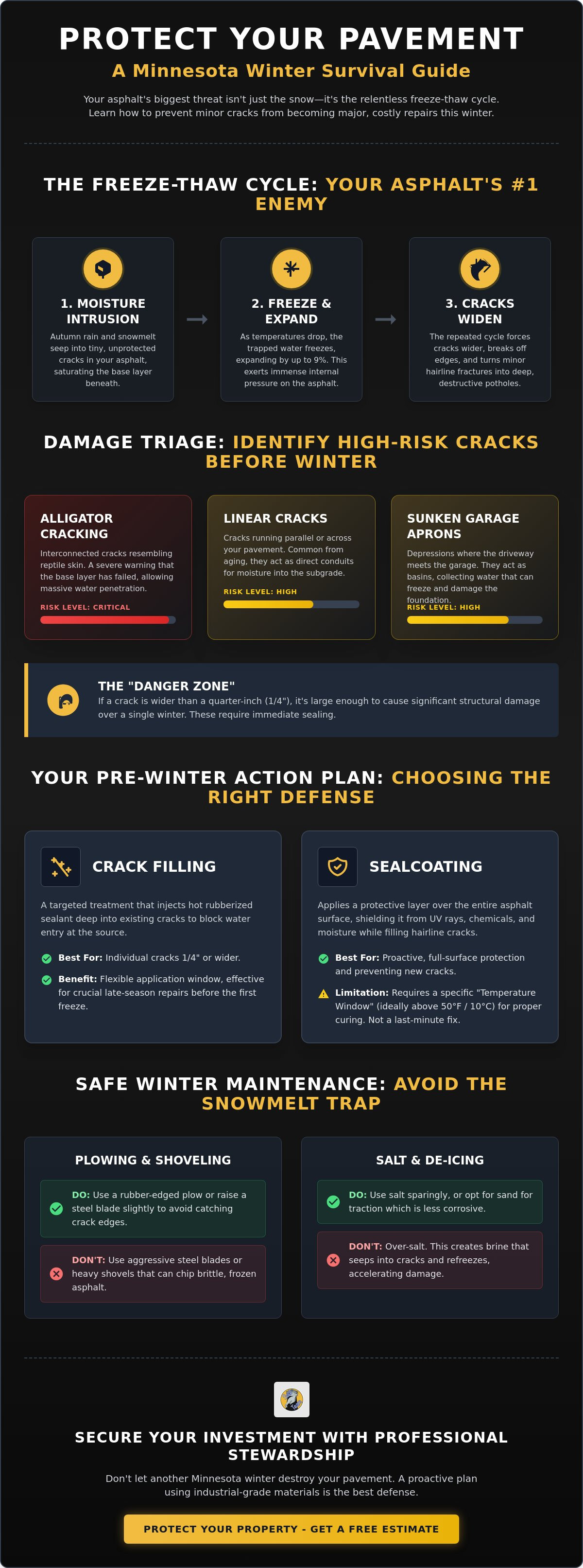
Minnesota winters are notoriously difficult on pavement, not just because of the extreme cold, but because of the constant temperature fluctuations. The freeze-thaw cycle is a repetitive process where moisture trapped within or beneath the asphalt melts during the day and refreezes at night. When water transitions from liquid to ice, it expands by approximately 9% in volume. This expansion exerts immense internal pressure on the walls of even the smallest hairline fractures. To gain a scientific perspective on this mechanical stress, Understanding the Minnesota Freeze-Thaw Cycle helps explain why water is such a destructive force for local property owners. Because the Twin Cities sit at a geographic crossroads of Arctic air and southern moisture, our region experiences significantly more of these damaging cycles per season than more stable climates in the northern or southern U.S.
The most severe damage often occurs through a process known as heaving. When moisture saturates the subgrade, or the soil foundation beneath your driveway, and then freezes, the resulting ice lenses push the asphalt upward. This displacement creates uneven surfaces and forces existing cracks to widen significantly. For homeowners focused on preventing asphalt cracks from worsening in winter, recognizing that the battle begins beneath the surface is essential. Without a proper seal, your driveway acts like a sponge, soaking up every mid-winter melt only to be torn apart when the sun goes down and the thermometer drops.
The Role of Moisture Intrusion
Standing water is the primary precursor to winter pavement failure. Autumn rains often "prime" a driveway by filling small voids and saturating the base layer just before the ground locks up for the season. If your driveway has poor drainage or low spots where puddles linger, that water is constantly looking for a way into the subgrade. This moisture intrusion weakens the bond between the asphalt and the earth, making the entire structure vulnerable to the weight of vehicles and the pressure of expanding ice.
Why Asphalt Becomes Brittle in Sub-Zero Temps
Asphalt is designed to be flexible, but that flexibility depends on the bitumen, the black, tar-like binder that holds the stones together. In sub-zero temperatures, this binder loses its elastic properties and becomes brittle. Brittle asphalt cannot "give" when ground pressure shifts, leading to thermal cracking. This state also makes the surface highly susceptible to physical damage from snowplows and heavy shovels. While surface-level cracks are a cosmetic concern, they quickly lead to structural failure if the brittle edges are allowed to chip away, exposing the vulnerable core of your pavement to the elements.
Categorizing Asphalt Damage: Which Cracks Will Fail First?
Performing a "triage" walk-through of your pavement before the first snowfall is the most effective way of preventing asphalt cracks from worsening in winter. Not all damage is equal; some issues are cosmetic, while others signal an impending structural collapse. By identifying these patterns early, you can prioritize maintenance that protects your subgrade from the destructive power of ice. Because Minnesota's weather is so unpredictable, knowing which cracks are high-priority allows you to allocate your maintenance budget where it matters most.
Look for these common indicators of distress during your inspection:
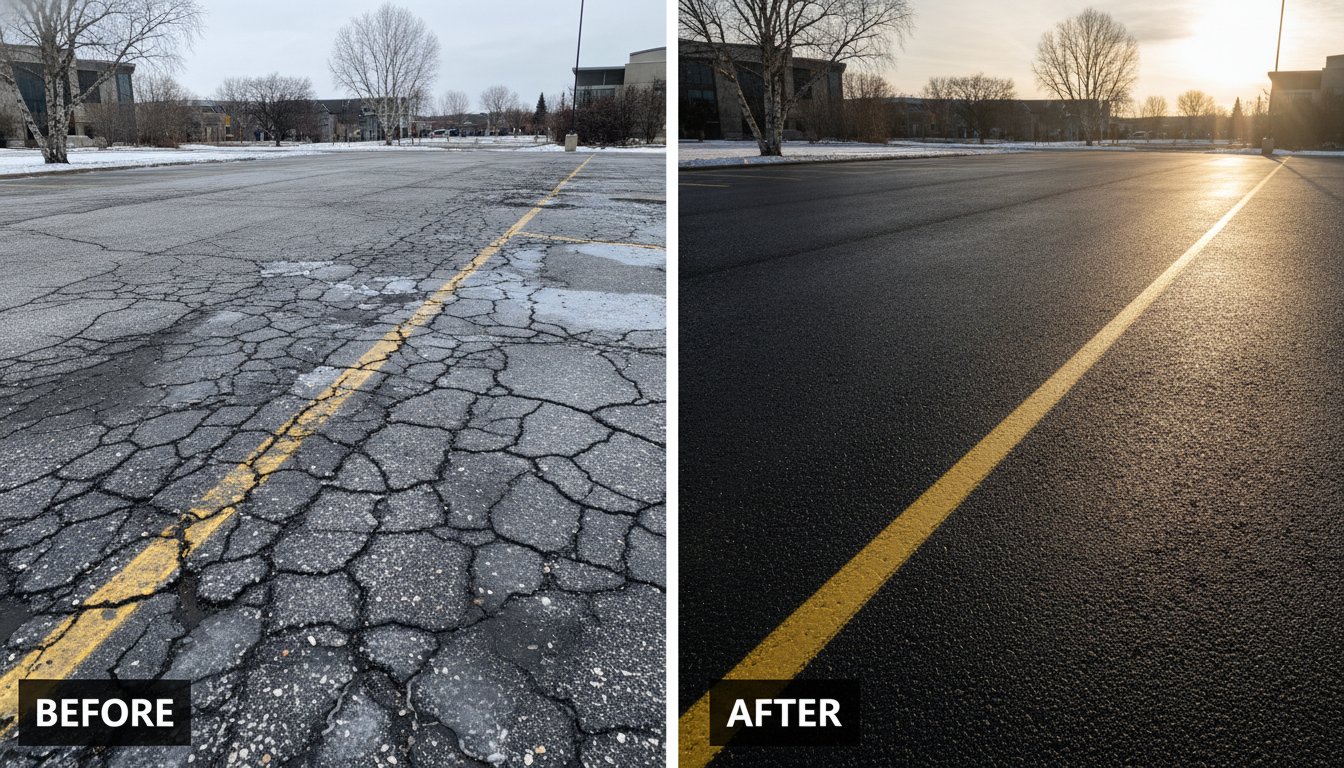
- Alligator Cracking: These interconnected cracks resemble the scales of a reptile. This is a severe warning sign that the base layer beneath the asphalt has failed. Because these cracks allow massive amounts of water to penetrate the subgrade, they are the most likely to turn into large potholes by February.
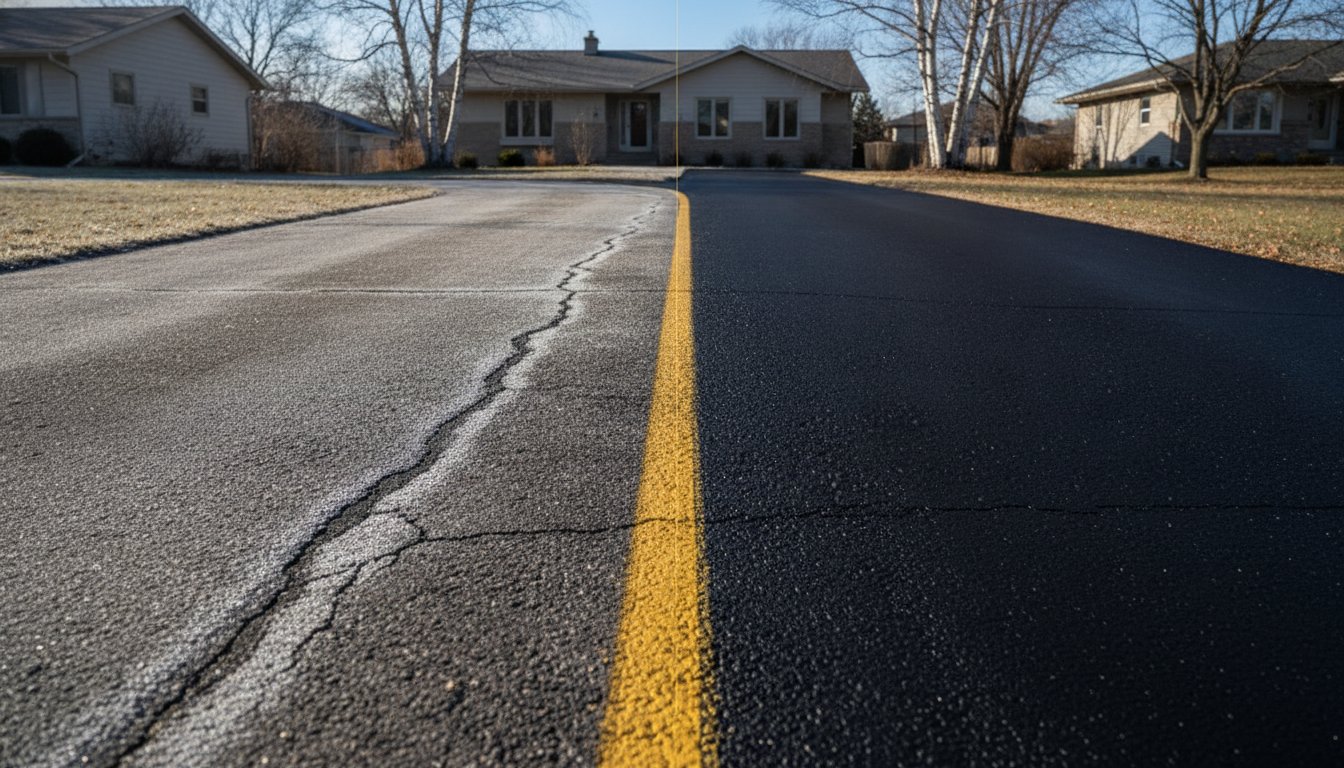
- Longitudinal and Transverse Cracks: Longitudinal cracks run parallel to the direction of the pavement, while transverse cracks run across it. These usually signal the natural aging of the bitumen or shrinkage from temperature shifts. While common, they act as direct conduits for moisture.
- Sunken Garage Aprons: The area where your driveway meets the concrete garage floor often settles over time. These depressions act as catch-basins for snowmelt, holding water in a concentrated area where it can seep into the foundation and freeze.
The "Danger Zone": Cracks Wider Than a Quarter Inch
If a crack is wide enough to fit a standard quarter, it has entered the "danger zone." These openings are large enough to allow significant volumes of water to reach the soil foundation. When this water freezes, the resulting expansion can heave the pavement several inches, leading to permanent deformation. Once the subgrade is compromised, the weight of a vehicle can cause the asphalt to collapse into the void, creating a hazard that is much more expensive to fix than a simple crack. Leaving these open to snowmelt almost guarantees subgrade erosion, which is why professional crack filling is the best defense against escalating repair costs.
Hairline Fractures: The Silent Winter Threat
Small cracks are often ignored because they don't look threatening, but they are the primary entry point for the moisture that "primes" the driveway for failure. The goal is to "seal the envelope," ensuring the entire surface remains waterproof. Utilizing driveway crack filling near me prevents these tiny openings from expanding into the major fractures discussed above. By prioritizing these triage steps, you take a proactive stance in preventing asphalt cracks from worsening in winter before the ground freezes solid.
The Pre-Winter Checklist: Crack Filling vs. Sealcoating
Understanding the difference between crack filling and sealcoating is vital for any property owner focused on preventing asphalt cracks from worsening in winter. While these two services are often mentioned together, they serve distinct roles in your pavement’s defense system. Crack filling is a structural repair designed to stop water from reaching the subgrade; sealcoating is a surface treatment that protects the asphalt "skin" from environmental wear. Using both in tandem creates a comprehensive shield, but the timing for each depends heavily on the fluctuating Minnesota thermometer.
One of the most common myths in the Twin Cities is that asphalt repairs can always wait until the spring thaw. In reality, waiting for spring is a gamble with your budget. By the time the ground warms up, the repeated expansion of ice has already turned minor fractures into deep structural failures. However, there is a strict "Temperature Window" to consider. Sealcoating requires ambient temperatures of 50°F and rising to cure properly. Because sealcoat is a water-based emulsion, it cannot be applied if there's a risk of freezing before it dries. Crack filling, specifically using professional hot-pour methods, offers more flexibility; because the material is heated to over 300°F, it can often be applied later into the autumn as long as the cracks are completely dry.
Why Crack Filling is Your Top Priority
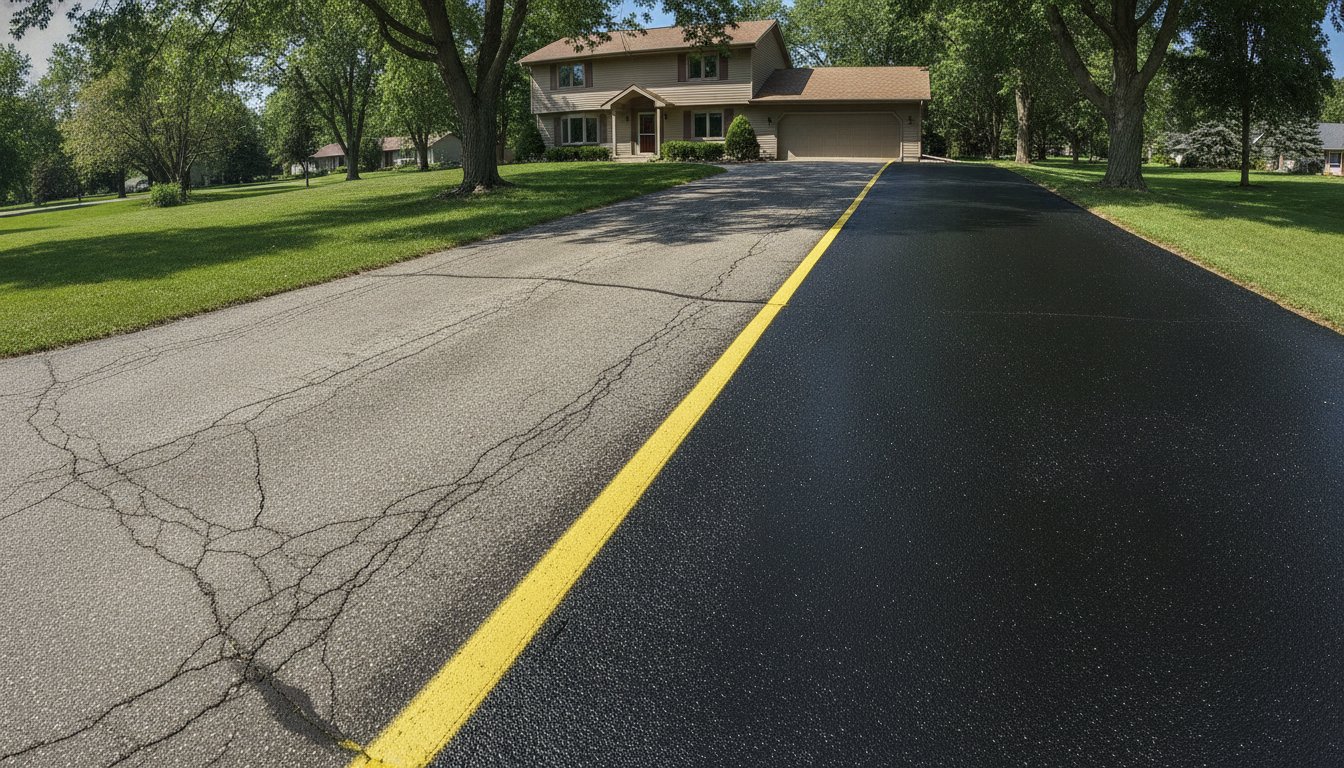
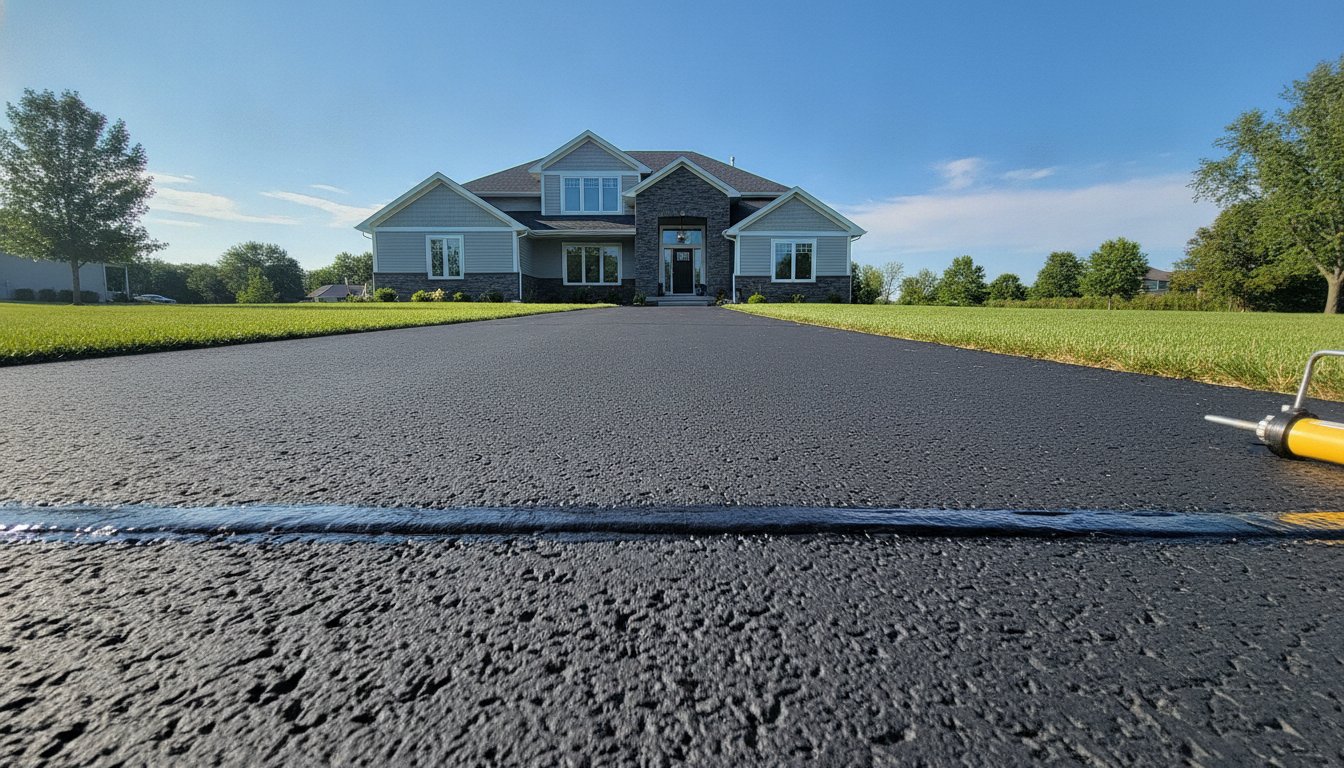
If you only have the budget or the weather window for one service, crack filling should be the priority. The technical goal is to create a watertight bond with the pavement sidewalls. We utilize industrial-grade, hot-pour rubberized fillers that remain flexible even in sub-zero temperatures. This flexibility is crucial; it allows the filler to stretch and contract along with the asphalt during extreme temperature swings without pulling away from the edges. This is the single most cost-effective way to prevent potholes because it keeps the foundation dry and stable throughout the winter months. Unlike DIY cold-patch products that often pop out during the first heavy plowing, hot-pour filler creates a permanent thermal bond with the existing pavement.
Sealcoating as a Winter Shield
Think of sealcoating as a high-performance raincoat for your driveway. A fresh coat of sealer causes snowmelt and autumn rains to bead and roll off the surface rather than soaking into the porous asphalt. This prevents the "saturation" stage of the freeze-thaw cycle. Additionally, sealcoat provides a vital layer of protection against UV rays. Even in winter, the sun can dry out the bitumen binder, making the surface brittle and prone to "thermal cracking." For a deeper look at how to time these applications for maximum durability, you can refer to our Sealcoating Services in Minnesota guide. By securing your pavement with these two methods, you ensure your investment remains intact through the harshest months of the year.
Safe Winter Maintenance: Snow Removal and Salt Management
Once the snow begins to fall in the Twin Cities, your strategy for preventing asphalt cracks from worsening in winter shifts from preparation to active preservation. If your driveway already has visible fractures, winter maintenance becomes a delicate balancing act. The most significant threat during these months is the "Snowmelt Trap." While a layer of snow might seem harmless, solar radiation or slight temperature increases cause the bottom layer of that snow to melt. This liquid water runs directly into open cracks. When the sun goes down and the temperature drops, that water refreezes and expands, widening the crack from the inside out. Leaving snow to sit on compromised areas actually increases the number of freeze-thaw cycles your pavement endures.
Plowing and Shoveling Best Practices
Mechanical damage from snow removal is a common cause of accelerated pavement decay. When asphalt is brittle from sub-zero temperatures, the edges of existing cracks are easily chipped or "plucked" by heavy metal blades. If you use a plowing service, ensure they adjust their plow shoes to keep the blade slightly off the surface. For residential owners, plastic shovels or shovels with rubber-edged blades are much safer than metal versions. You should also be mindful of where you pile your snow. Never stack large snowbanks on known low spots or heavily cracked areas, as the concentrated weight and constant melting will saturate the subgrade and lead to spring potholes. If you notice your driveway is struggling under the weight of the season, it’s time to consult with the experts at Seal Team LLC for a professional assessment.
The Truth About Road Salt and Ice Melt
Choosing the right de-icing agent is critical for the long-term health of your asphalt. Traditional rock salt, or sodium chloride, is the most common choice, but it can be the most damaging to cracked surfaces. It works by lowering the freezing point of water, which sounds helpful, but it actually forces the pavement through more frequent freeze-thaw cycles than natural weather would. This constant internal pressure can quickly turn a hairline fracture into a major structural gap.
Calcium chloride is generally a safer alternative for asphalt because it works at much lower temperatures and is less chemically aggressive. Regardless of the product you choose, you should always sweep up excess salt once the ice has melted. Salt is hygroscopic, meaning it draws moisture toward it; if left on the surface, it can "chemically dry" the asphalt, making the binder even more brittle and susceptible to further cracking. Diligent salt management is a key part of a successful stewardship plan for any Minnesota property owner.
Securing Your Investment with Professional Asphalt Stewardship
Viewing your driveway or parking lot as a static surface is a common mistake that often leads to premature failure. Instead, it's helpful to view pavement care as a form of long-term property stewardship. By taking a proactive stance on preventing asphalt cracks from worsening in winter, you aren't just avoiding an eyesore; you're protecting the structural integrity of your entire property foundation. The return on investment for regular maintenance is significant. While a full repaving project can cost thousands of dollars, consistent crack filling and sealcoating extend the life of your pavement by years, keeping your long-term costs predictable and manageable.
Seal Team LLC utilizes industrial-grade materials specifically engineered to withstand the unique environmental stressors of the Twin Cities metro. We don't believe in "one-size-fits-all" solutions. Our materials are selected for their durability and their ability to remain flexible during the brutal freeze-thaw cycles we discussed in previous sections. Because asphalt is one of the most recycled materials in the U.S., with reuse rates around 80%, maintaining your existing surface is also a responsible, sustainable choice for our local environment.
Why Local Expertise Matters in the Twin Cities
The soil conditions in Minneapolis and Saint Paul vary wildly, from heavy clay to sandy loam. These different bases react uniquely to frost heaving and moisture retention. A knowledgeable local specialist understands these nuances and applies the right techniques to ensure a lasting bond between the filler and the pavement. For business owners, the stakes are even higher. We structure commercial asphalt maintenance plans that account for high traffic volume and the weight of heavy snow removal equipment. This professional oversight provides the peace of mind that your lot will remain safe and accessible for customers, even during a moderate Minnesota winter.
Getting a Head Start on Spring
Even in the middle of January, you can take steps to protect your investment. We recommend performing a mid-winter inspection during a brief thaw. Use your phone to document any new cracks or areas where the asphalt seems to be sinking or "heaving" near the garage apron. This documentation is invaluable when the ground finally thaws, allowing you to secure priority scheduling before the spring rush begins. By identifying these issues early, you ensure that preventing asphalt cracks from worsening in winter remains a manageable task rather than an emergency repair. Taking the time to plan now prevents minor fractures from expanding into major liabilities. Contact Seal Team LLC for a free winterization estimate today.
Protecting Your Pavement Investment for the Long Term
Minnesota's winters are unforgiving; however, your driveway doesn't have to be a casualty of the season. By understanding how the freeze-thaw cycle works and identifying high-risk damage early, you can take control of your property's longevity. Proactive stewardship is always more affordable than a total replacement. The key to preventing asphalt cracks from worsening in winter lies in creating a watertight seal before the subgrade is compromised. Utilizing professional-grade rubberized hot-pour fillers ensures that your repairs remain flexible during sub-zero temperature swings. When you combine these structural repairs with careful snow removal and smart salt management, you build a multi-layered defense against the elements.
We specialize in Minnesota freeze-thaw protection for both residential and commercial properties. Our team provides the expertise needed to navigate these seasonal maintenance requirements with confidence. Don't wait for the spring thaw to address today's minor issues. Protect your pavement and get a free crack filling estimate from Seal Team LLC today! We offer free estimates for Twin Cities homeowners and businesses to help you build a durable, worry-free property plan.
Frequently Asked Questions
Can I fill asphalt cracks in the middle of a Minnesota winter?
Professional crack filling typically requires a dry, ice-free surface to ensure a proper thermal bond. While hot-pour rubberized filler is applied at high temperatures, attempting to fill cracks in the middle of a snowy Minnesota winter is usually ineffective because moisture trapped in the crack prevents the material from adhering to the sidewalls. It's best to complete these repairs during the dry days of autumn before the ground freezes.
Is it too late to sealcoat my driveway if the temperature has dropped below 50 degrees?
Yes, it's too late for sealcoating once temperatures consistently drop below 50°F. Sealcoating is a water-based emulsion that needs warmth and sunlight to evaporate the moisture and harden correctly. If the material freezes before it fully cures, the bond will fail, and the sealant will likely flake off or wash away during the first significant snowmelt of the season.
Does road salt actually damage the asphalt itself, or just the cracks?
Road salt is a dual threat to your pavement. While it doesn't "eat" the asphalt like it does metal, it lowers the freezing point of water, which artificially increases the number of freeze-thaw cycles. This puts more internal pressure on cracks. Additionally, rock salt can draw moisture out of the bitumen binder, making the surface more brittle and prone to further cracking over time.
What happens if I ignore small cracks until the spring?
Ignoring small cracks often leads to a complete structural failure by spring. Even a hairline fracture allows moisture to reach the subgrade foundation. Once that water freezes and expands, it displaces the soil and pushes the asphalt upward. This process turns affordable maintenance into an expensive repair bill for potholes or foundation stabilization once the ground finally thaws.
How much does it cost to have a professional fill driveway cracks before winter?
The cost for professional crack filling depends on several variables, including the total linear footage of the cracks, the depth of the gaps, and the specific type of rubberized material required. Most professionals provide a custom estimate based on a site inspection. Investing in these repairs early is a key part of preventing asphalt cracks from worsening in winter and avoiding the much higher cost of full driveway replacement.
Should I use a DIY cold-patch for cracks I find in December?
DIY cold-patch products are generally not recommended for winter repairs in the Twin Cities. These materials rely on solvent evaporation to harden, which happens very slowly in cold weather. Because the patch remains soft, it's easily dislodged by snowplows or heavy vehicle traffic. Professional hot-pour filler is the only way to achieve a permanent, flexible bond that survives the freeze-thaw cycle.
How can I tell if a crack is just on the surface or if it goes all the way through?
You can often determine the severity of a crack by its width and the presence of debris. If a crack is wider than a quarter inch or if you see dirt and grass growing from it, the fracture likely extends through the full depth of the asphalt to the subgrade. Surface-level check cracks are usually very fine and don't show signs of displacement or base exposure.
What is the best way to remove ice from a cracked driveway without making it worse?
The safest way to manage ice on compromised asphalt is to use a plastic shovel and a de-icing agent like calcium chloride. Avoid using heavy metal ice chippers or metal-edged shovels, as these can easily catch on the edges of cracks and pull up chunks of brittle pavement. Sweeping up excess melting agent after the ice has cleared also helps preserve the asphalt binder from chemical drying.