Did you know that a single Minnesota winter can exert enough pressure to expand a hairline fracture into a tire-popping pothole by spring? It's a common frustration for local homeowners who watch their smooth asphalt succumb to the relentless freeze-thaw cycle every year. You likely feel that familiar sense of dread as water seeps into small openings, threatening the very foundation of your driveway. Effective driveway crack prevention isn't just about aesthetics; it's a necessary form of stewardship for one of your property's most visible investments.
We understand that the confusion between hardware store DIY sealers and professional-grade services can be overwhelming. This guide provides the professional strategies you need to stop cracks before they start, specifically tailored for the extreme climate we face here in the North. You'll learn the science of asphalt preservation and why proactive care is the only way to avoid the significant repair bills that often follow a harsh winter. We will walk through the essential maintenance steps, from identifying early warning signs to timing your service for maximum durability during the May to October paving season.
Key Takeaways
- Understand the mechanics of the 9% water expansion cycle and how it generates the internal pressure that causes asphalt to fail.
- Implement a strategic plan for driveway crack prevention by focusing on aggressive water runoff management and perimeter vegetation control.
- Discover how sealcoating provides a protective defense against UV oxidation and creates a waterproof barrier for long-term durability.
- Learn the importance of a seasonal care schedule, including critical spring assessments and the removal of harmful chemical spills in the summer.
- Recognize the value of professional crack filling using hot-applied rubberized materials that remain flexible throughout Minnesota's temperature extremes.
Understanding the Mechanics of Driveway Deterioration in Minnesota
To master driveway crack prevention, you must first understand that asphalt is not a solid, impenetrable block. It is a flexible, porous composite. Understanding What is Asphalt Concrete? helps clarify why it is so susceptible to our local environment. Because asphalt is naturally porous, it contains microscopic voids that allow moisture to settle beneath the surface. In a temperate climate, this might not be an issue. In Minnesota, it is the beginning of a destructive cycle.
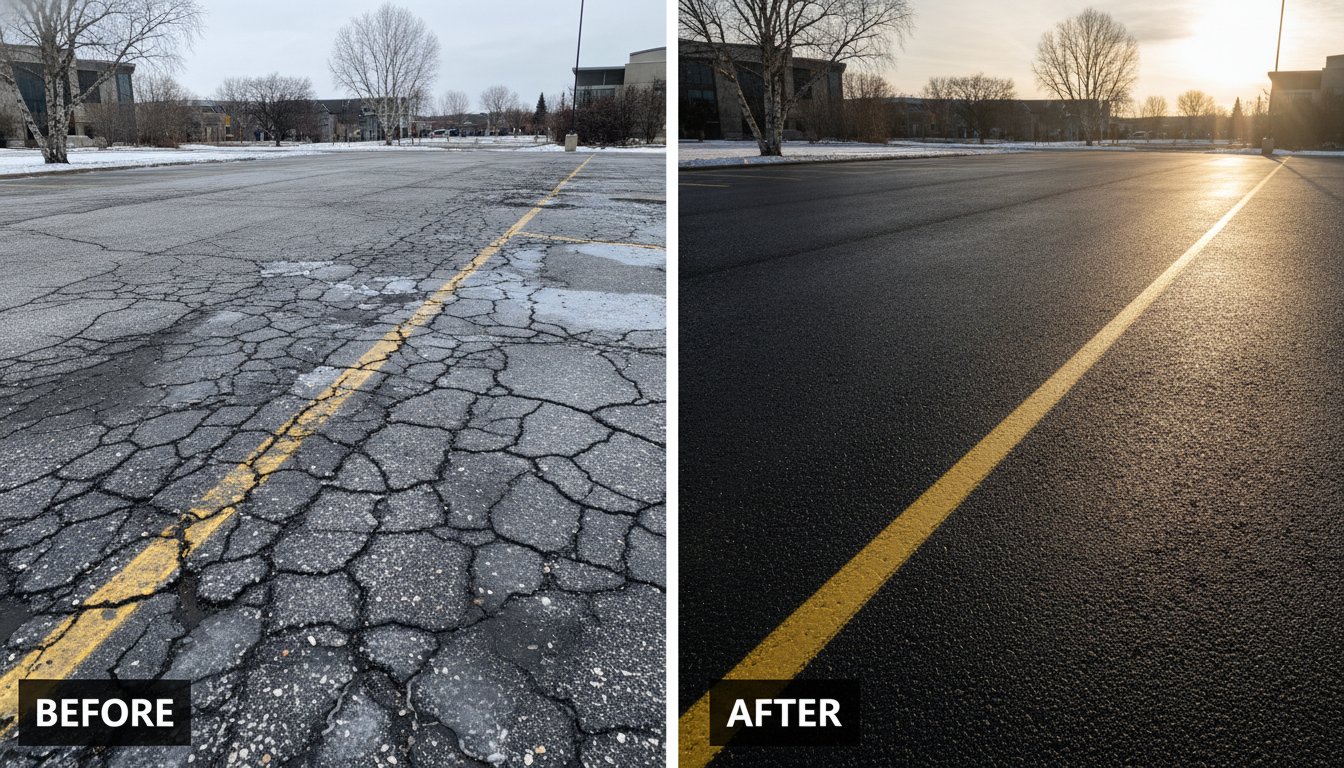
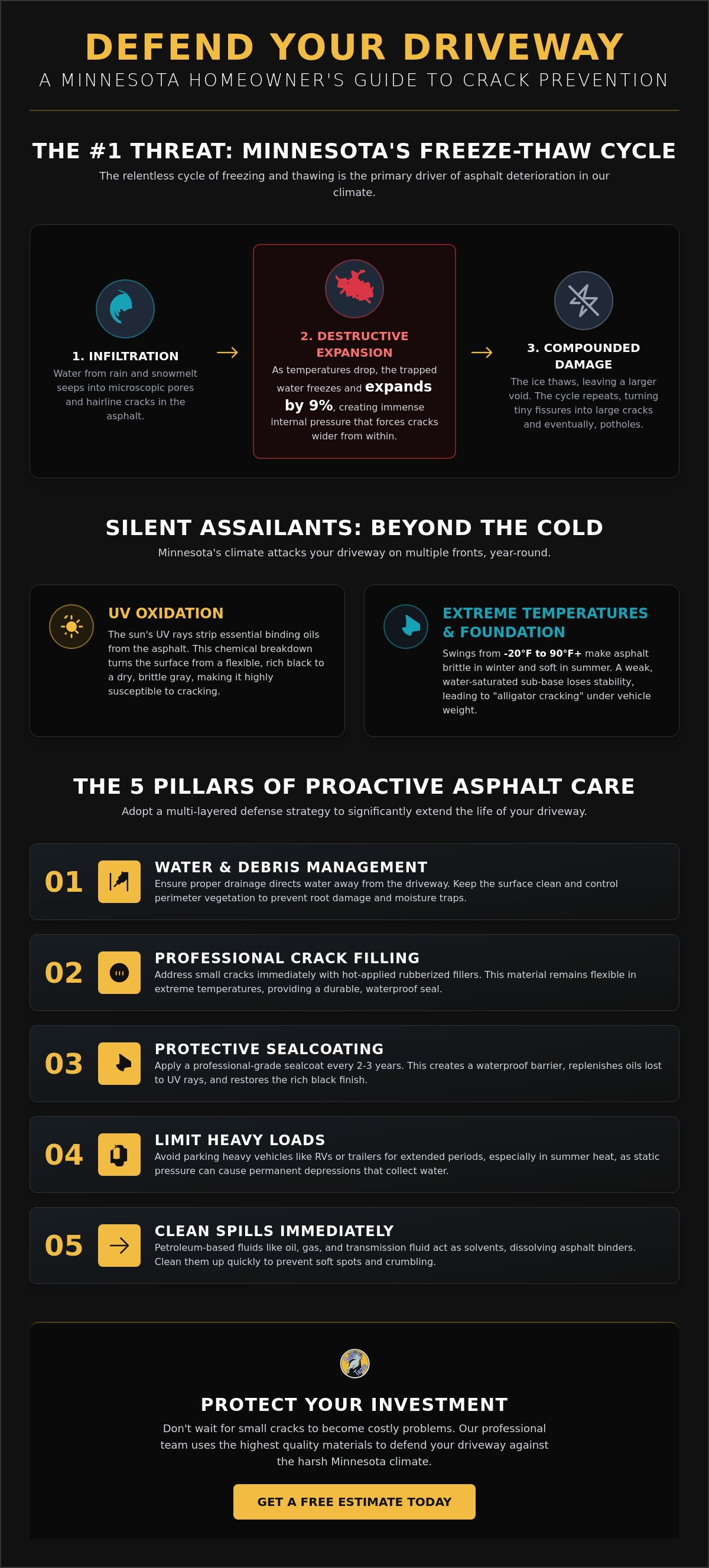
The primary driver of damage in our region is the freeze-thaw cycle. When water enters those small voids and the temperature drops, that water freezes and expands by approximately 9%. This expansion creates immense internal pressure, pushing against the aggregate from the inside out. When the ice thaws, it leaves behind a slightly larger void, which then fills with even more water during the next melt. Over a single winter, this process repeats hundreds of times. This constant internal stress eventually exceeds the material's tensile strength, resulting in the surface fissures you see in the spring. These small cracks are the early warning system for your driveway. If they aren't addressed, they provide a direct path for water to reach the foundation.
Minnesota’s extreme temperature swings add another layer of stress. Our asphalt must remain resilient while facing temperatures ranging from -20°F in the deep winter to 90°F in the peak of summer. At sub-zero temperatures, asphalt becomes brittle and loses its ability to flex. When the ground shifts under these conditions, the pavement simply snaps. Conversely, high summer heat can soften the binder, making the surface vulnerable to scuffing and indentation. This constant fluctuation between extremes accelerates the aging process of any unprotected driveway.
The Role of Sub-Base Stability
A driveway is only as strong as the ground beneath it. If the soil sub-base becomes saturated with water, it loses its load-bearing capacity. This leads to shifting and sinking when vehicles drive over the surface. You can often identify sub-base failure by "alligator cracking" patterns, which look like the scales of a reptile. This specific type of damage usually indicates poor initial compaction or a foundation that has been compromised by moisture. Maintaining a solid, dry foundation is the most critical line of defense in long-term crack prevention.
UV Rays and Oxidation: The Silent Killers
While water causes the most dramatic damage, the sun is a constant threat. UV rays strip the essential binding oils from the asphalt, which are responsible for keeping the pavement flexible and waterproof. You can see this happening as your driveway transitions from a rich, deep black to a dull, oxidized gray. Asphalt oxidation is the chemical breakdown of petroleum binders due to solar radiation. Once these binders are gone, the asphalt becomes dry and brittle, making it far more likely to crack under the pressure of a freeze-thaw cycle or heavy vehicle loads.
The 5 Pillars of Proactive Driveway Crack Prevention
Effective driveway crack prevention requires a multi-layered defense strategy. It isn't enough to just fix problems as they appear. You must address the environmental and mechanical stressors that create them in the first place. By adopting a mindset of stewardship, you can significantly extend the life of your asphalt. This proactive approach involves five core pillars designed to keep the structure sound and the surface resilient against the elements.
One critical pillar is establishing a strict cleaning protocol. Petroleum-based fluids, such as motor oil or gasoline, act as solvents on asphalt. They dissolve the binders that hold the aggregate together, leading to soft spots that eventually crumble into potholes. Additionally, managing weight loads is essential. Asphalt is flexible, but static pressure from heavy vehicles like RVs or trailers can cause depressions. These low spots eventually collect water, which leads back to the destructive freeze-thaw cycle. Finally, applying a professional sealcoat every two to three years remains the most effective way to replenish the oils lost to UV exposure. This maintenance is supported by extensive research on crack sealing and filling, which emphasizes that preventative treatments are far more cost-effective than major structural repairs.
Water Runoff and Drainage Optimization
Water is the primary catalyst for asphalt failure. After a typical Saint Paul rainstorm, you should inspect your driveway for "birdbaths," which are shallow depressions where water pools. If water stands for more than 24 hours, it begins to seep into the pores. You can mitigate this by installing French drains or swales to divert water away from the pavement. It's also vital to ensure that your home's gutter downspouts extend at least five feet away from the driveway edge to prevent the sub-base from becoming saturated and unstable.
Edge Defense and Vegetation Control
The edges are the most vulnerable parts of your driveway. When grass or weeds grow over the asphalt, they act as a natural dam that traps moisture against the side of the slab. This leads to "edge cracking," where the perimeter begins to break away. Professional edging creates a clean channel that allows water to shed off the sides efficiently. You must also monitor nearby trees. Large roots can exert immense upward pressure, eventually snapping the asphalt slab from below. While many of these tasks are manageable for homeowners, professional seal coating provides the industrial-strength barrier needed to stop moisture from entering the surface in the first place.
Why Surface Sealing is the Foundation of Asphalt Longevity
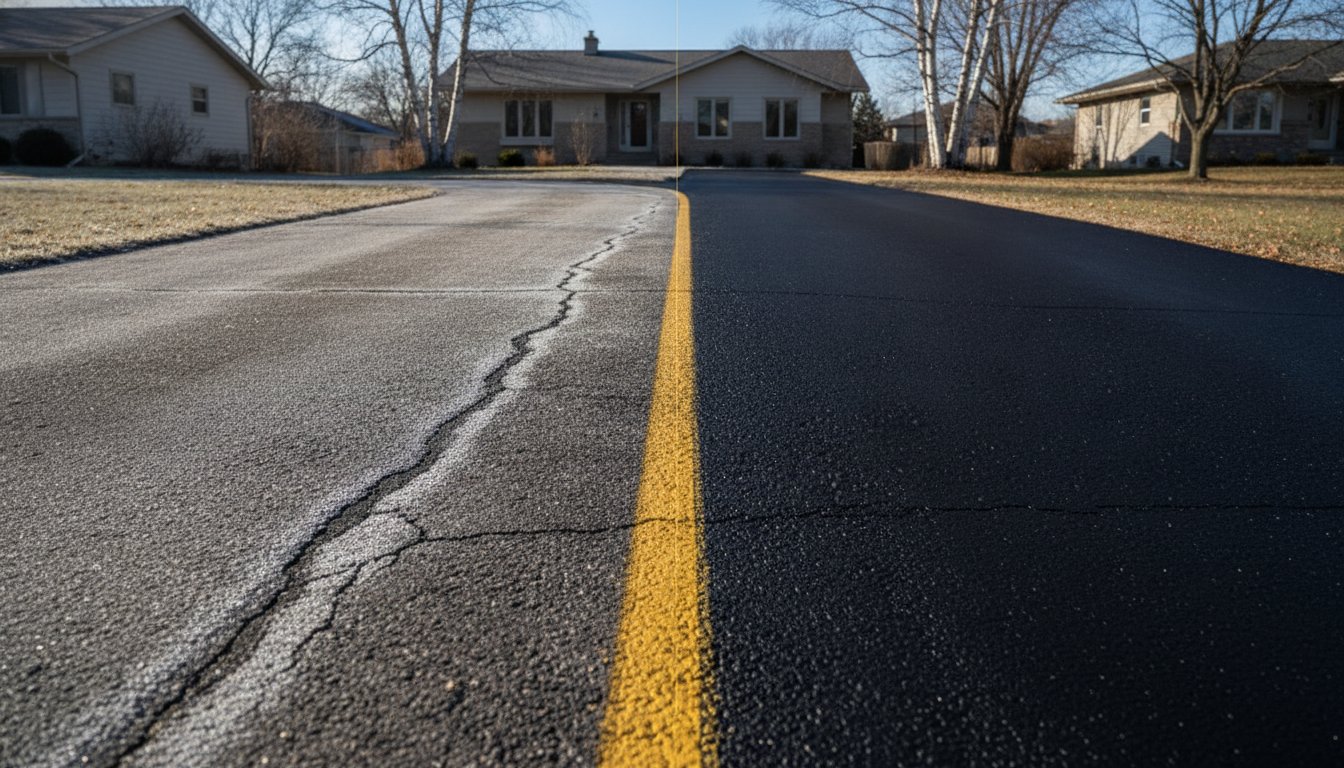
Surface sealing acts as a sacrificial layer for your asphalt. It takes the brunt of environmental damage so your structural pavement doesn't have to. While we've previously discussed how moisture and sun degrade the material, professional sealcoating is the primary tool for driveway crack prevention. It works by filling the surface voids, creating an impermeable barrier. This membrane prevents water from entering the pores, effectively neutralizing the 9% expansion cycle that occurs during our brutal freeze-thaw months. Without this shield, your driveway remains an open sponge for every rainstorm and snowmelt.
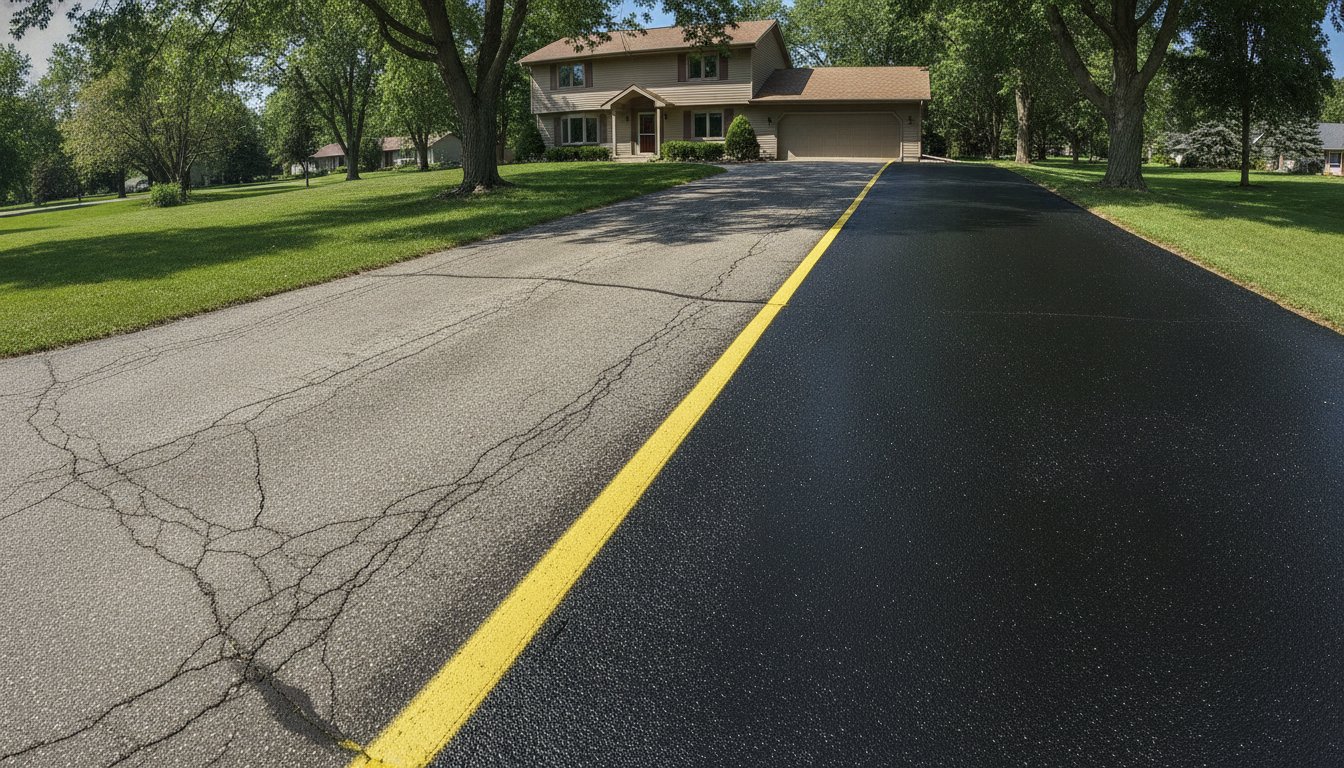
Beyond water protection, sealcoating serves as a high-strength sunscreen. The sun's rays are relentless, and as we've noted, they chemically break down the binders that hold your driveway together. A fresh application of sealer replenishes the essential oils that maintain asphalt flexibility. This allows the pavement to expand and contract during our 100-degree temperature swings without snapping. There's also an undeniable aesthetic benefit. A professionally applied coat restores that rich, deep black finish. This doesn't just look better; it significantly boosts your home's curb appeal and overall property value.
Professional vs. DIY Sealants
Many homeowners are tempted by the convenience of hardware store buckets. However, these DIY products are often basic acrylic or water-thinned emulsions that lack the high solids content required for Minnesota's climate. They frequently peel within a single season because they don't bond deeply with the existing asphalt. Professional-grade sealants, like the high-durability options we use, provide a much thicker, more resilient wear surface. You can learn more about the sealcoating services Minnesota homeowners trust for long-term durability to see the difference in material quality.
Timing Your Sealcoat Application
Timing is everything when it comes to protection. If you apply sealer too early to a brand-new driveway, you trap the light oils that need to evaporate for the asphalt to harden. Usually, a 6 to 12-month wait is ideal for new installs. For existing driveways, you can perform the "water bead test." Simply pour a cup of water on a clean section of the pavement. If the water soaks in and darkens the asphalt rather than beading on top, your protective layer has worn away. In the Twin Cities, we recommend scheduling this work when temperatures are at least 50°F and rising to ensure a proper chemical bond.
Seasonal Maintenance: Protecting Your Asphalt Year-Round
Maintaining your driveway is a year-round commitment that changes with the Minnesota calendar. While the heavy work happens in the warmer months, the most significant damage often occurs during the transitions between seasons. Effective driveway crack prevention requires you to adapt your care routine to the specific threats posed by our shifting weather patterns. By staying ahead of the clock, you can catch minor issues before they escalate into structural failures.
Spring is your critical inspection window. Once the snow melts and the ground thaws, you should walk the entire length of your pavement. Look for new heaving or settlement caused by the retreating frost. Summer brings its own challenges as high temperatures cause the asphalt to expand. During this time, you must be vigilant about cleaning up oil or fuel spills immediately. Because heat softens the binder, chemicals can penetrate deeper and faster, leading to rapid deterioration. If you're searching for driveway crack filling near me, autumn is your final deadline to act. Winterizing your driveway in the fall ensures that open gaps are sealed tight before the first hard freeze locks moisture into the pavement.
The Fall Winterization Checklist
Autumn is arguably the most important season for asphalt stewardship. You must ensure the surface is completely free of organic debris like wet leaves, which can trap moisture and promote rot in existing fissures. Before the ground temperature drops below 50°F, inspect all cracks. Any opening larger than 1/4 inch acts as a funnel for snowmelt. Cleaning these cracks of dirt and vegetation is essential for ensuring that professional-grade sealants can bond properly to the sidewalls. Scheduling a professional crack filling service before the first frost is the best way to ensure your driveway survives until spring.
Winter Protection and Salt Management
Winter maintenance is about more than just moving snow. While road salt is effective for safety, it's notoriously hard on asphalt. Salt lowers the freezing point of water, which sounds helpful, but it actually increases the frequency of freeze-thaw cycles. This means the water inside your pavement's pores melts and refreezes more often than it would naturally. To minimize this, consider using sand for traction or choosing asphalt-safe de-icers. Additionally, ensure your snowplow operator keeps the blade slightly elevated or uses a rubber edge. Metal blades can easily gouge the surface, stripping away the protective sealcoat and creating new entry points for moisture.
Professional Crack Filling: Stopping Small Issues Before They Become Potholes
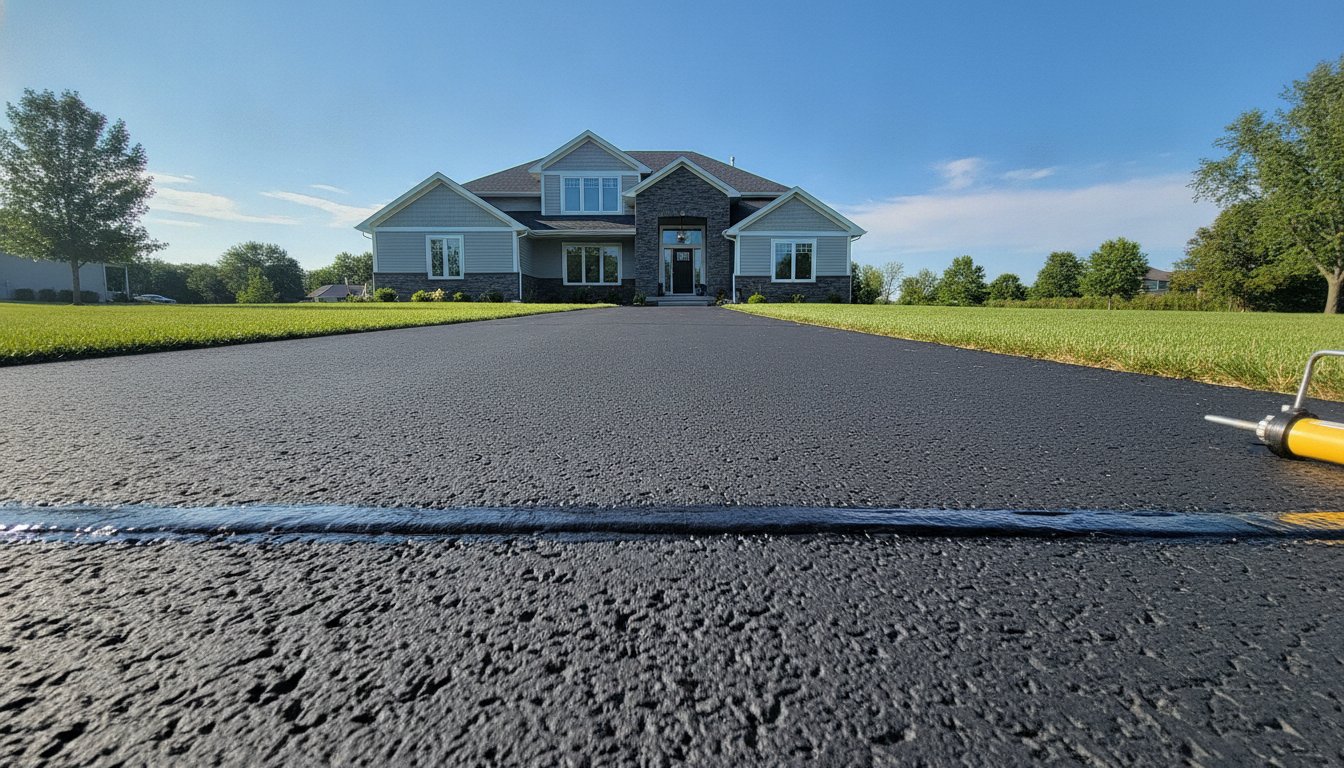
Professional crack filling is the most immediate and effective tactic in your driveway crack prevention strategy. While previous sections focused on surface-level protection, this process addresses structural vulnerabilities that have already appeared. It's important to distinguish between "filling" and "sealing" a crack. Surface sealing provides a thin waterproof layer over the entire driveway, but crack filling involves injecting a heavy-duty, hot-applied rubberized material directly into the fissure. This material is specifically engineered to remain flexible, allowing it to expand and contract in unison with the pavement as temperatures shift. For cracks between 1/8 and 3/4 inches, this specialized rubberized asphalt sealer is the industry standard for preventing water from reaching the sub-base.
The return on investment for proactive crack filling is significant. Industry data from May 2026 shows that the average cost to repair a neglected asphalt driveway ranges between $1,070 and $4,020, with many homeowners facing bills around $2,469 for major restorative work. In contrast, a small investment in annual or biennial maintenance can prevent the need for a full tear-out and replacement, which averages $3.38 per square foot in Minnesota. By adopting a "stewardship" mindset, you aren't just spending money on a chore; you are defending a major asset. A typical driveway might last 15 to 20 years with basic care, but a meticulously maintained surface can often reach a 30-year lifespan, effectively doubling your initial investment's value.
When to Call a Professional Asphalt Contractor
Not every crack can be solved with a simple filler. If you notice "spider web" or alligator cracking, this is a sign that the sub-base has already failed due to moisture saturation or poor compaction. In these cases, surface treatments are only a temporary fix. You should also be wary of DIY liquid fillers found in big-box stores. These products often lack the polymer density required to survive the extreme Minneapolis cold and tend to pull away from the crack sidewalls after the first deep freeze. You can compare your options for professional-grade materials in our asphalt crack filling guide for 2026.
The Seal Team LLC Approach to Preservation
Our approach is rooted in local expertise and the use of high-quality materials designed specifically for the rigors of the Minnesota climate. We don't just patch holes; we execute a preservation plan that addresses the root causes of decay. This includes helping property managers develop a commercial asphalt maintenance plan that balances immediate needs with long-term budget goals. We believe in transparency and foresight, which is why we offer professional estimates to help you detect issues early. Taking action today ensures your asphalt remains a durable, attractive part of your property for decades to come.
Secure the Future of Your Asphalt Investment
Protecting your driveway requires more than just a reactive approach to visible damage. By understanding the mechanics of the freeze-thaw cycle and the importance of a waterproof barrier, you can transform your maintenance routine into a strategic defense. Remember that managing water runoff and addressing small fissures before the first frost are the most effective ways to ensure structural stability. Consistent driveway crack prevention isn't just a chore; it's a commitment to preserving your property's value and curb appeal against Minnesota's relentless environmental stressors.
Our team at Seal Team LLC brings local Twin Cities expertise and reliability to every project. We specialize in Minnesota's harsh freeze-thaw climate, utilizing professional-grade hot-applied crack fillers that outperform standard retail products. By choosing a partner who understands the technical nuances of asphalt preservation, you can avoid the frustration of premature failure and costly repaving projects. Protect your investment with a free maintenance estimate from Seal Team LLC. With proactive stewardship and the right professional support, your driveway will remain a durable and welcoming asset for decades.
Frequently Asked Questions
What is the best way to prevent cracks in an asphalt driveway?
The most effective approach to driveway crack prevention involves a combination of routine sealcoating and timely crack filling. Sealcoating provides a necessary waterproof barrier and UV protection to keep the asphalt flexible, while hot-applied fillers stop water from reaching the sub-base through existing openings. This dual-layered strategy addresses both the surface condition and the internal structural integrity of your pavement.
How often should I sealcoat my driveway in Minnesota?
In the Twin Cities, property owners should plan to sealcoat every two to three years. This frequency is necessary because our extreme freeze-thaw cycles and heavy snowplow use wear down protective layers faster than in milder climates. Waiting longer than three years often leaves the asphalt vulnerable to oxidation and moisture penetration, which can lead to significant structural decay.
Does road salt cause driveway cracks?
Road salt does not chemically dissolve asphalt, but it indirectly causes cracks by increasing the frequency of freeze-thaw cycles. Salt lowers the freezing point of water, which forces more frequent cycles of melting and refreezing as temperatures fluctuate. This constant expansion and contraction puts immense pressure on the internal structure of the pavement, eventually leading to surface fissures and potholes.
Can I prevent cracks by using a thicker layer of asphalt?
Simply increasing the thickness of the asphalt layer won't prevent cracks if the underlying sub-base is unstable. While a standard residential driveway is usually two to three inches thick, the foundation's compaction and drainage are far more important for long-term durability. A thick slab on a soft, wet base will still shift and snap during a hard Minnesota frost.
How do I stop grass and weeds from growing in my driveway cracks?
The only permanent way to stop vegetation growth is to have the cracks professionally cleaned and filled with hot-applied rubberized material. Weeds thrive when dirt and moisture collect in open gaps, providing a perfect environment for seeds to take root. Once the crack is sealed, you eliminate the access to soil and water that plants need to survive, preventing further root-driven damage.
Is it better to fill cracks in the spring or the fall?
While spring is a great time for an initial inspection, the fall is the most critical time for professional crack filling. Sealing these openings before the first freeze prevents winter snowmelt from entering the driveway and causing massive expansion damage. Ensuring your driveway is winterized by October provides the best defense against the upcoming cold season and the destructive power of ice.
Will sealcoating fix existing cracks in my driveway?
Sealcoating is a preventative surface treatment and is not designed to bridge or structurally repair existing cracks. While it can fill very fine hairline fissures, any opening wider than a credit card requires a dedicated crack filling service. Applying sealer over a large crack will only hide the problem temporarily until the next rainstorm or temperature shift reopens the gap.
How long does a professional crack prevention treatment last?
A professional sealcoating treatment typically lasts between two and three years, depending on traffic volume and weather severity. Hot-applied rubberized crack fillers often stay effective longer because they are designed to remain flexible through several seasons of ground movement. Regular inspections every spring help you determine when it's time for a fresh application to maintain your driveway crack prevention strategy.