If you believe that your driveway is at the mercy of the Minnesota climate, you're overlooking your most powerful defense. While the state's extreme freeze-thaw cycles are notoriously harsh, the real culprit behind premature failure is often a lack of proactive asphalt maintenance. It's common to feel overwhelmed by the thought of high replacement costs, especially when every winter seems to bring new damage. You aren't alone in wanting to protect your property without wasting money on methods you don't fully understand.
This guide bridges the gap between scientific decay and practical preservation. We'll show you how professional strategies can actually double the lifespan of your pavement, turning a weathering surface into a long-term asset. We'll examine the ROI of consistent care, explain how essential services like crack filling and seal coating provide a structural defense, and help you identify a local expert who values durability over quick fixes. By the end, you'll have a clear roadmap for defending your investment through 2026 and beyond.
Key Takeaways
- Understand the science of UV oxidation and how it strips the vital bitumen binder from your pavement, leaving it brittle and gray.
- Learn why proactive asphalt maintenance is a structural necessity that can double the lifespan of your driveway by preventing water penetration.
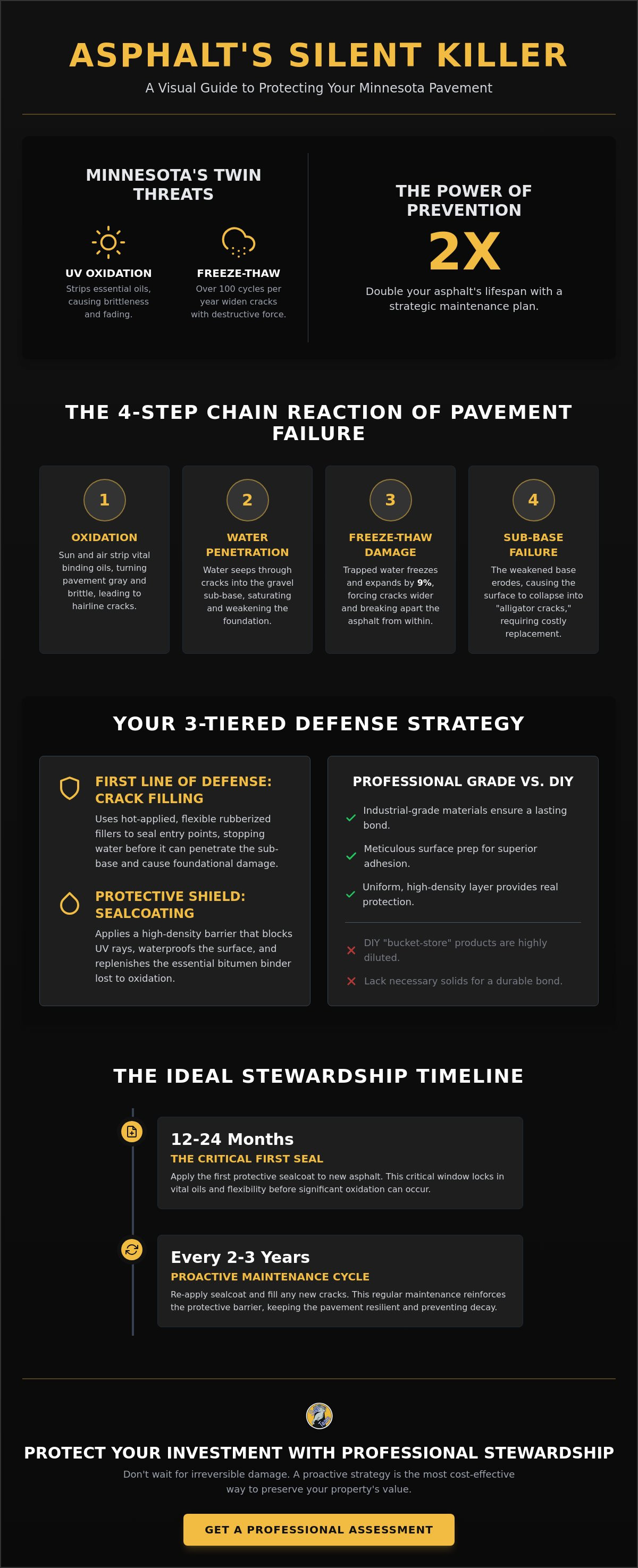
- Discover how to protect your investment against Minnesota’s 100+ annual freeze-thaw cycles and the destructive 9% volume expansion of trapped water.
- Identify the ideal stewardship timeline, including the critical 12-24 month window for first-time sealing and the recommended 2-3 year maintenance cycle.
- Recognize the importance of meticulous surface preparation and professional-grade materials in ensuring a long-lasting bond and superior defense.
The Science of Asphalt Decay: Understanding Why Pavement Fails
Asphalt is a sophisticated, flexible composite material. It consists of a precise mixture of aggregate, such as crushed stone and sand, held together by a bitumen binder. This binder is a petroleum-based byproduct that acts as the essential "glue" keeping your driveway or parking lot intact. To understand The Science of Asphalt Decay, one must realize that asphalt is designed to be resilient and pliable. It needs to bend slightly under the weight of vehicles and shift during temperature changes. When that flexibility is lost, the structural integrity of the pavement begins to fail.
As the binder degrades, you might notice a process called raveling. This occurs when the bitumen can no longer hold the aggregate in place, causing loose stones to break away from the surface. This leaves the pavement feeling rough and porous. While many factors contribute to this breakdown, water remains the primary catalyst for structural sub-base failure. Once the surface is compromised, moisture can reach the foundation, leading to expensive repairs that go far beyond simple asphalt maintenance.
The Role of UV Oxidation and Air
Sunlight and oxygen are the constant enemies of new pavement. This process, known as UV oxidation, chemically alters the organic oils within the bitumen binder. As these oils evaporate or break down, the asphalt loses its rich black color and transitions into a chalky gray. This isn't merely a cosmetic change. The graying indicates that the pavement is becoming brittle and losing its ability to flex. Without that necessary elasticity, the surface develops "hairline" cracks that allow the elements to penetrate deeper into the structure. Oxidation is the silent thief of asphalt lifespan.
Water Penetration and Sub-base Erosion
Once oxidation creates micro-cracks, water begins its destructive work. Liquid seeps through these openings and settles into the gravel foundation, or sub-base, beneath the asphalt. This foundation is the true load-bearing component of your driveway. When the sub-base becomes saturated, the weight of passing traffic creates a "pumping" effect. This pressure forces water and fine soil particles out through the surface cracks, leaving hollow voids in the foundation below.
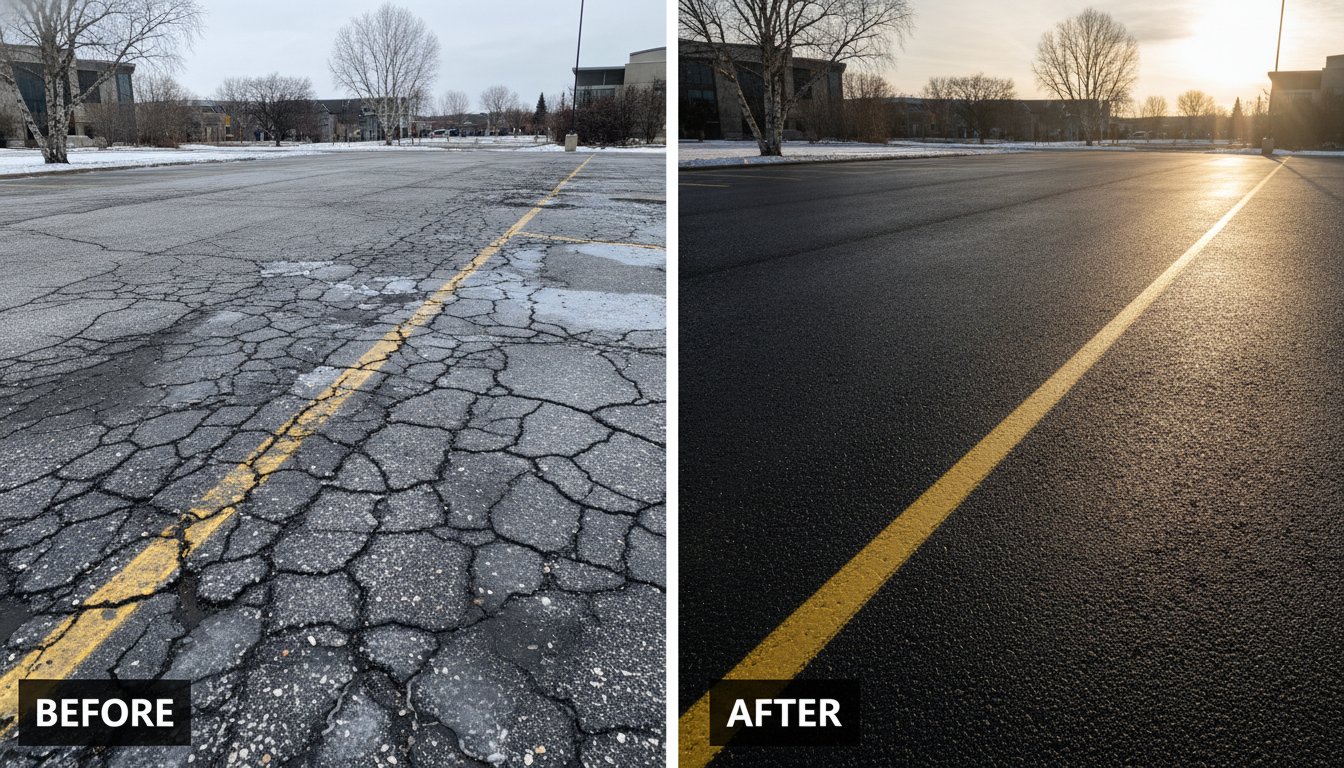
Without a solid base to rest on, the asphalt eventually collapses under its own weight. This results in a pattern of deep, interconnected fractures known as alligator cracking. At this stage, the damage is often too severe for standard asphalt maintenance and may require a full replacement. Protecting the sub-base by sealing the surface is the most effective way to prevent this chain reaction of decay.
The Anatomy of Professional Asphalt Maintenance
Effective asphalt maintenance isn't a single task; it's a multi-layered defense strategy. To protect your pavement properly, professionals rely on three fundamental pillars: crack filling, sealcoating, and patchwork. While each serves a specific purpose, they work together to prevent the molecular breakdown and sub-base erosion discussed in the previous section. This approach aligns with The Stewardship Strategy, which emphasizes that early, proactive intervention is far more cost-effective than reactive reconstruction. By treating maintenance as a form of property stewardship, you ensure your driveway remains an asset rather than a liability.
Professional applications differ significantly from "bucket-store" DIY attempts found at local hardware retailers. Most consumer-grade products are highly diluted with water and lack the necessary solids to provide a lasting bond. In contrast, industrial-grade equipment and materials provide a uniform, high-density layer that actually adheres to the existing bitumen. This ensures that the protective barrier stays intact through heavy traffic and extreme weather shifts.
Crack Filling: Your First Line of Defense
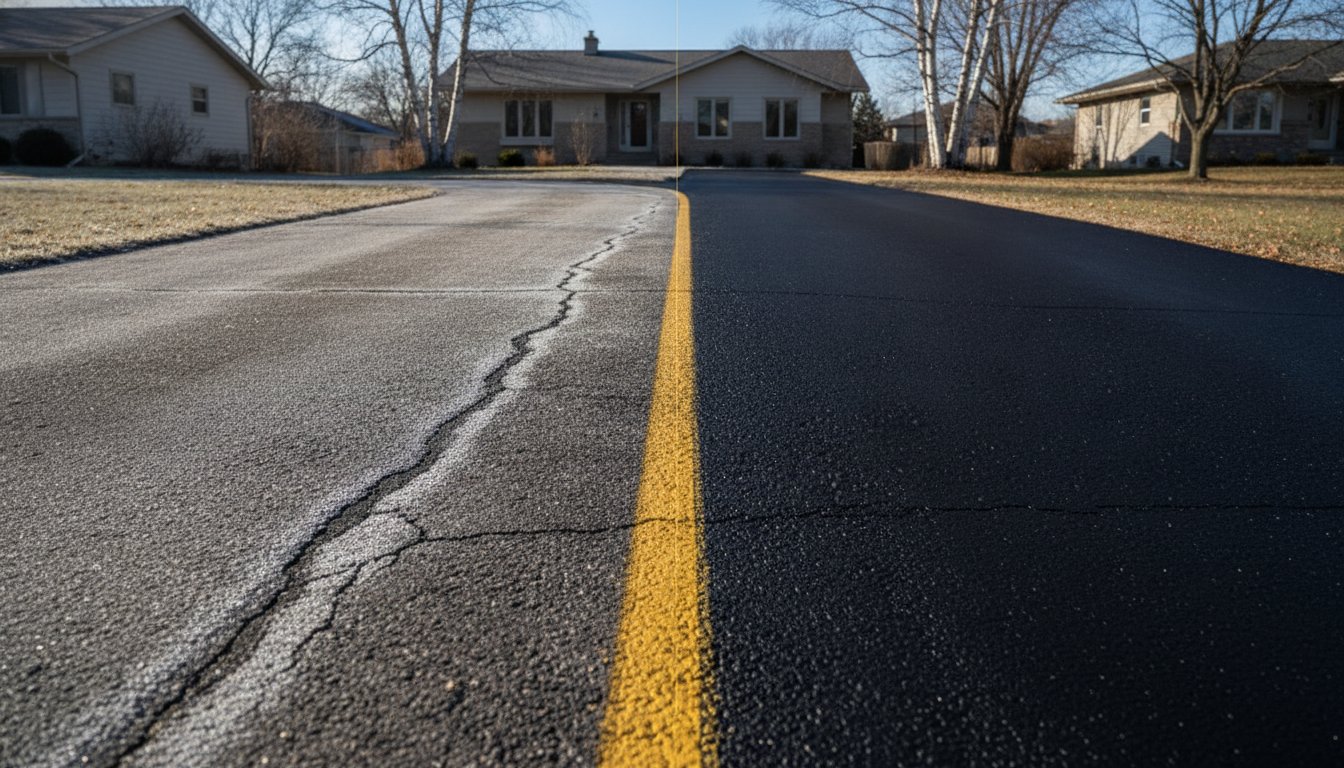
If water is the primary enemy of your pavement, crack filling is the shield that keeps it out. This process involves using hot-applied, rubberized fillers that remain flexible even in freezing temperatures. When searching for driveway crack filling near me, it's vital to choose a provider that distinguishes between filling and sealing. Crack filling addresses stationary cracks to prevent them from growing. Sealing is used for cracks that expand and contract with the seasons. Mastering this distinction is the key to preventing potholes before they start.
Sealcoating: The Protective Shield
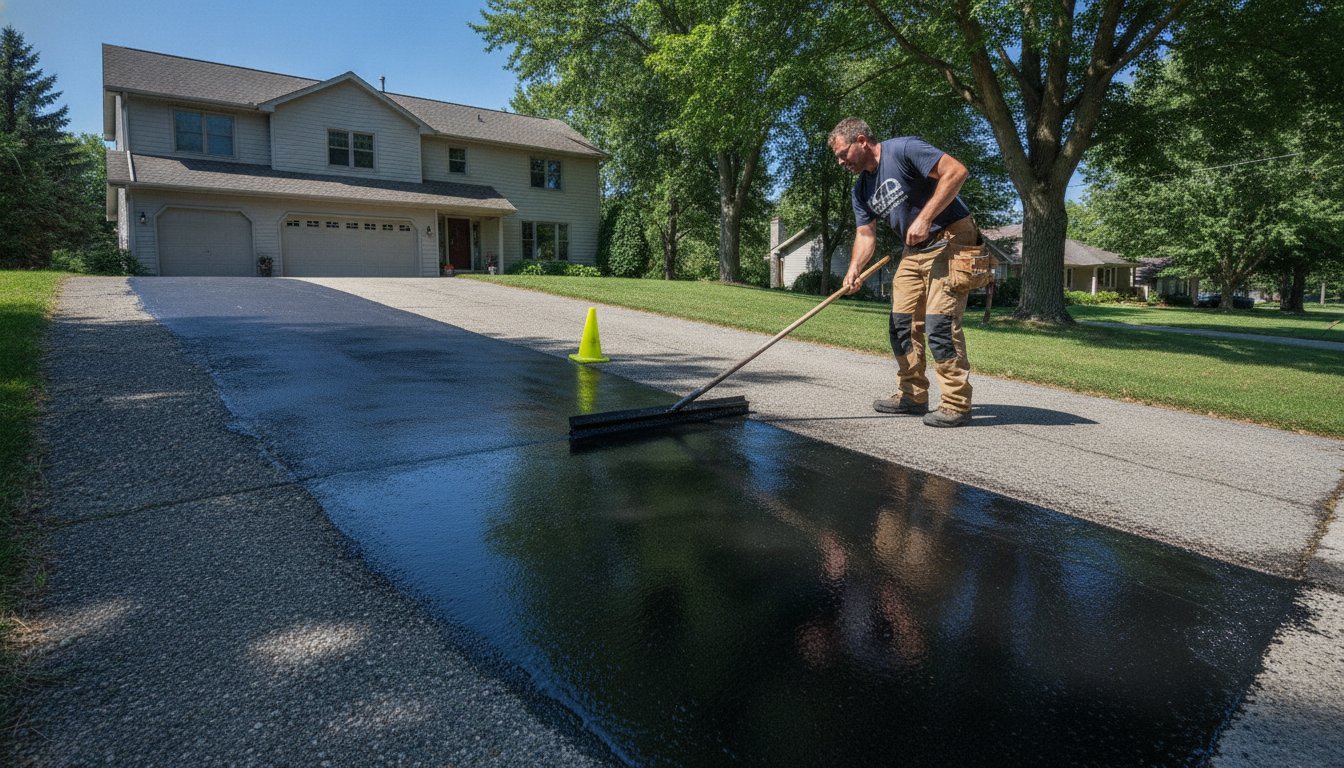
Sealcoating acts as a sacrificial layer for your driveway. It replenishes the essential oils lost to UV oxidation and seals the surface pores against moisture, oil, and gasoline spills. Modern professionals prefer high-quality asphalt emulsions over traditional coal tar, as they are more environmentally friendly and provide superior flexibility. It's important to remember that sealcoating is a preventative treatment, not a structural repair. It won't fix a crumbling foundation, but it will stop a healthy surface from reaching that point. If you aren't sure which service your pavement requires, consulting with a specialist for professional seal coating and crack filling can provide the clarity you need to move forward with confidence.
- Crack Filling: Stops water from reaching the gravel foundation.
- Sealcoating: Blocks UV rays and chemical spills while restoring the dark finish.
- Patchwork: Corrects localized structural failures like potholes or depressions.
By understanding these components, property owners can move away from "quick fix" mentalities. Instead, they can adopt a logical asphalt maintenance plan that prioritizes long-term durability and maximizes the return on their initial investment.
The Minnesota Factor: Why Local Asphalt Faces Unique Threats
In Minnesota, the environment is particularly aggressive toward paved surfaces. While we've discussed the general science of decay, local property owners face a specific set of environmental stressors that southern regions simply don't encounter. Our state experiences over 100 freeze-thaw cycles annually. This high frequency demands more rigorous asphalt maintenance to prevent structural collapse. When water enters a micro-crack and freezes, it expands by approximately 9% in volume. This expansion exerts immense internal pressure; it's essentially a slow-motion wedge that shatters the bitumen binder from the inside out.
This unique regional pressure is why proactive pavement preservation is the only logical approach for Twin Cities residents. In milder climates like Georgia or Texas, a driveway might go five or six years without professional care. In Minnesota, that same level of neglect often leads to irreparable "alligator" cracking within just three seasons. The window for intervention is much smaller here, making timing the most critical part of your stewardship strategy.
Surviving the Twin Cities Freeze-Thaw Cycle
The physics of ice lenses are a primary concern for local infrastructure. As moisture trapped in the sub-base freezes, it forms concentrated layers of ice that heave the asphalt upward. During the spring thaw, this ice disappears, leaving behind a saturated, hollow soft spot. When a vehicle drives over these weakened areas, the surface collapses, resulting in a pothole. Completing maintenance tasks in the autumn is critical. It's the only way to ensure your pavement is watertight before the first frost hits and the cycle begins again.
The Hidden Damage of Road Salt and Chemicals
Road salt and liquid de-icers keep our families safe on the road, but they're corrosive to your investment. Salt works by lowering the freezing point of water. While this prevents ice buildup, it also artificially increases the number of freeze-thaw cycles. It causes water to melt and refreeze multiple times in a single day as temperatures fluctuate. The resulting brine doesn't just sit on top. It penetrates the pores of the asphalt and chemically strips away the binder's essential oils. This process makes the surface gray and brittle much faster than sun exposure alone. To minimize damage, property owners should consider asphalt-safe alternatives like sand or acetate-based de-icers when possible.
- Salt Brine: Accelerates oil loss and binder breakdown.
- Ice Lenses: Create subsurface voids that lead to potholes.
- 9% Expansion: Physically shatters the asphalt from within.
The Stewardship Strategy: Timing Your Asphalt Care
Effective asphalt maintenance relies entirely on a logical timeline. Proactive care is a form of stewardship that protects the molecular bond of the bitumen before it begins to fail. If you wait until the surface is crumbling to take action, you've already missed the window for preservation. For a brand-new driveway, the first application of sealcoat should typically occur within 12 to 24 months. This allows the new asphalt enough time to "cure" and release excess oils while ensuring the surface is shielded before the first signs of UV oxidation appear.
Once that initial barrier is established, the "Every 2-3 Year" rule becomes your primary guideline. In the Twin Cities, this frequency is necessary to combat the accelerated wear caused by our climate. However, there is a "Point of No Return" where maintenance is no longer a viable option. If your pavement exhibits widespread alligator cracking or if the sub-base has become soft and unstable, sealcoating will only provide a cosmetic mask for a structural failure. At that stage, the foundation is compromised, and a total tear-out is often the only permanent solution.
Creating an Asphalt Maintenance Schedule
Consistency is the secret to doubling your pavement's lifespan. A structured approach ensures you never overlook a minor issue before it turns into a costly repair. Follow these three essential steps:
- Step 1: Annual Spring Inspection. Once the snow melts, walk your entire driveway to identify new cracks or areas of standing water.
- Step 2: Immediate Crack Filling. Address any opening larger than a quarter-inch immediately. This prevents summer rain from reaching the gravel foundation.
- Step 3: Periodic Sealcoating. Every two to three years, apply a fresh layer of professional-grade emulsion to maintain UV protection and restore the binder.
Calculating the ROI of Pavement Preservation
The financial argument for a stewardship strategy is undeniable. Over a 20-year period, the total cost of consistent asphalt maintenance is roughly 10% of the cost of a full replacement. By spending a small amount on regular care, you avoid the massive capital expenditure of a total tear-out and repaving project. Performing maintenance is exactly like changing the oil in your car; you don't do it because the engine has failed, you do it so that it never will.
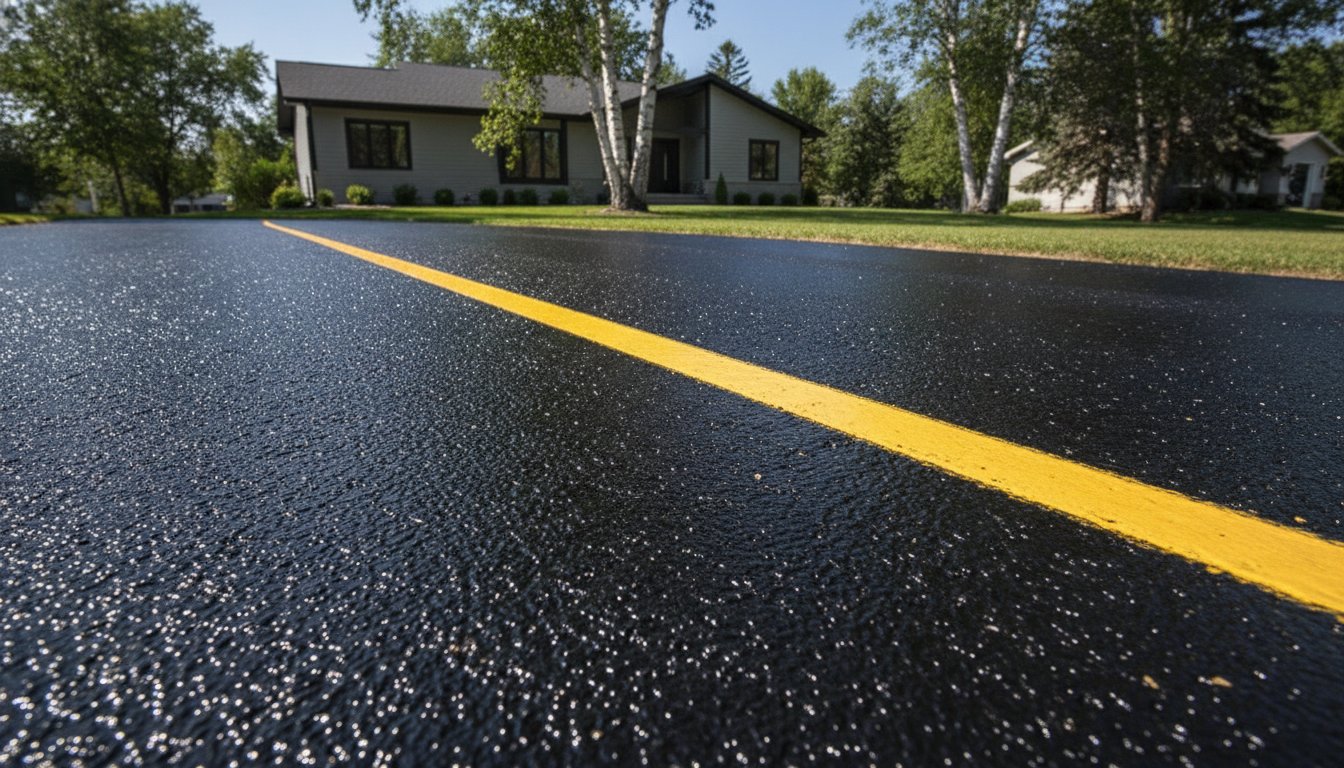
Beyond the structural benefits, the aesthetic impact of sealcoating services minnesota significantly boosts property resale value. A deep black, well-maintained driveway creates an immediate impression of a well-cared-for home. To protect your investment and ensure your pavement remains a durable asset, it's best to request a professional maintenance assessment before the next change in season.
The Seal Team LLC Standard: Professional Stewardship
Seal Team LLC approaches every project with a focus on long-term preservation. We understand that professional asphalt maintenance in the Twin Cities requires more than a simple coat of black paint. Our standard is built on the principle of stewardship, where every step of our process is designed to defend your pavement against the specific stressors we've analyzed throughout this guide. This commitment starts by prioritizing crack filling as the structural foundation of every job. Without a watertight seal on those fractures, any surface treatment is merely cosmetic. We use high-solids, commercial-grade sealants that contain a higher concentration of bitumen and polymer additives. These materials are specifically formulated to remain flexible during a deep Minnesota freeze while resisting the softening effects of a humid July afternoon.
Meticulous Preparation and Application
The success of any pavement treatment is decided before the sealant ever touches the ground. Poor adhesion is almost always the result of inadequate cleaning. To prevent this, we use high-pressure air and industrial wire brushing to clear debris, vegetation, and loose aggregate from every crack and pore. This meticulous cleaning ensures our rubberized filler achieves a "deep-well" bond with the inner walls of the asphalt. You can find a detailed breakdown of our step-by-step methodology in our professional guide on what to expect during driveway sealcoating. We also understand that your home is more than just a driveway. Our "no-overspray" guarantee ensures that we take the time to tape off or shield your lawn, landscaping, and adjacent concrete surfaces, leaving your property cleaner than we found it.
Protecting the Twin Cities, One Driveway at a Time
Our team brings years of localized experience to neighborhoods across Minneapolis, St. Paul, and the surrounding suburbs. We don't just see a job site; we see a significant investment that deserves a diligent guardian. Local stewardship matters because we live in the same climate we service. We know exactly how the next 100 freeze-thaw cycles will test our work, and we prepare your pavement to pass that test through science-based application techniques. When you're ready to move from reactive repairs to a proactive asphalt maintenance plan, contact Seal Team LLC for a free asphalt maintenance estimate. We'll provide a transparent assessment and a rationale for care that prioritizes the long-term health of your pavement.
Securing Your Pavement's Future through Proactive Care
Protecting your property starts with understanding that your driveway is a dynamic asset. You've seen how UV oxidation and Minnesota's 100+ annual freeze-thaw cycles can shatter even the strongest surfaces from the inside out. By adopting a stewardship mindset, you're choosing to prevent decay rather than reacting to it. Consistent asphalt maintenance is the most effective way to double your pavement's lifespan while avoiding the massive capital expenditure of a total tear-out.
Our team specializes in defending local surfaces with high-solids, industrial-grade sealants designed specifically for the rigors of our climate. We understand the science of preservation and take pride in helping our neighbors avoid future headaches through meticulous care. Whether you manage a large commercial lot or a residential driveway, we provide the expertise needed to keep your foundation secure. Take the first step in preserving your investment today. Get Your Free Asphalt Maintenance Estimate from Seal Team LLC for your residential or commercial property. Don't let another season of ice and salt compromise your foundation. With the right strategy, your pavement can remain durable and beautiful for years to come.
Frequently Asked Questions
How often should I schedule asphalt maintenance in Minnesota?
You should schedule professional sealcoating and crack filling every 2 to 3 years to combat the state's severe freeze-thaw cycles. While milder climates might allow for longer intervals, Minnesota's 100+ annual temperature swings accelerate binder breakdown. Regular asphalt maintenance at this frequency ensures that the bitumen remains flexible and the sub-base stays dry, preventing the formation of deep cracks and structural heaving.
Can I apply driveway sealer myself, or should I hire a professional?
Hiring a professional is recommended because consumer-grade kits often lack the high-solids content and polymer additives found in industrial emulsions. Professionals use specialized equipment like high-pressure air lances to clean cracks, ensuring a superior bond. A professional application provides a much thicker, more durable protective layer that can withstand heavy traffic and winter plowing, whereas DIY coatings often flake or wear thin within a single season.
What is the difference between asphalt crack filling and crack sealing?
Crack filling involves placing a rigid or semi-flexible material into stationary cracks that don't move significantly with temperature changes. Crack sealing uses a specialized, hot-applied rubberized bitumen designed to expand and contract alongside the pavement during Minnesota's extreme seasonal shifts. Using the correct method is vital for a successful asphalt maintenance strategy, as it prevents water from reaching the gravel foundation regardless of the pavement's movement.
How long does sealcoating take to dry before I can drive on it?
You can typically walk on a freshly sealed surface within 4 to 8 hours, but vehicles should stay off for 24 to 48 hours. Drying times depend heavily on humidity, sunlight, and wind speed. It's best to wait the full 48 hours to ensure the material has completely cured and bonded to the surface. Driving too early can cause permanent power steering marks or pull the sealant off the aggregate entirely.
Is it too late to save my driveway if it already has potholes?
It isn't too late, but potholes indicate a localized structural failure that sealcoating alone cannot fix. You must first address the pothole with a professional patch to restore the sub-base and surface integrity. Once the structural repairs are complete, you can proceed with a standard maintenance plan to protect the rest of the driveway from similar failures. If the damage is widespread, a full replacement may be more cost-effective.
What is the best time of year to perform asphalt maintenance in the Twin Cities?
The ideal window for maintenance in the Twin Cities is between May and September. Sealcoating requires consistent overnight temperatures above 50 degrees Fahrenheit to cure properly. Scheduling your service in the late spring or summer ensures the sealant bonds correctly before the autumn rains and winter frosts arrive. Early autumn is also a popular time to "winterize" pavement, provided the temperatures remain within the safe application range.
Does sealcoating make the driveway slippery during Minnesota winters?
Professional sealcoating won't make your driveway excessively slippery if it's applied with a high-quality silica sand additive. This additive provides essential traction for both pedestrians and vehicles during icy conditions. While a freshly sealed driveway might look smooth and shiny, the sand within the mixture creates a textured surface that maintains grip. We always include traction agents in our mixtures to ensure safety throughout the harsh winter months.
Will asphalt maintenance fix "alligator" or spiderweb cracking?
Maintenance treatments like sealcoating or crack filling won't fix alligator cracking. This specific pattern of interconnected fractures is a sign that the gravel foundation beneath the asphalt has failed or become saturated. Because the structural support is gone, the pavement will continue to shift and break regardless of surface treatments. Alligator cracking usually requires a dig-out repair or a full replacement of the affected area to restore the driveway's integrity.