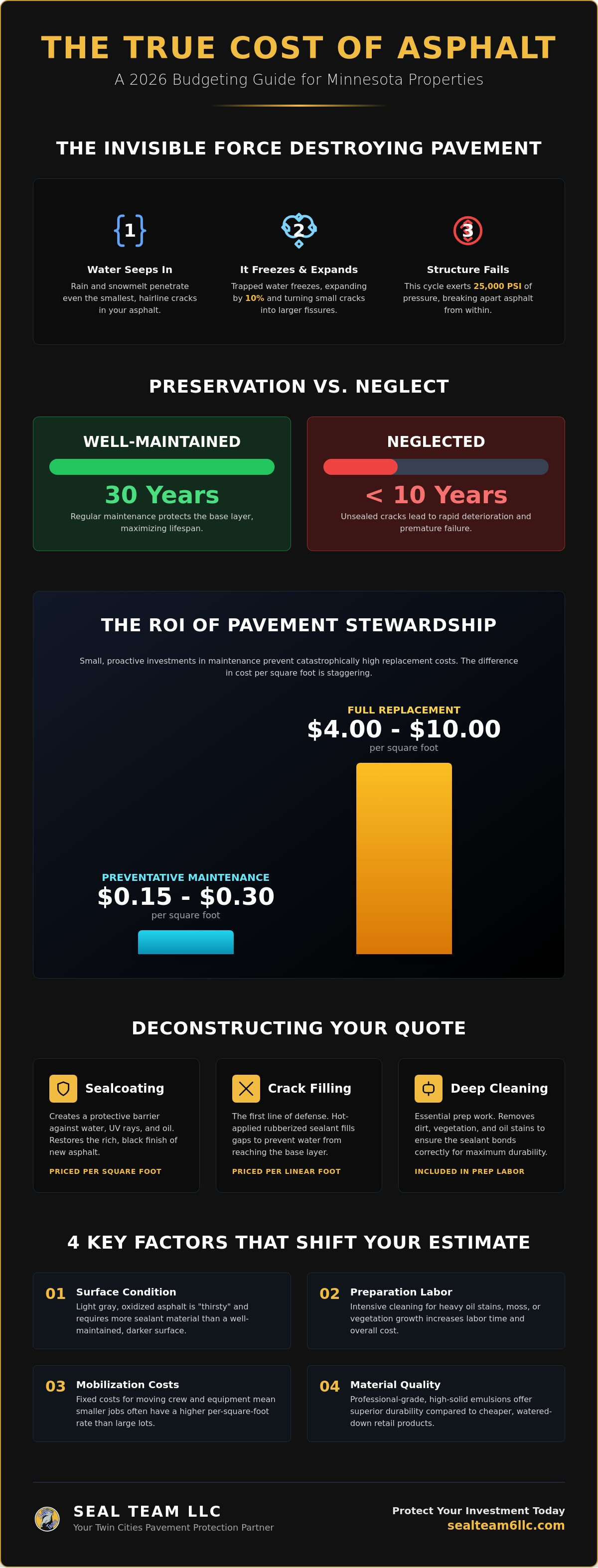
When water freezes inside a pavement crack, it expands by approximately 10% and exerts upwards of 25,000 psi of pressure on the surrounding surface. In Minnesota, this invisible force is the primary reason why a neglected driveway can fail in less than a decade, while a well-maintained one often lasts thirty years. It's understandable to feel uncertain when reviewing bids, especially when you're trying to determine a fair asphalt maintenance cost per square foot without being overcharged for unnecessary services.
You likely already know that ignoring small cracks today leads to massive potholes tomorrow. We're here to confirm that your instinct to prioritize preservation is correct. This 2026 budgeting guide will teach you the exact factors that determine maintenance pricing and how proactive care saves you thousands in replacement costs. We'll break down the specific line items you'll see on a professional quote, explain how our local climate dictates your maintenance schedule, and provide a clear framework to help you choose the right partner for your property's long term health.
Key Takeaways
- Understand how professional services like sealcoating and crack filling are calculated to determine a realistic asphalt maintenance cost per square foot for your specific property.
- Identify the primary variables that influence your budget, including the level of surface oxidation and the intensive prep work needed to restore your pavement's defense.
- Discover the long-term ROI of the "stewardship strategy" and how small investments in maintenance prevent the high costs of complete asphalt replacement.
- Learn how the unique Minnesota freeze-thaw cycle forces water into small cracks, and why sealing those gaps is essential to protecting your base layer.
- Gain a framework for evaluating contractor quotes to ensure you're receiving transparent pricing and durable materials from a reliable local specialist.
Breaking Down Asphalt Maintenance Cost per Square Foot
Understanding your budget begins with defining what maintenance actually entails. It isn't a single task; it's a suite of protective services designed to extend the life of your asphalt concrete. A standard maintenance plan typically includes deep surface cleaning, crack filling, and sealcoating. By grouping these together, you create a defensive barrier against the elements that prevents the underlying structure from failing prematurely.
The industry standard for measuring these services is the asphalt maintenance cost per square foot. This model provides the most transparent and fair way to calculate material usage and labor requirements. While a full asphalt replacement can cost anywhere from $4.00 to $10.00 per square foot, preventative maintenance costs represent a small fraction of that expense. National industry averages for sealcoating often fall between $0.15 and $0.30 per square foot. Using a square-foot benchmark allows property owners to compare quotes accurately and ensures you only pay for the specific area being treated.
Sealcoating vs. Crack Filling: Different Pricing Models
While the overall project is estimated by total area, different services within the plan have unique pricing structures. Sealcoating is almost always calculated by the total square footage of the lot. This covers the cost of the sealant material and the labor required to apply it evenly across the surface. Crack filling operates differently; it's often priced by the linear foot or added as a flat fee depending on the severity of the damage. Bundling these services is the most cost-effective approach for property owners seeking Sealcoating Services in Minnesota. It ensures that cracks are sealed before the topcoat is applied, preventing moisture from undermining your investment.
Calculating Your Total Square Footage
Estimating your own project's scale is a logical first step in budgeting. For a standard residential driveway, multiply the length by the width. If your driveway is 20 feet wide and 50 feet long, you have 1,000 square feet of asphalt. You should account for "bump-outs," turnarounds, or extra parking pads by measuring those sections separately and adding them to your total. For larger commercial lots, professional contractors often use satellite imaging software to get precise measurements. This technology ensures that the asphalt maintenance cost per square foot is applied accurately, leaving no room for guesswork or overcharging on the final quote.
Primary Variables That Shift Your Maintenance Estimate
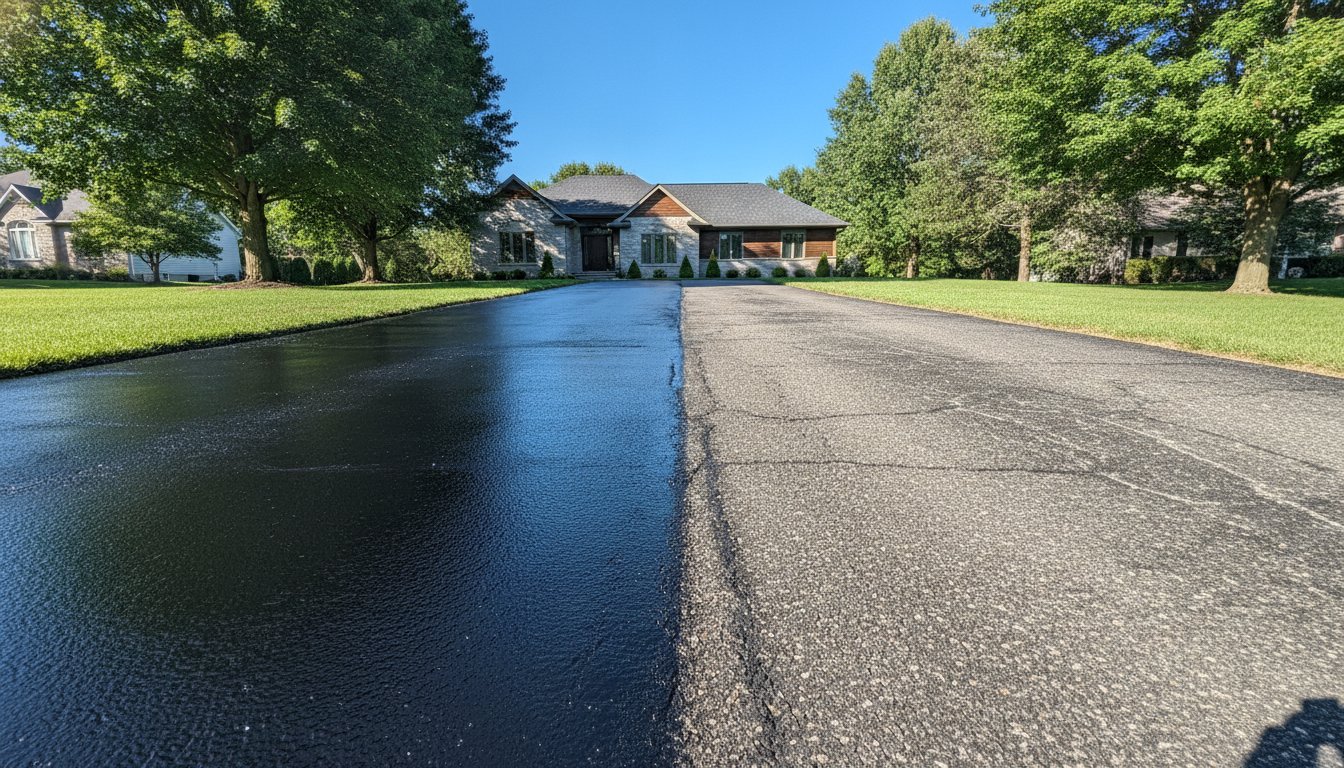
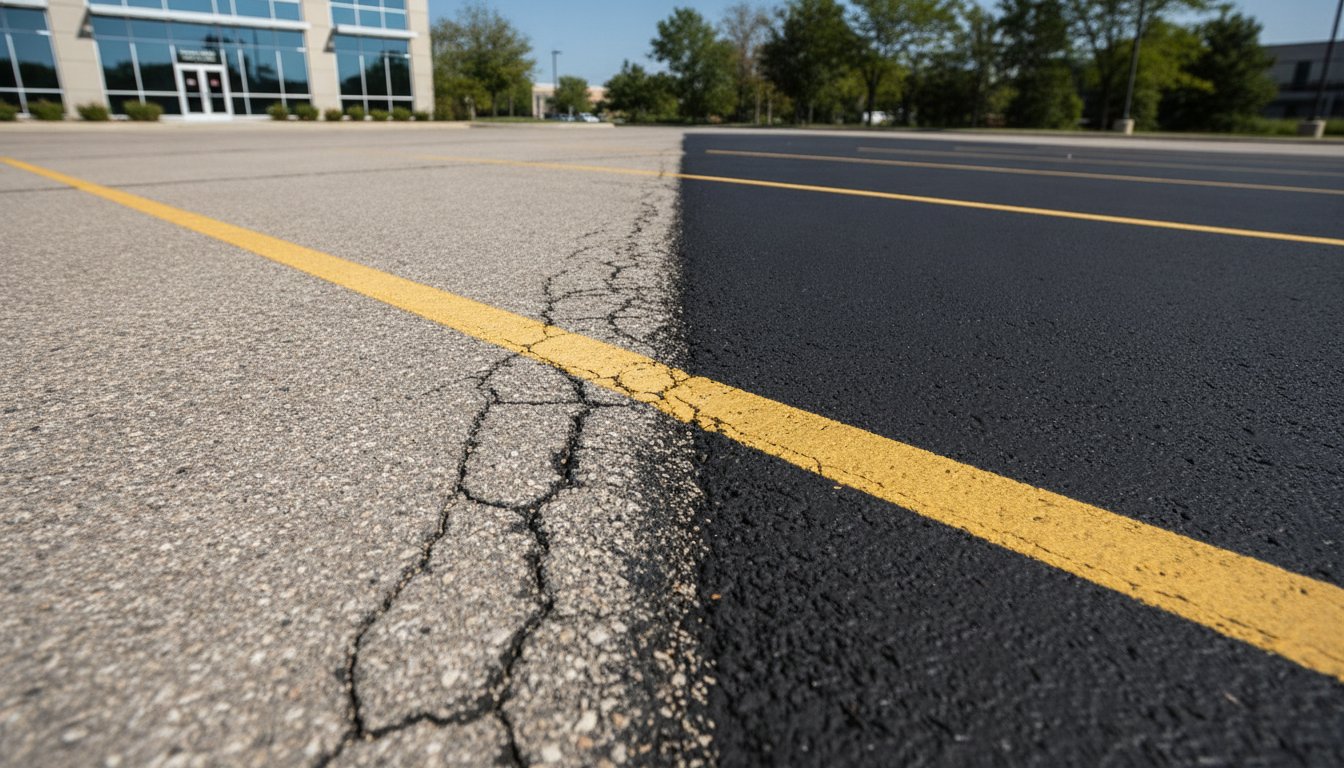
Why do two properties of the same size often receive different quotes? The asphalt maintenance cost per square foot isn't a static number because every lot faces different levels of environmental stress and wear. Surface condition is the most significant factor in your final bid. If your asphalt has turned a light gray, it's heavily oxidized. This means the binder has evaporated, leaving the surface porous and "thirsty." These surfaces require more material to saturate the pores compared to a lot that has been regularly maintained.
Preparation labor also impacts the budget. Heavy oil stains or vegetation growing through cracks require intensive treatment before any sealer is applied. Without proper cleaning, the bond will fail within months. The Minnesota pavement maintenance handbook highlights that surface prep is the most critical step for durability in our region. These standards ensure that the maintenance layer actually protects the structure instead of just masking problems.
Mobilization and material quality round out the estimate. Contractors have fixed costs for moving equipment and crews. This is why a 600 square foot driveway often has a higher asphalt maintenance cost per square foot than a large commercial parking lot. Additionally, professional grade high solids emulsions offer better protection than watered down retail products. While retail options are cheaper, they lack the durability needed to survive a single season of heavy traffic.
Surface Condition and Cleaning Requirements
Sealant only bonds to clean asphalt. Dirt, moss, and oil act as barriers that lead to premature peeling. While a simple leaf blower works for clean lots, neglected surfaces may need mechanical wire brushing to remove stubborn debris. Alligator cracking or significant pitting increases the volume of sealer required because the material must fill deep surface voids rather than just providing a thin protective film. This extra material and labor for deep cleaning will naturally reflect in the final quote.
Project Scale and Accessibility
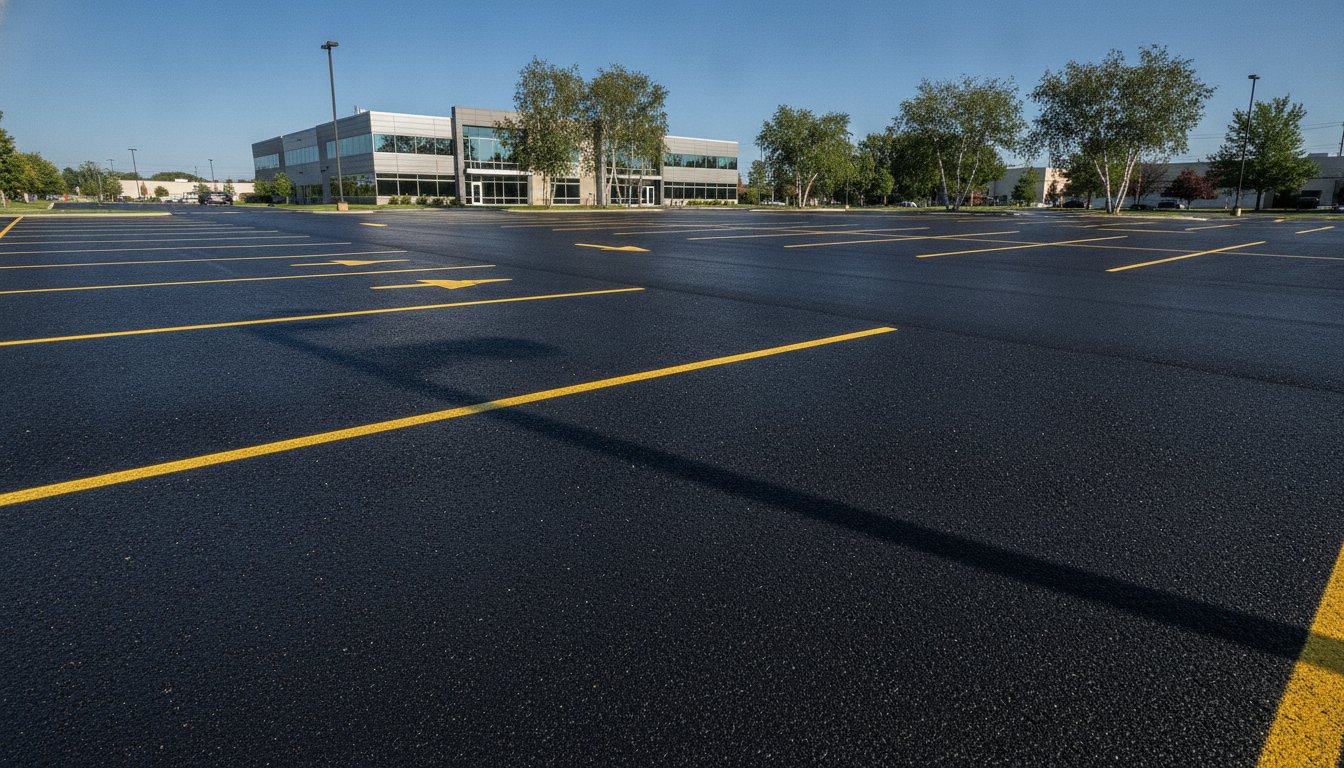
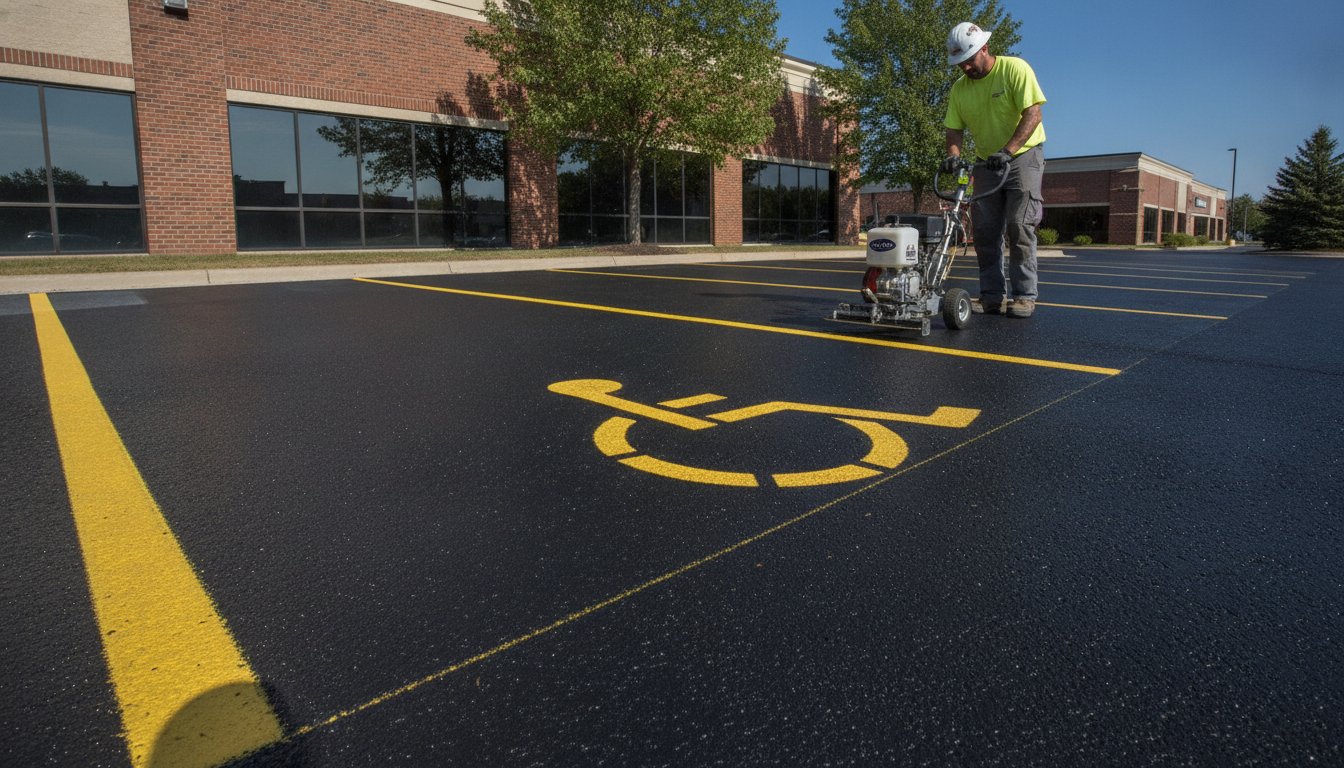
Large parking lots enjoy economies of scale because crews can use high volume spray equipment without frequent stops. In contrast, small driveways or lots with many curbs, drains, and delicate landscaping require slow, meticulous hand brushing. If a site is difficult for large equipment to access, the labor hours will increase accordingly. If you aren't sure how these variables apply to your property, getting a quote for professional asphalt maintenance can provide the clarity you need to budget effectively.
The ROI of Pavement Stewardship: Maintenance vs. Replacement
Stewardship of your pavement is a calculated financial strategy rather than a mere cosmetic choice. Industry professionals often refer to the "1-10-100" rule of pavement management. This concept suggests that every dollar invested in timely maintenance today prevents ten dollars in future repairs and one hundred dollars in eventual reconstruction. When you consider the asphalt maintenance cost per square foot against the massive expense of tearing out and repaving a lot, the logic of proactive care becomes undeniable. By intervening early, you preserve the flexible nature of the material before it becomes brittle and prone to failure.
One of the biggest threats to your investment is invisible. Ultraviolet rays from the sun constantly bake the asphalt binder, which is the "glue" holding the aggregate together. This process, known as oxidation, turns the surface gray and makes it susceptible to cracking. Sealcoating acts as a high-grade sunscreen, blocking these rays and keeping the binder supple. When you pair this with professional driveway crack filling near me, you create a waterproof seal. This prevents moisture from saturating the gravel base, which is the leading cause of structural collapse.
The difference in longevity is stark. Well-maintained asphalt typically serves a property for 25 to 30 years. In contrast, neglected surfaces often fail within 12 to 15 years. By doubling the lifespan of your pavement, you effectively cut your long-term infrastructure costs in half. Consistency is the key to achieving these results.
Avoiding the Replacement Trap
There is a definitive "point of no return" for every asphalt surface. Once the binder has fully oxidized and the surface has developed "alligator" cracks across the majority of its area, sealcoating is no longer a viable solution. At this stage, your asphalt maintenance cost per square foot jumps from a few cents for preservation to several dollars for a full replacement. Staying on a consistent 2 to 3 year maintenance cycle ensures you never cross this threshold, keeping your costs predictable and low.
Curb Appeal and Property Value
Beyond structural protection, pavement stewardship offers immediate aesthetic and commercial benefits. A "jet black" finish provides a powerful psychological boost to curb appeal, signaling to potential buyers or customers that the property is meticulously managed. For commercial owners, a smooth, dark surface reduces liability risks from trips and falls while creating a welcoming environment for visitors. Professional maintenance preserves the structural integrity of the asphalt binder, ensuring the surface remains safe and attractive for decades.
Navigating the Minnesota Freeze-Thaw Cost Factor
Minnesota weather is notoriously hard on infrastructure. The Twin Cities experience rapid temperature swings that create a destructive cycle for pavement. When moisture seeps into unsealed cracks and freezes, it expands by approximately 10%. This expansion exerts massive pressure, widening the gap and weakening the surrounding material from the inside out. By the time spring arrives, what was once a hairline fracture has often transformed into a deep pothole. This cycle is the primary reason why your asphalt maintenance cost per square foot can fluctuate if you wait too long to address minor issues.
Road salt and chemical de-icers exacerbate this damage. While these agents are necessary for winter safety, they're corrosive to unsealed asphalt. They penetrate the surface and accelerate "raveling," which is the process where aggregate particles loosen and wash away. Proactive maintenance creates an impermeable shield against these chemicals. The best time to apply this protection is during the "sweet spot" between May and September when conditions are optimal for the material to bond and cure properly.
Why Early Spring and Late Fall Timing Matters
Sealants require specific environmental conditions to cure. The temperature must be at least 50 degrees Fahrenheit and rising for the material to set correctly. If you apply sealer too late in the season, early frost can disrupt the curing process, leading to a brittle finish that peels away. Following a structured asphalt maintenance schedule allows you to book your service during peak weather and avoid the late-season rush when contractors are most busy.
Combating Road Salt and Ice Melt
Unsealed asphalt acts like a sponge for winter brine. Sealcoating provides a critical barrier that prevents salt from reaching the internal binder. Without this defense, you'll notice significant aggregate loss and surface pitting by the time the snow melts. Professional-grade sealers are specifically formulated to withstand the abrasive scraping of plow blades and the chemical stress of modern de-icers. To ensure your property is ready for the next winter, it's wise to get a professional maintenance quote before the first frost hits.
Selecting a Maintenance Partner in the Twin Cities
Choosing a specialist in the Minneapolis-Saint Paul area requires a discerning eye for detail. A professional quote should be a transparent document that removes any ambiguity about the asphalt maintenance cost per square foot. It's vital to avoid solicitors who claim to have leftover material from a nearby project. These scams are common across the Twin Cities and often result in a thin, low-quality application that fails within months. Instead, look for established local firms that provide detailed material specifications and verifiable local references.
While some homeowners consider handling the work themselves, comparing sealcoating DIY vs professional options reveals significant differences in long-term durability. Retail-grade sealers are often thinner and contain a high percentage of water and fillers. These products lead to frequent, frustrating reapplications. A professional application uses high-solids emulsions that create a resilient protective film. This ensures your pavement remains protected through several harsh winters rather than just one. Before signing a contract, ask specific questions about the asphalt sealer application process to ensure the crew follows industry best practices for cleaning and preparation.
Evaluating Contractor Quotes
When you analyze a bid, check if the contractor is proposing one coat or two. A second coat is often recommended for high-traffic areas or heavily oxidized surfaces, and this will naturally influence the asphalt maintenance cost per square foot. Ensure the quote includes mechanical cleaning and crack preparation. In our local market, a legitimate partner should provide proof of insurance and a list of completed projects in your specific neighborhood to demonstrate their reliability.
Why Quality Materials Save Money Long-Term
The chemical composition of the sealer dictates how well it will resist the degradation discussed earlier. High-solids content leads to a thicker protective layer that withstands the abrasive nature of snowplows and salt. While coal tar and oil-based sealers exist, high-quality asphalt emulsions are the modern standard for environmental safety and performance. Our final recommendation is simple: prioritize long-term stewardship over the lowest initial bid. Investing in a knowledgeable specialist ensures your asphalt remains an asset rather than a liability for decades to come.
Secure the Future of Your Property’s Asphalt
Maintaining your asphalt is an act of stewardship that pays dividends over decades. You now understand how surface condition and meticulous preparation influence the asphalt maintenance cost per square foot, and why waiting for visible structural failure leads to a much larger financial burden. By prioritizing professional-grade sealcoating and crack filling, you're not just improving curb appeal; you're building a vital defense against the inevitable expansion of winter ice.
We specialize in protecting Twin Cities properties from the aggressive Minnesota freeze-thaw cycle. Our team provides professional-grade crack filling and sealcoating designed to withstand local environmental stressors. If you're ready to secure your pavement's longevity with a partner you can trust, we invite you to Get a Free, Transparent Estimate for Your Minnesota Property. We offer free, no-obligation estimates for both residential and commercial lots throughout the region. Proactive care is the most reliable way to avoid the high costs of total replacement, ensuring your investment remains durable and attractive for years to come.
Frequently Asked Questions
Is the cost per square foot lower for larger parking lots?
Yes, economies of scale play a significant role in project pricing. Large commercial parking lots allow crews to use high-volume spray equipment and maintain a steady workflow without the frequent stops required on smaller residential driveways. This efficiency often results in a lower unit rate for larger properties, making it a highly cost-effective way for businesses to manage their infrastructure while ensuring consistent protection across the entire surface.
Does crack filling cost more if the cracks are deep?
Yes, the depth and width of a crack directly influence the volume of material required for a successful repair. Deep cracks require more hot-applied rubberized sealant to bridge the gap and prevent moisture from reaching the base layer. If a crack is particularly wide, it may also require additional cleaning or specialized backer rods to ensure the filler bonds correctly and remains flexible during the intense Minnesota winter.
How often should I pay for sealcoating in Minnesota?
Most property owners in the Twin Cities should plan for sealcoating every 2 to 3 years. Our region’s extreme temperature swings and heavy use of de-icing salts accelerate the degradation of the asphalt binder. Staying on this schedule ensures that your protective barrier remains thick enough to repel moisture and resist the abrasive pressure of snowplow blades throughout the long winter months.
Will sealcoating fix existing potholes in my driveway?
No, sealcoating is a preventative topical treatment and isn't designed to fill potholes or repair structural collapses. Potholes represent a failure of the underlying base or a complete break in the asphalt surface. These areas must be patched or repaired before maintenance begins. Applying sealer over a pothole is purely cosmetic and won't stop the damage from spreading deeper into the pavement structure.
Can I save money by only sealcoating the high-traffic areas?
While it might seem like a way to cut costs, spot-treating only high-traffic areas is generally a poor investment. Asphalt degrades globally due to UV exposure and moisture, not just from tire wear. Leaving sections unsealed creates weak points where water can penetrate and undermine the entire lot. A uniform application ensures that your entire investment is protected and prevents uneven wear at the seams.
What happens to the cost if I wait an extra year to maintain my asphalt?
Delaying maintenance usually leads to a higher asphalt maintenance cost per square foot in the future. As the binder oxidizes and cracks widen, the surface becomes more porous and "thirsty." This means the contractor will need more material to achieve proper coverage and more labor to clean out expanded cracks. Proactive care is always more affordable than reactive restoration after a harsh season of neglect.
Are there additional costs for removing oil stains before sealcoating?
Yes, heavy oil, grease, or chemical stains require intensive preparation and specialized primers. Sealant cannot bond to petroleum-based stains; it will simply peel away shortly after application. Treating these spots involves mechanical cleaning and the application of a transitional primer to ensure the new sealcoat adheres properly to the damaged area. This adds a small amount of labor but is essential for a durable finish.
Does the price per square foot include the cost of cleaning and prep work?
A comprehensive quote for the asphalt maintenance cost per square foot almost always includes standard cleaning and preparation. This typically involves using high-powered blowers and mechanical brooms to remove dirt, dust, and loose debris. Proper cleaning is the most critical step for ensuring the sealer bonds correctly. Reputable contractors include it as a standard part of their professional service package to guarantee long-term results.