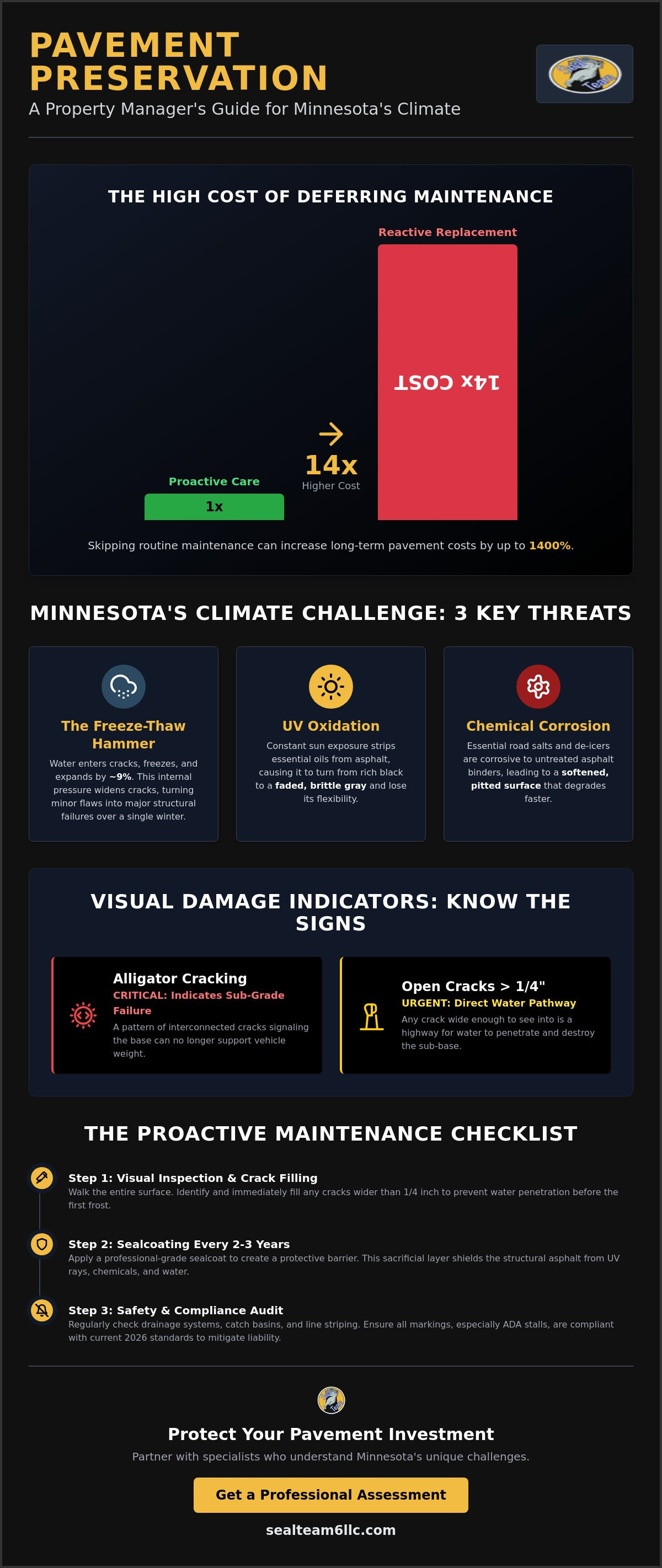
Did you know that skipping routine maintenance can make your long-term pavement costs skyrocket by 14 times the price of proactive care? In our region, where the freeze-thaw cycle acts like a relentless hammer on asphalt, parking lot sealcoating minnesota is the primary defense for any commercial property. You likely already know that a neglected lot doesn't just look bad. It creates liability risks from potholes and risks a total asphalt replacement that could devastate your annual budget.
We understand that managing a facility in 2026 requires balancing immediate safety with long-term value. This guide provides an expert-led checklist designed specifically for the unique environmental stressors we face here in the North. You'll learn how to extend your pavement's lifespan, stay compliant with updated ADA standards, and stop small cracks from becoming expensive structural failures. We'll walk through the essential steps to keep your lot resilient, professional, and safe for every visitor.
Key Takeaways
- Understand how the Minnesota freeze-thaw cycle turns minor surface cracks into major structural failures if left unmanaged.
- Learn how to identify "alligator cracking" and why industrial crack filling is your first line of defense against water penetration.
- Discover why professional parking lot sealcoating minnesota acts as a structural shield, extending your pavement's lifespan by years.
- Identify the specific ADA requirements for 2026 that protect your business from liability and ensure safe access for all visitors.
- Establish a predictable three-year stewardship cycle and learn the best time of year to secure a local specialist for the upcoming season.
The Minnesota Climate Challenge: Why Parking Lot Sealcoating is Structural Defense
Viewing your parking lot as a static piece of infrastructure is a common mistake. Instead, think of it as a significant commercial investment that requires active stewardship to survive. In our region, parking lot maintenance isn't a cosmetic luxury; it's a proactive preservation strategy. Without a defensive layer, your asphalt is vulnerable to a cocktail of environmental stressors that begin degrading the material the moment it's laid down. Professional Sealcoating provides the necessary barrier to keep these elements at bay, ensuring your pavement remains flexible and intact.
The primary antagonist for local property managers is the freeze-thaw cycle. When moisture enters small, often invisible cracks in the pavement, it settles into the asphalt's pores. As temperatures drop, that water expands by approximately 9% as it turns to ice. This expansion exerts incredible internal pressure on the asphalt, widening existing cracks and creating new ones. When the ice melts, it leaves behind a larger void, ready to catch even more water during the next cycle. Over a single winter, this process can happen dozens of times, effectively "hammering" your pavement from the inside out.
Beyond water, two other factors accelerate decay:
- Chemical Corrosion: Minnesota winters require heavy use of road salt and liquid de-icers. These chemicals are essential for safety, but they are corrosive to untreated asphalt binders, causing the surface to soften and pit.
- UV Oxidation: Sun exposure acts as a slow catalyst for oxidation. This process strips away the essential oils that keep asphalt flexible. You'll notice this when your lot turns from a rich black to a brittle, faded gray.
By investing in parking lot sealcoating minnesota, you're not just improving curb appeal. You're applying a sacrificial layer that absorbs these hits so your structural asphalt doesn't have to.
The Science of Asphalt Degradation in the Twin Cities
Asphalt is a viscoelastic material, meaning it needs to remain somewhat flexible to handle the weight of vehicles. In the Twin Cities, the extreme temperature swings force the material to expand and contract at a molecular level. Damage often accelerates during March and April. During these months, the ground begins to thaw during the day, but night-time temperatures still drop below freezing. This rapid cycling is when surface-level wear quickly transitions into base-layer structural failure, as the binder loses its ability to hold the aggregate together.
Water: The Silent Destroyer of Commercial Pavement
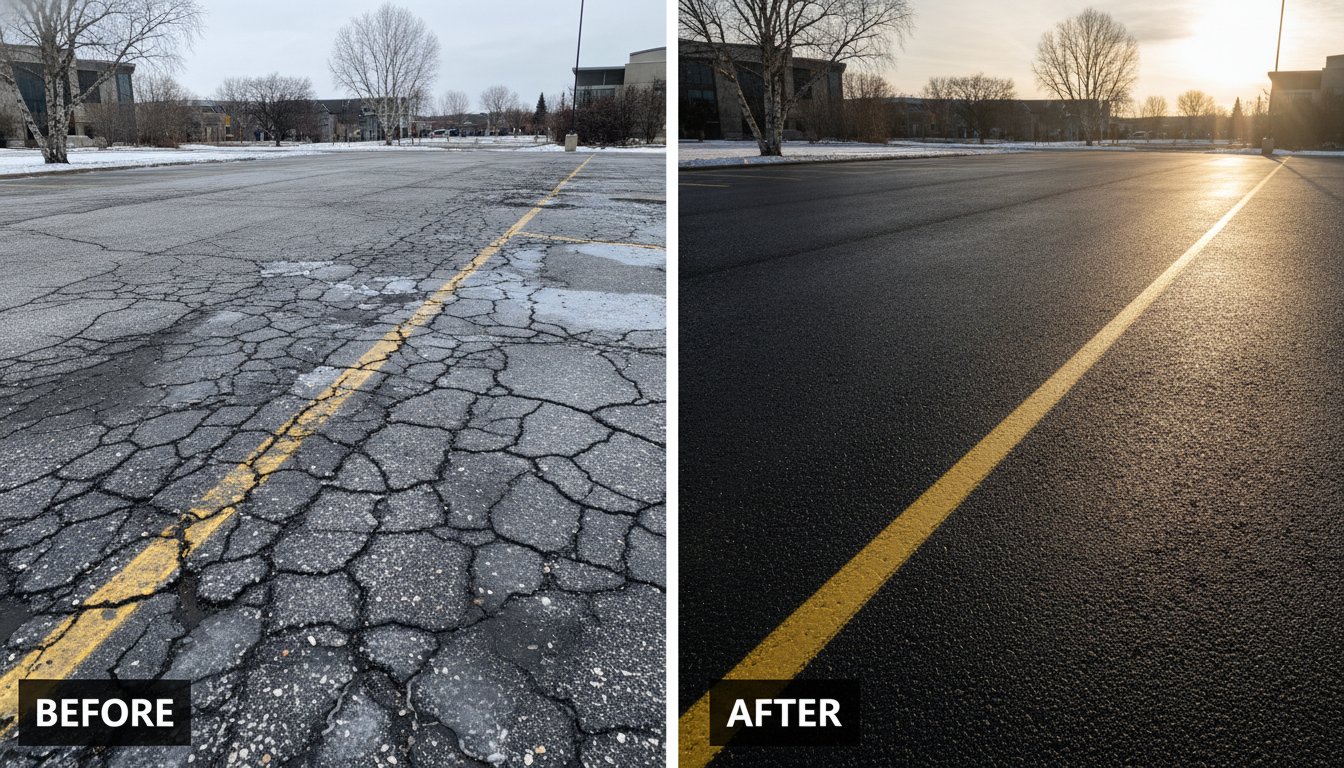
When water penetrates the surface, it creates hydro-static pressure. This occurs when trapped moisture is squeezed by the weight of passing cars, forcing the water deeper into the sub-base. If you see standing water on your lot after a rain, it's a clear indicator that your lot's drainage or grade is failing. Left unaddressed, this leads to the most feared sign of pavement death. Alligator cracking is a series of interconnected cracks resembling reptile scales, indicating that the sub-grade has become saturated and can no longer support the weight of vehicles.
The Essential Preventative Maintenance Checklist for MN Business Owners
Managing a commercial property requires a clear order of operations to prevent small issues from becoming budget-breaking repairs. In Minnesota, your maintenance window is short, usually running from late spring through early autumn. To protect your investment, you need a systematic approach that prioritizes structural integrity over cosmetic fixes. Use this checklist to evaluate your lot's health before the next winter cycle begins.
- Visual Inspection: Conduct a walking audit of the entire surface. Look specifically for "spider web" patterns, which indicate the asphalt is becoming brittle and losing its essential oils.
- Immediate Crack Filling: Identify any cracks wider than 1/4 inch. These are direct pathways for water to reach your sub-grade and must be sealed before the first frost.
- Sealcoating Schedule: Most commercial lots require a fresh protective barrier every two to three years. If the pavement looks gray and porous, it's likely overdue.
- Drainage Audit: Check catch basins for debris or signs of sinking. Standing water is a primary cause of base-layer saturation.
- Safety and Compliance Review: Ensure your stalls and aisles meet current standards. In Minnesota, all ADA stalls and access aisles must be at least 8 feet wide to remain compliant.
Crack Filling: Your First Line of Defense
Think of crack filling as the "seal" on a wound. For commercial properties, we recommend hot-applied rubberized sealant rather than cold-pour alternatives. Hot-applied material creates a flexible, watertight bond that expands and contracts with the pavement during extreme temperature shifts. If you notice cracks exceeding a quarter-inch, they need immediate attention to stop the freeze-thaw cycle from hollowing out the ground beneath your asphalt. For a deeper look at the materials used in our region, see our guide on Expert Driveway Crack Filling in Minneapolis & Saint Paul.
Parking Lot Sealcoating Minnesota: Restoring Health and Aesthetics
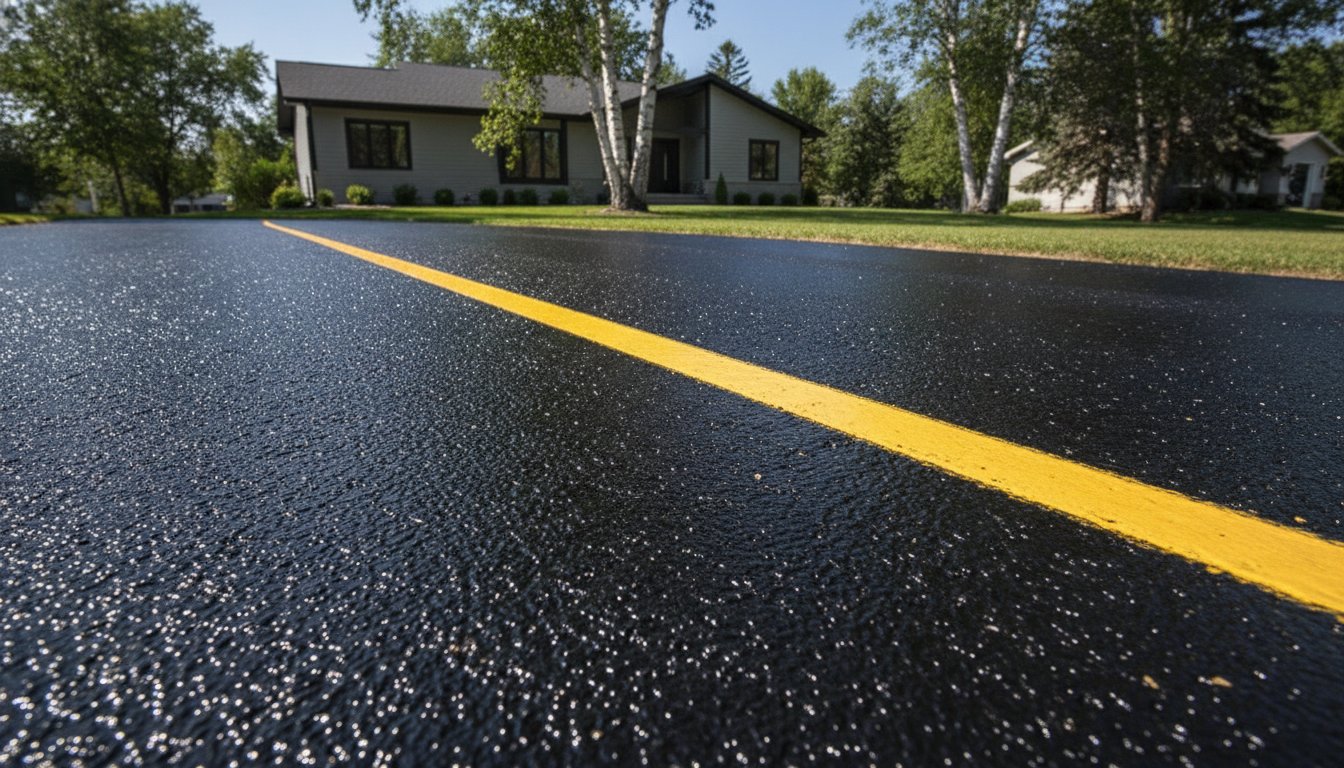
While crack filling handles specific gaps, parking lot sealcoating minnesota provides a comprehensive chemical barrier for the entire surface. Asphalt is naturally porous; it acts like a sponge for automotive fluids. Gas and oil are solvents that dissolve the binders holding your pavement together, leading to soft spots and pitting. A high-quality sealcoat stops these fluids from penetrating the surface. To ensure a proper bond, application must occur when air and surface temperatures are at least 50°F and rising. This ensures the material cures into a durable, protective shield rather than just a surface-level film.
Maintaining a safe environment also means adhering to OSHA parking lot safety guidelines to minimize struck-by hazards and pedestrian risks. If your current lot shows signs of fading or significant wear, scheduling a professional asphalt assessment can help you prioritize the most critical repairs before the seasons change.
Safety and Liability: Maintaining a Compliant Commercial Surface
For a property manager, a parking lot is more than just a place to park vehicles. It's a high-traffic zone where safety and legal compliance intersect. While structural integrity is essential for the pavement's life, the surface condition directly impacts your liability profile. Neglecting visible markings or allowing cracks to expand into trip hazards creates an environment where accidents are more likely to occur. Maintaining a compliant surface isn't just about avoiding fines; it's about protecting your visitors and your bottom line from the high costs of negligence claims.
Visible markings and clear navigation are the navigation system of your property. When striping fades, traffic flow becomes disorganized, increasing the risk of low-speed collisions and pedestrian "struck-by" incidents. Beyond vehicle traffic, unmaintained cracks and settling asphalt create uneven surfaces. These "trip hazards" are a primary source of premises liability. By addressing these issues through regular maintenance, you ensure that your property remains a safe, welcoming environment for everyone who visits.
- ADA Compliance: Ensure all stalls and aisles meet the specific width and slope requirements mandated by state law.
- High-Visibility Markings: Use industrial-grade paint for stalls, crosswalks, and fire lanes to ensure they remain visible in all weather conditions.
- Directional Clarity: Maintain clear arrows and stop bars to dictate traffic flow and prevent confusion in busy intersections.
- Surface Uniformity: Fill cracks and address depressions to eliminate uneven edges that could catch a pedestrian's foot.
ADA Compliance and Professional Striping
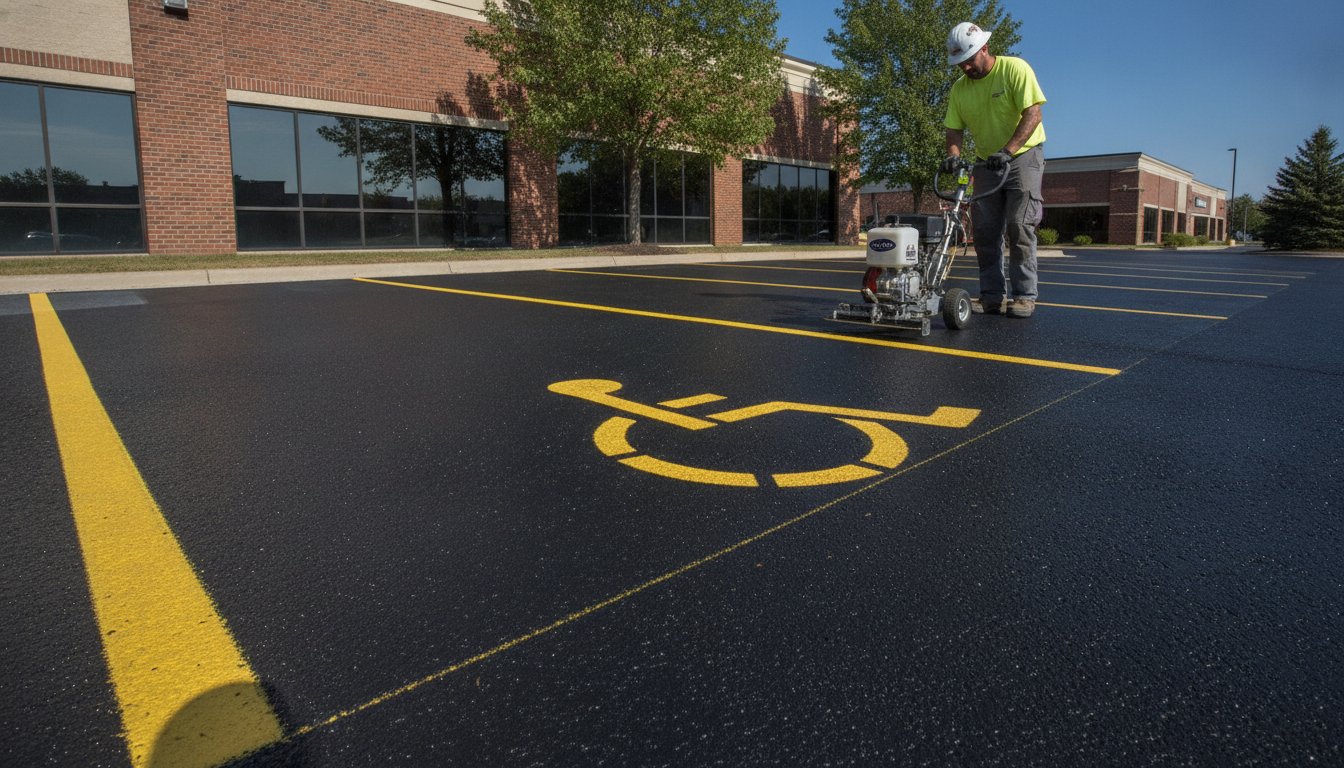
In Minnesota, ADA requirements are more stringent than the federal standard. All accessible stalls and their corresponding access aisles must be a minimum of 8 feet wide. This specific requirement effectively makes every accessible spot in the state van-accessible. When you invest in a restriping project, you aren't just buying paint; you're ensuring your lot remains legally compliant. A well-marked lot builds customer trust by demonstrating that you value their safety and accessibility. Comprehensive asphalt maintenance for property managers must always include a safety audit to identify stalls that no longer meet these evolving standards.
Mitigating Pothole Risks Before They Form
Potholes don't appear overnight. They are the final, destructive stage of neglected crack maintenance. When you allow a crack to remain open, water erodes the sub-base until the asphalt collapses under the weight of a vehicle. The cost of filling a single crack is a fraction of what you'll pay to patch a fully formed pothole or repair a visitor's damaged suspension. Industry safety experts suggest that proactive maintenance can reduce liability claims by as much as 70%. Applying professional parking lot sealcoating minnesota protects the surface from the moisture intrusion that starts this cycle, keeping your lot smooth and your liability low.
Planning Your Maintenance Cycle: Timing and Budgeting for Success
Effective property management relies on foresight rather than reaction. Instead of waiting for a tenant complaint or a vehicle damage claim, successful managers employ a 3-year "Stewardship Cycle." This methodical approach ensures that your asphalt remains under a continuous protective shield. By spreading out the costs of minor repairs, you avoid the massive capital hit of a full lot replacement. A comprehensive commercial asphalt maintenance plan transforms your pavement from a deteriorating liability into a predictable, managed asset.
Timing is a critical factor in the Twin Cities. Because our reliable "working weather" is limited, the best contractors are often booked months in advance. We recommend beginning your evaluation process in late winter or early spring. This allows you to secure a spot on the summer schedule, ensuring your parking lot sealcoating minnesota project is completed during the peak curing months of June, July, or August. Waiting until September risks cooler temperatures that can interfere with the sealant's ability to bond properly with the asphalt binder.
When you begin collecting quotes, look beyond the bottom-line number. A low-cost bid often indicates a diluted product or a single-coat application that won't survive a single season of snow plowing. Ask potential contractors about their material solids content and their specific application thickness. Professional-grade stewardship requires a heavy-duty mix designed to withstand the friction of turning tires and the weight of delivery trucks.
The ROI of Proactive Asphalt Care
The financial argument for maintenance is undeniable. Industry data suggests that every $1 invested in preventative care can save between $6 and $10 in future reconstruction costs. Beyond direct savings, a well-maintained lot significantly impacts property valuation. First impressions matter to stakeholders and prospective tenants; a jet-black, clearly marked lot signals that the entire property is managed with excellence. When presenting budgets to owners, frame these services as "asset preservation" rather than an expense. It's an investment that keeps the property's "welcome mat" looking professional while extending the usable life of the surface by up to 300%.
When to Call a Professional Asphalt Contractor
While some minor tasks seem manageable, DIY solutions often fail because retail-grade sealants lack the industrial polymer modifiers needed for the Minnesota climate. You should call a professional if you notice red flags like standing water, deep depressions, or base-layer failures. These issues require specialized equipment and materials that go beyond surface-level aesthetics. Always ask for local references and proof of insurance. A reputable contractor will be happy to show you commercial projects they've maintained over several years, proving their work can handle our local winters. If you're ready to move from reactive repairs to a strategic plan, you can schedule a strategic consultation to assess your lot's current health.
Partnering for Longevity: How Seal Team LLC Protects Your Investment
Seal Team LLC operates as a specialized guardian for commercial pavement throughout the Twin Cities. We don't just view a parking lot as a surface; we see it as a critical asset that requires expert stewardship to maintain its value. Our "Stewardship First" philosophy is rooted in the belief that proactive, high-quality care is the only reliable way to avoid the massive capital expenditures associated with asphalt failure. By focusing on parking lot sealcoating minnesota and industrial-grade crack filling, we provide the specific defenses needed to withstand our state's unique environmental pressures.
We understand that as a property manager, you're responsible for balancing safety, aesthetics, and a strict budget. That's why we prioritize fixing small issues before they evolve into structural crises. Our team brings local expertise to every project, ensuring that the materials and methods we use are specifically rated for the extreme temperature swings we experience here in the North. We don't believe in quick fixes; we believe in long-term results that protect your bottom line.
Our Specialized Minnesota Maintenance Process
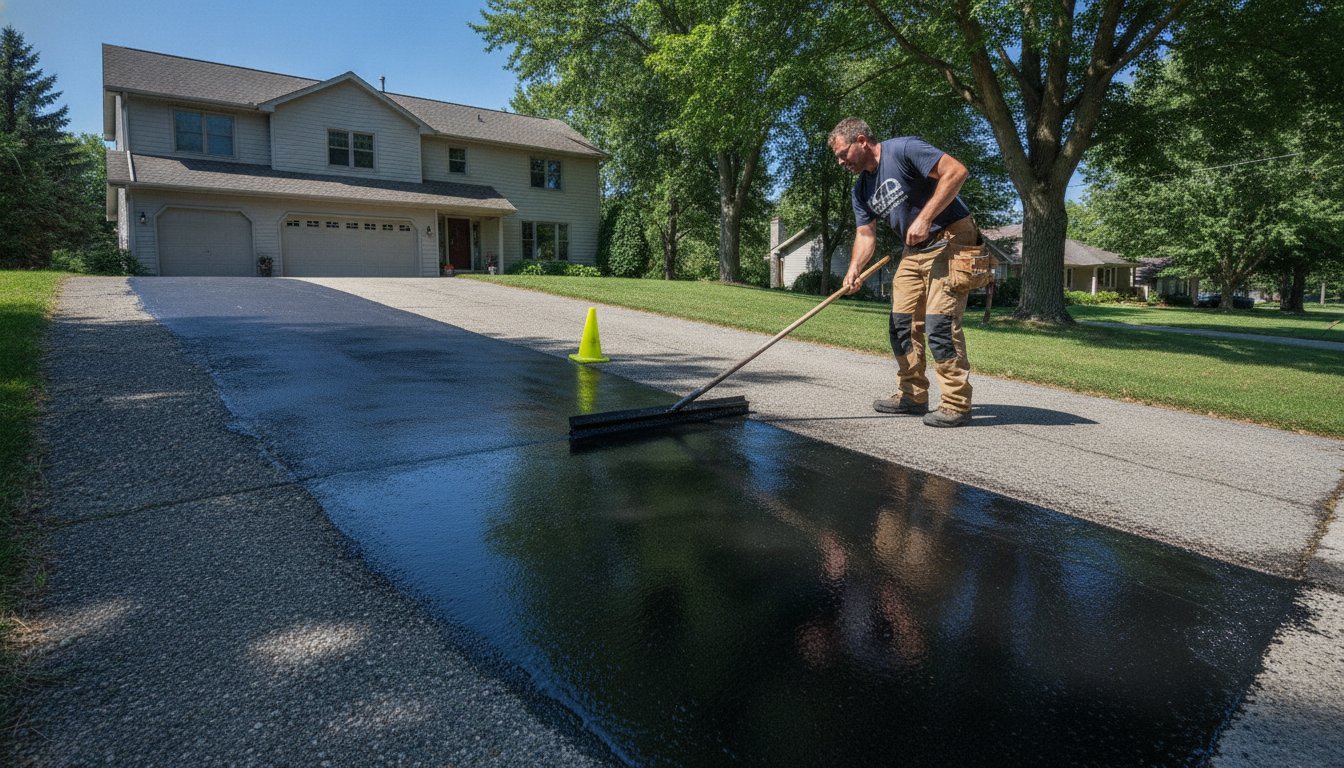
Success in our climate depends entirely on the quality of the bond between the sealant and the asphalt. Our process is methodical and instructional, ensuring every property owner understands the "why" behind our work. We begin with meticulous surface preparation, which includes professional cleaning to remove dirt, debris, and vegetation that could interfere with adhesion. We also prime oil and gas spots to prevent these solvents from eating through the new protective layer.
- Hot-Applied Rubberized Crack Filling: We use industrial-grade material that maintains maximum flexibility, allowing it to expand and contract without failing during the winter.
- High-Solids Sealcoating: Our application uses a high-solids mix that provides a thicker, more durable barrier against UV rays and chemical corrosion.
- Minimal Business Disruption: We work closely with facility managers to phase our projects, ensuring that your tenants and customers still have access to the building during the application process.
Get Your Free Commercial Maintenance Quote Today
Regaining control over your property's long-term maintenance costs starts with a clear understanding of your lot's current condition. We provide detailed, no-obligation assessments for commercial properties across Minneapolis and St. Paul. This evaluation gives you a logical roadmap for preservation, allowing you to budget effectively and prioritize the safety of every visitor who enters your property. It's a transparent process designed to build trust through thoroughness and expert insight.
Because the summer window for professional curing is limited in our region, early booking is essential to secure your place on our schedule. Don't wait for a small crack to become a liability claim or a costly pothole. Take the first step toward a more durable, compliant, and professional-looking property by requesting your free estimate today. We're here to be your partner in pavement preservation for 2026 and beyond.
Securing Your Pavement's Future for 2026 and Beyond
Effective property management isn't about fixing problems after they occur. It's about preventing them through diligent stewardship. You've seen how the Minnesota freeze-thaw cycle can turn minor cracks into structural failures, but you also have the tools to stop that process. By adhering to a three-year maintenance cycle and prioritizing high-visibility safety standards, you protect both your visitors and your long-term budget. Professional parking lot sealcoating minnesota remains the most effective way to shield your asphalt from the corrosive effects of road salt and UV oxidation.
Seal Team LLC specializes in providing the specific defenses our local climate demands. From expert hot-applied rubberized crack filling to high-solids surface protection, we help you avoid the 14-fold cost increase of a full asphalt replacement. We invite you to take the first step toward a safer, more durable commercial property. Protect your property today with a free maintenance estimate from Seal Team LLC. Our team is ready to provide a thorough commercial lot assessment and help you build a resilient maintenance plan that lasts.
Frequently Asked Questions
How often should a parking lot be sealcoated in Minnesota?
Most commercial parking lots in our region require a fresh application every two to three years. This timeline is necessary because the extreme temperature swings and heavy use of de-icing chemicals strip away the asphalt's protective oils faster than in milder climates. If your pavement has turned a light gray color or feels porous to the touch, it's a clear indicator that the previous barrier has worn away.
Can parking lot maintenance be done in the winter?
No, professional maintenance cannot be performed during a Minnesota winter. Sealants and crack fillers require air and surface temperatures to be at least 50 degrees Fahrenheit and rising to cure and bond properly. If applied in freezing temperatures, the material will fail to adhere and simply flake off, wasting your investment. We recommend scheduling your work between May and September for the best results.
What is the difference between crack filling and crack sealing?
Crack filling involves placing a specialized material into non-moving cracks to prevent water from reaching the sub-base. Crack sealing is generally used for "working" cracks that expand and contract significantly with the seasons. For our local climate, we focus on industrial-grade crack filling using hot-applied rubberized material. This ensures the seal remains flexible enough to survive the ground shifting during the intense spring thaw.
How long does a parking lot need to be closed after sealcoating?
You should plan to keep your lot closed to all traffic for 24 to 48 hours after the application is complete. While the surface may feel dry to the touch within a few hours, the material needs a full day or two to cure deeply enough to handle the weight and friction of turning vehicle tires. Opening the lot too early can lead to tracking and permanent scuffing on the new surface.
Is sealcoating just for looks, or does it actually protect the asphalt?
While the jet-black finish significantly improves curb appeal, parking lot sealcoating minnesota is primarily a structural defense. The sealant acts as a sacrificial layer that absorbs the damage from UV rays, gas spills, and road salts. Without this protection, the asphalt binders become brittle and lose their flexibility, leading to the "alligator cracking" and potholes that eventually require expensive replacement.
What happens if I ignore the cracks in my parking lot for one more season?
Ignoring cracks for even one more season allows water to penetrate the sub-grade, where it will expand during the next freeze cycle. This process hollows out the ground beneath your pavement, leading to the formation of potholes or base-layer failure. The cost to repair these structural issues is significantly higher than the cost of a proactive crack-filling service performed before the snow falls.
Do I need to restripe my parking lot every time I sealcoat?
Yes, you must restripe your parking lot every time you apply a new layer of sealcoat. The sealant is an opaque black material that will completely cover your existing parking stalls, directional arrows, and ADA markings. Restriping is a critical step to ensure your property remains compliant with safety standards and traffic flow regulations immediately after the lot reopens to the public.
How much does commercial parking lot maintenance cost per square foot?
The cost of commercial maintenance varies based on the total square footage of the lot and the current condition of the asphalt surface. Factors such as the depth of existing cracks and the complexity of the striping layout will influence the final project scope. We recommend a professional on-site assessment to get an accurate quote tailored to your property's specific needs and traffic patterns.