Did you know that a standard asphalt driveway can last up to 40 years with proper maintenance, yet most homeowners end up paying for a full replacement in less than half that time? It's stressful to watch small hairline cracks appear after a single Minnesota winter. You know that if water gets underneath the surface, those tiny lines will inevitably become tire-jarring potholes by spring. This is why investing in professional driveway preservation services is a necessity rather than a luxury for local property owners who want to avoid the high cost and disruption of total repaving.
We understand that you want to protect your property value without falling for a "quick fix" scam. This guide explains how specialized preservation techniques act as a proactive defense system, shielding your investment from the brutal freeze-thaw cycles that define our region. You'll learn the critical difference between cosmetic coatings and structural crack filling; we also provide the 2026 standards for vetting contractors based on MnDOT best practices. By the end of this article, you will have a clear plan to ensure your driveway survives the next freeze intact while extending its functional lifespan for decades.
Key Takeaways
- Differentiate between proactive maintenance and costly reconstruction to extend your pavement's functional lifespan for decades.
- Understand the "Minnesota Freeze-Thaw" effect and how liquid expansion can compromise your driveway's structural integrity if left unsealed.
- Learn why professional driveway preservation services must include thorough cleaning and crack filling before sealcoating to provide a true moisture barrier.
- Identify the critical warning signs of common industry scams to ensure you choose a reliable, insured local specialist for your property care.
- Discover how a structured preservation plan defends against the brittle effects of oxidation and chemical erosion caused by road salts.
What Are Driveway Preservation Services?
Driveway preservation is not just a fancy term for a quick cleanup; it is a systematic approach to maintenance that prioritizes the health of your existing asphalt. Think of it as the difference between regular oil changes for your car and waiting for the engine to seize before visiting a mechanic. The goal of driveway preservation services is to keep your pavement in its "good" state for as long as possible, preventing the slow degradation that leads to expensive structural failure.
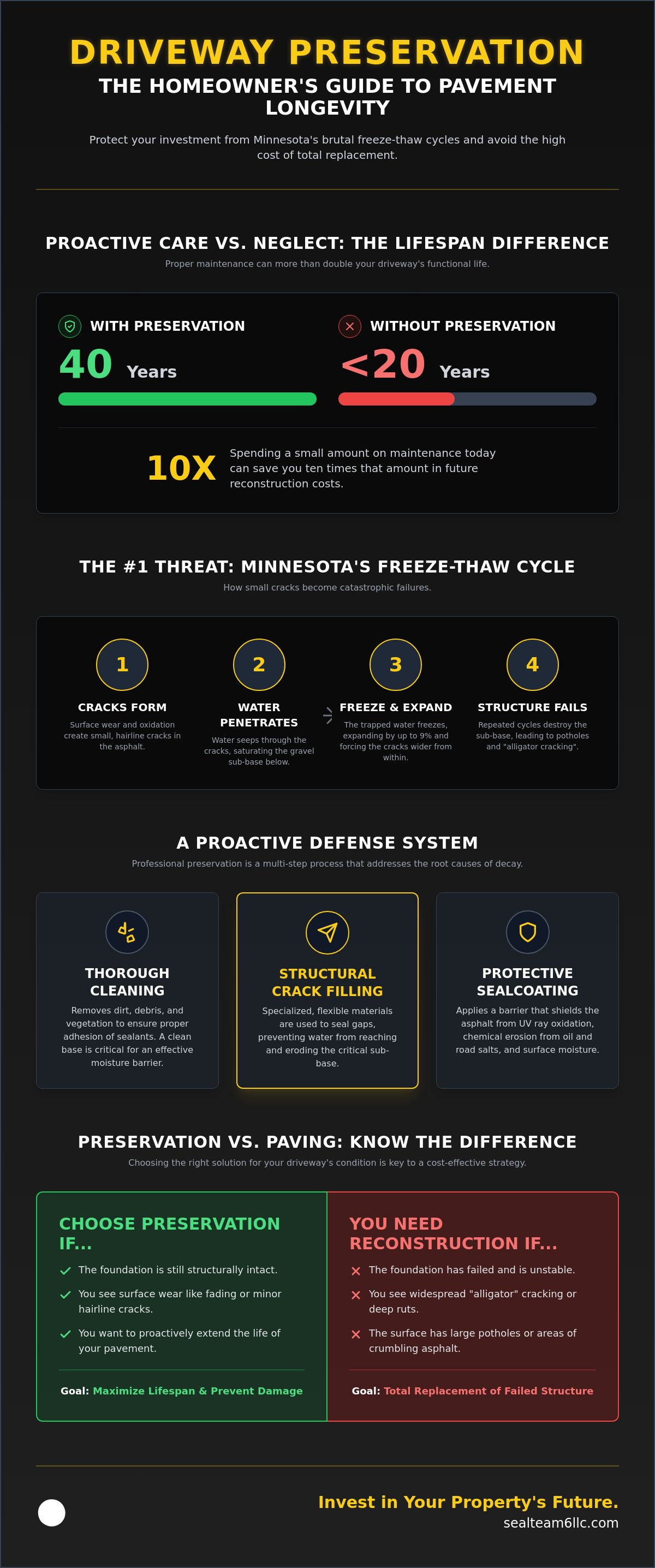
According to the City of Saint Paul, a typical asphalt pavement can last up to 40 years with diligent preventative care. Without it, you might find yourself facing a full reconstruction in half that time. This strategy follows the "Pavement Preservation Life Cycle," a principle that suggests spending a small amount on maintenance today can save you ten times that amount in future repair costs. By acting while the asphalt is still structurally sound, you avoid the heavy machinery and massive bills associated with tearing out and replacing your entire driveway.
The process relies on two primary pillars of defense:
- Crack Filling: This involves sealing gaps with specialized materials to prevent water from reaching the gravel sub-base.
- Sealcoating: This provides a protective barrier against UV rays and chemicals. You can find more technical details in this Sealcoating Explained resource.
Preservation vs. Paving: Knowing the Difference
Is your driveway a candidate for preservation, or is it too late? Preservation is designed for asphalt that is still structurally intact but showing signs of surface wear, such as fading or minor cracking. In contrast, rehabilitation or paving is required when the foundation has failed, often evidenced by "alligator" cracking or deep ruts. While a new driveway can cost significantly more per square foot, preservation costs a fraction of that price. At Seal Team LLC, we specialize in keeping your current asphalt healthy; we do not offer paving or dig-outs because our mission is to prevent you from needing them in the first place.
The Goal of Stewardship
We view every homeowner as a steward of their property's value. A well-maintained driveway does more than just look good; it serves as a safe, smooth surface for your family and visitors. Regular driveway preservation services can nearly double the functional life of your pavement by shielding it from the elements. By choosing a proactive plan, you aren't just buying a service; you're investing in the long-term durability of your home's exterior and ensuring your curb appeal remains high for decades to come.
The Science of Asphalt Decay: Why Preservation is Necessary
Asphalt is a complex composite of stone aggregates and bitumen, a petroleum-based binder. It's designed to be flexible, allowing it to expand and contract with temperature changes. However, this flexibility is temporary if the material isn't shielded from the environment. Understanding the mechanical breakdown of these materials is the first step in realizing why professional driveway preservation services are a requirement for long-term durability.
How UV Rays Weaken Your Driveway
Solar radiation is a constant stressor. Oxidation is the process where the sun robs bitumen of its binding oils. Just as skin needs protection to avoid damage, your driveway requires a barrier to prevent it from becoming gray and brittle. For a deeper look at this, read about asphalt sun damage protection to see how we shield your pavement from UV decay.
The U.S. National Park Service advocates for proactive pavement preservation because it addresses the underlying causes of decay rather than just the symptoms. Beyond UV rays, chemical erosion from oil leaks and road salt can dissolve the binders in your pavement. These substances act as solvents, turning a solid surface into a loose collection of gravel.
The Danger of Unsealed Cracks
Water penetration is the leading cause of sub-base erosion. A crack as narrow as 1/4 inch is an open door for liquid to reach the gravel and soil beneath your driveway. When the sub-base becomes saturated, it loses its ability to support weight. This leads to shifting, sinking, and the formation of "alligator cracking," which is often the point of no return for asphalt surfaces.
The freeze-thaw cycle is the most aggressive threat in Minnesota. When water enters a crack and freezes, it expands by 9%, creating enough force to widen the gap and lift the pavement. This cycle repeats dozens of times each winter, turning minor blemishes into structural failures. Investing in professional driveway preservation services ensures these entry points are sealed tight. Proactive crack filling is the single most important step you can take to defend your property against the coming winter.
The Core Components of a Professional Preservation Plan
Effective driveway preservation services rely on a systematic approach rather than a single, isolated task. It is a three-step defense designed to seal out moisture and block the destructive effects of UV rays. This process includes thorough cleaning, precision crack filling, and a high-quality sealcoat application. Skipping the preparation or sealing over open cracks results in a cosmetic failure; your driveway might look dark and new for a few weeks, but the structural vulnerabilities remain wide open to the elements.
The foundation of any successful application is meticulous surface preparation. We begin by mechanically edging the grass away from the asphalt to expose the full width of the pavement. This ensures that the sealant covers the vulnerable edges where many driveways first begin to crumble. High-pressure air blowers and wire brushes are then used to remove dirt, debris, and vegetation from every crevice. Without this level of cleaning, the preservation materials won't bond properly to the asphalt, leading to peeling and premature wear.
Crack Sealing: The First Line of Defense
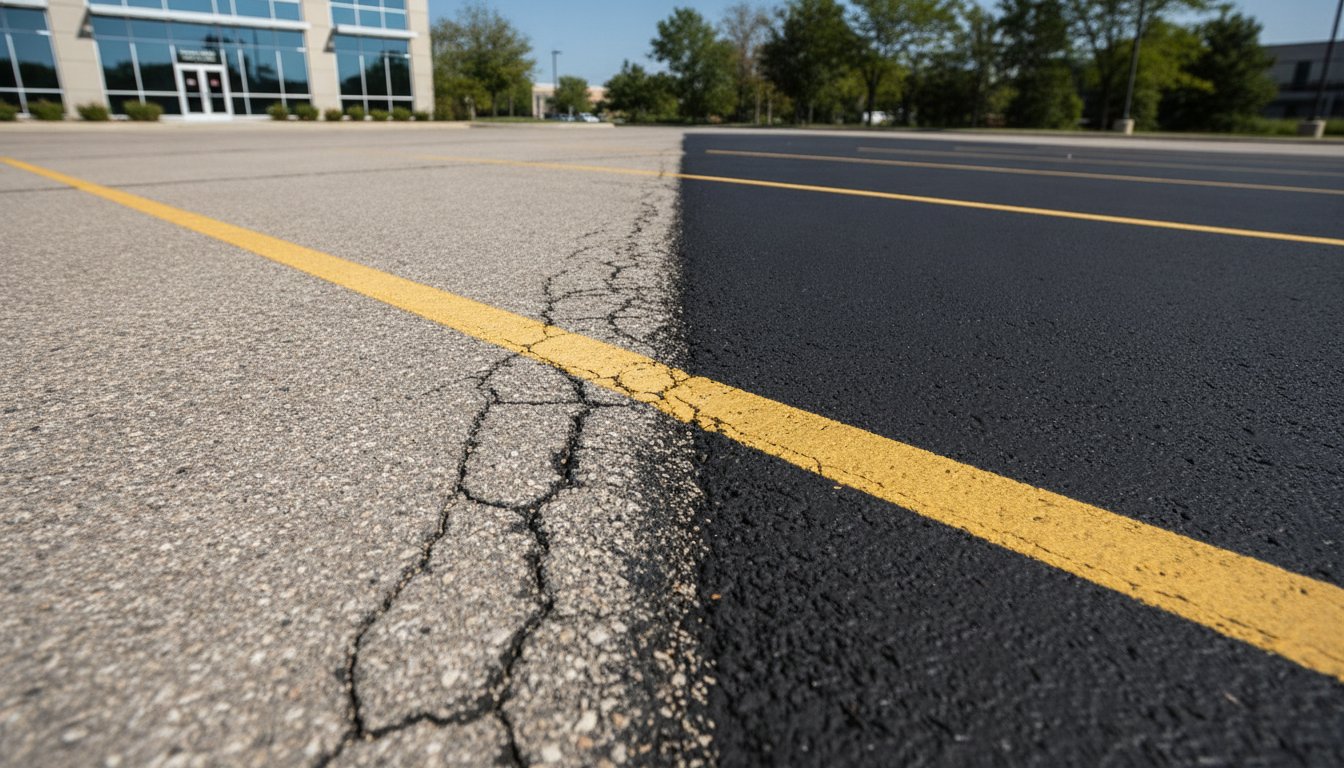
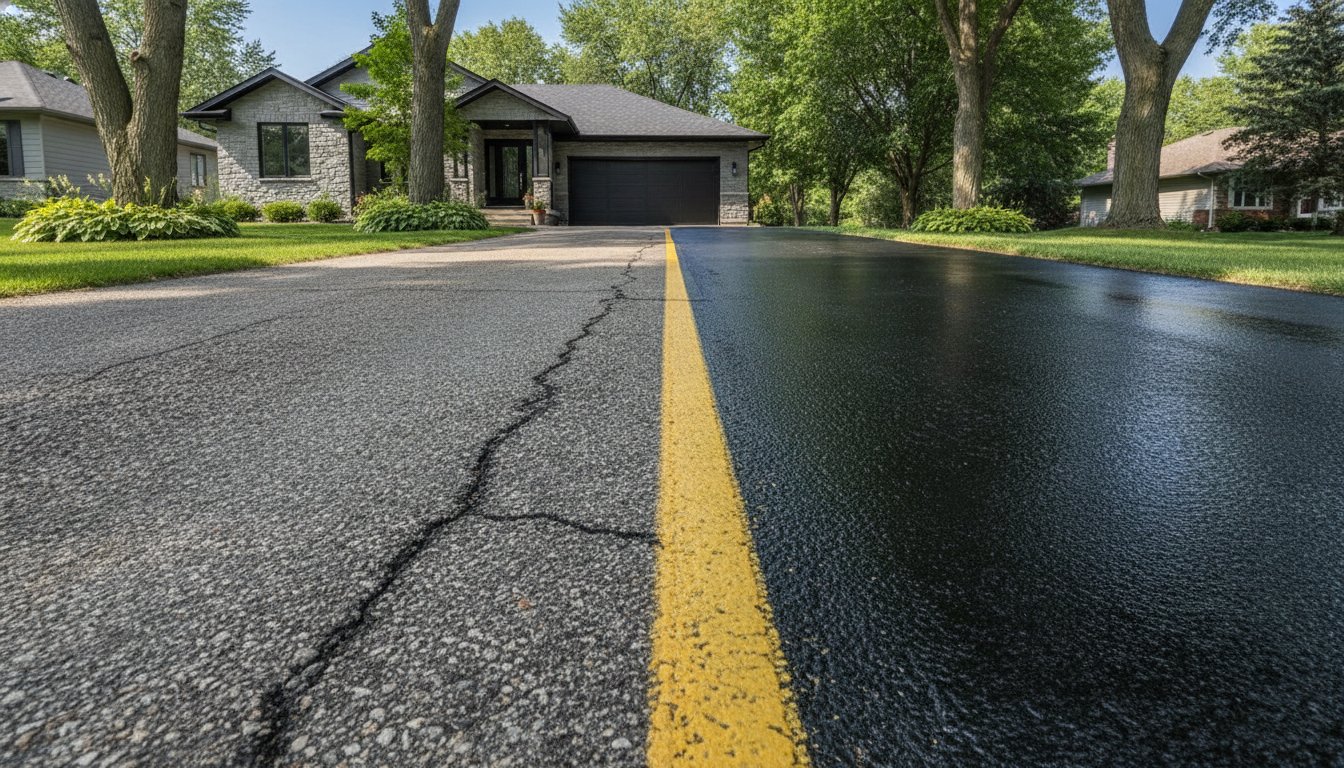
Once the surface is clean, we address the cracks that allow water to reach your driveway's sub-base. We use a hot-applied rubberized crack filler that is heated to approximately 400 degrees. This material is specifically engineered to remain flexible during our harsh winters; it expands and contracts along with the pavement without losing its seal. There is a significant difference between simply "filling" a crack with a cold-pour product and "sealing" it with professional-grade hot rubber. Sealing creates a watertight bond that prevents the freeze-thaw cycles from widening the gaps. If you're interested in the technical nuances of this process, you can explore our guide on how to fix driveway cracks. We focus on active cracks that are 1/4 inch or wider, as these pose the greatest threat to your driveway's foundation.
Sealcoating: The Protective Shield
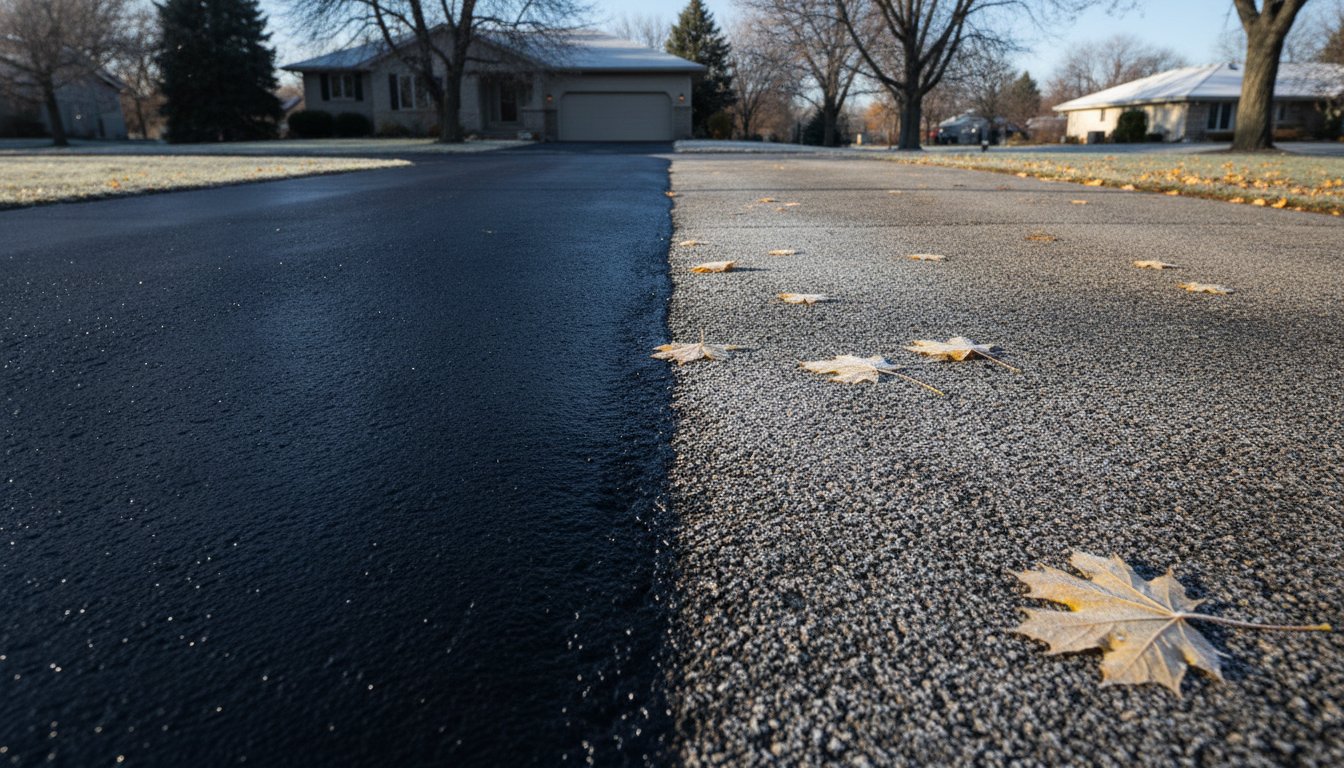
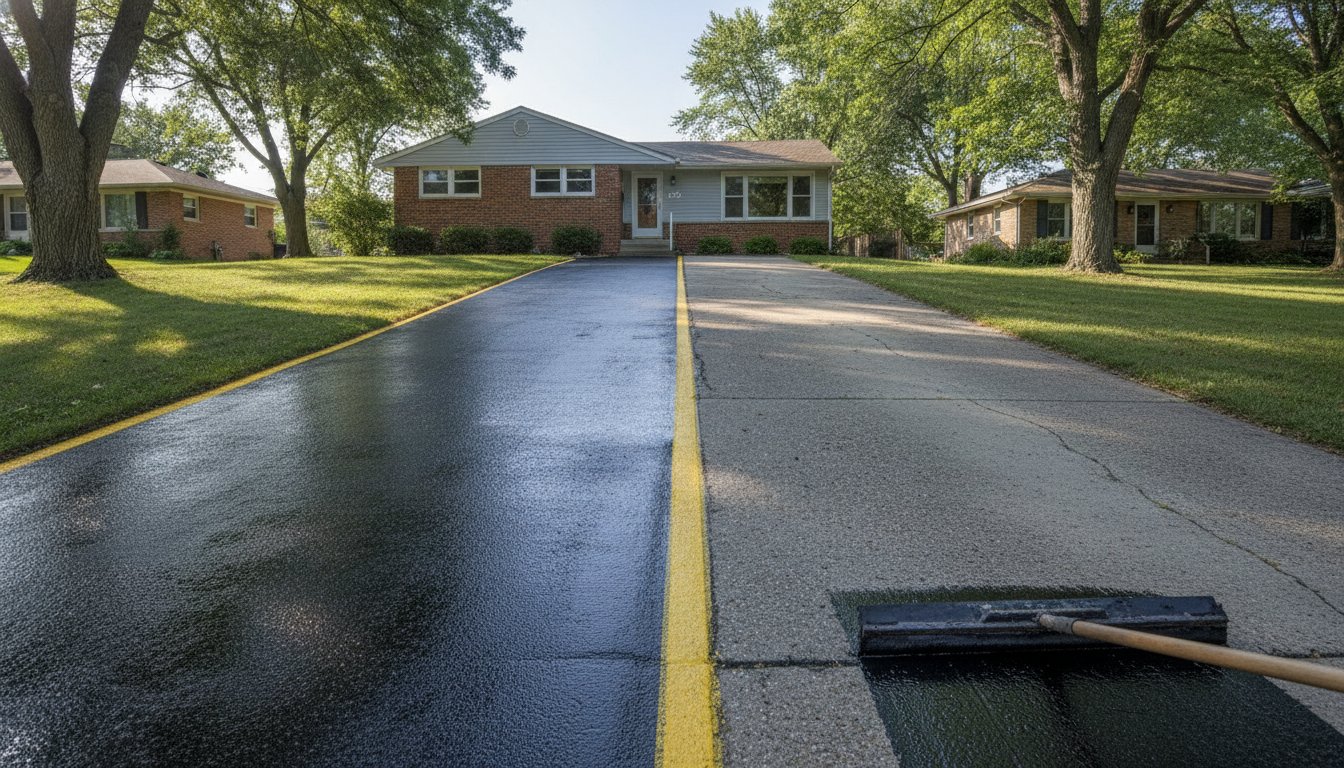
The final stage of driveway preservation services is the application of an industrial-grade emulsion sealer. This isn't just a black coating for aesthetics; it acts as a sacrificial wear surface. The sealcoat takes the brunt of the traffic, solar radiation, and chemical spills, sparing the underlying asphalt from direct damage. A professional application restores the deep, dark appearance of your driveway while providing a slip-resistant finish. When planning your maintenance schedule, it's helpful to review the professional sealcoating cost for 2026 to ensure your budget aligns with long-term stewardship. This protective shield is the final layer of defense that keeps your investment intact for years to come.
Why Minnesota’s Climate Demands Specialized Preservation
Living in the Twin Cities means your driveway faces some of the most aggressive environmental conditions in North America. The "Minnesota Freeze-Thaw" isn't just a local catchphrase; it's a mechanical reality that destroys asphalt from the inside out. When water enters unsealed pores or cracks and freezes, it expands by 9%. This expansion generates immense pressure, physically blowing cracks apart and lifting the pavement. Because our region experiences dozens of these cycles every winter, a single season of neglect can lead to rapid structural failure. Professional driveway preservation services are specifically designed to create a moisture-proof seal that prevents this internal expansion from occurring.
In Minneapolis and Saint Paul, our "Season of Opportunity" for maintenance is remarkably short. According to industry standards for our climate, sealcoating should only be applied when the air temperature is above 50°F and the pavement is warm and dry. This limited window means that property owners must be proactive. Waiting until late autumn often results in materials failing to bond properly, leaving your asphalt vulnerable just as the first ground frost arrives. Local expertise is non-negotiable here; a contractor must understand the specific humidity and temperature fluctuations of the Upper Midwest to select the right industrial-grade emulsions.
Surviving the 2026 Winter Cycle
Preservation must be completed before the ground reaches its first deep freeze to be effective. Brittle, unsealed asphalt is much more susceptible to damage from snowplows and heavy snowblowers. A sealed surface remains flexible, allowing the blade of a plow to glide over the top rather than catching on jagged, oxidized edges. For more information on coordinating your maintenance before the snow flies, consult our 2026 timing guide to ensure your driveway is protected in time.
Salt and Chemical Resistance
Road salt and liquid de-icers are essential for winter safety, but they are devastating to unsealed asphalt. These chemicals react with the bitumen binder, causing it to dissolve and lose its grip on the stone aggregate. Professional sealcoating acts as a non-porous shield, preventing salt-laden slush from soaking into the pavement. To maximize these preservation results, we recommend clearing snow promptly to reduce the time salt sits on the surface. If your driveway is already showing signs of graying or surface pitting, it is time to act. Contact us today to secure your spot in our seasonal schedule and defend your asphalt against the harsh Minnesota elements.
Choosing the Right Preservation Partner in the Twin Cities
Selecting a contractor for your asphalt maintenance is a decision that impacts your property value for years. While many companies offer driveway preservation services, the quality of materials and the thoroughness of the application vary significantly. A contractor who arrives unannounced at your door claiming to have "leftover material" from a nearby job is a major red flag. These operators often use diluted, low-grade sealants that provide a dark color but offer zero structural protection against Minnesota's freeze-thaw cycles. Professional stewardship requires a written estimate, a clear explanation of the process, and a commitment to using industrial-grade materials.
Verifying credentials is the next step in protecting your investment. In cities like Saint Paul, reputable contractors must maintain specific liability insurance and licensing to operate. Ask for local references and check for a history of reliable service in the Twin Cities. A legitimate specialist will be transparent about their insurance coverage and the specific steps they take to prepare the surface. They should treat your driveway as a long-term asset, not just another stop on a high-volume route.
Questions to Ask Your Contractor
- Do you use industrial-grade sealer or a hardware store "budget" mix? Professional-grade emulsions contain higher solids and polymer additives that hardware store buckets lack.
- Is crack filling included in the preservation quote? Sealing over cracks without filling them first is a cosmetic failure that allows water to reach the sub-base.
- What is your warranty for material adhesion? A reliable partner stands behind their work and ensures the product bonds correctly to the asphalt.
The Seal Team LLC Difference
At Seal Team LLC, we don't believe in quick fixes or high-pressure sales. Our approach is rooted in the role of a knowledgeable local specialist. We focus exclusively on residential driveways and commercial lots within the Twin Cities, ensuring our techniques are perfectly calibrated for the local climate. We take the time to educate our clients on the "why" behind every step, from mechanical edging to hot-applied crack sealing. Our goal is to provide a defense system that nearly doubles the life of your pavement through diligent, expert-led care.
Don't wait for small cracks to become expensive potholes this winter. Secure your property's future with a partner who values honesty and long-term results. Protect your investment today with a free quote from Seal Team LLC and ensure your 2026 preservation needs are handled by local experts who understand the stakes.
Take Control of Your Driveway's Longevity
Maintaining an asphalt driveway in the Twin Cities requires more than a reactive approach to repairs. As we have explored, the combination of oxidation, chemical erosion, and the relentless Minnesota freeze-thaw cycle can turn a healthy surface into a liability in just a few seasons. By shifting your focus toward driveway preservation services, you are choosing to defend your property against structural decay before it starts. This proactive strategy is the most effective way to nearly double the functional lifespan of your pavement while avoiding the massive expense of a full replacement.
Successful preservation depends on the quality of the materials and the precision of the application. Our team brings local Minnesota expertise to every project, utilizing industrial-grade sealants and acting as hot-applied crack filling specialists to ensure a watertight bond. We take pride in helping our neighbors understand the technical aspects of asphalt care with transparency and honesty. Secure your driveway's future with a professional preservation estimate from Seal Team LLC. Don't let another winter compromise your investment; reach out today to start a long-term stewardship plan for your home.
Frequently Asked Questions
Is driveway preservation the same as sealcoating?
Driveway preservation is a comprehensive maintenance strategy that includes sealcoating as one of its primary components. While sealcoating provides the protective surface layer, a complete preservation plan also involves mechanical cleaning and hot-applied crack filling to address structural vulnerabilities. Treating these as a combined system is what prevents water from reaching the sub-base and causing the long-term failures discussed earlier in this guide.
How often should I invest in driveway preservation services in Minnesota?
For residential properties in Minnesota, we generally recommend driveway preservation services every two to three years. This frequency is dictated by our state's extreme temperature fluctuations and the heavy use of de-icing chemicals. Regular maintenance ensures the sealcoat remains flexible and the crack filler stays intact, providing a continuous defense against the brutal freeze-thaw cycles that characterize our winters.
Can preservation fix a driveway that is already crumbling?
No, preservation is designed to maintain asphalt that is still structurally sound rather than fixing pavement that has already failed. If your driveway is crumbling, has deep ruts, or shows extensive "alligator" cracking, it likely requires rehabilitation or full paving. Our services focus on keeping healthy asphalt in its current state to avoid the high costs associated with those more intensive reconstruction projects.
What is the best time of year for asphalt preservation in the Twin Cities?
The optimal window for asphalt preservation in the Twin Cities typically runs from May through September. The air and pavement temperatures must be consistently above 50°F for the materials to bond and cure correctly. Because our season is relatively short, it's best to schedule your maintenance during the warm, dry months of summer to ensure the sealant has adequate time to set before the first ground frost.
How long do I need to stay off my driveway after preservation services?
You should wait at least 24 to 48 hours before driving a vehicle onto your newly preserved surface. While the sealant may feel dry to the touch within a few hours, it requires a full day or two to cure completely and reach its maximum durability. Foot traffic is usually safe after 4 to 8 hours, but keeping heavy vehicles off the surface is critical to prevent scuffing or tracking during the initial curing phase.
Is it worth sealcoating a brand-new driveway?
Yes, but you must allow the new asphalt to cure for 6 to 12 months before applying your first sealcoat. This waiting period allows the light oils in the fresh asphalt to evaporate, ensuring the driveway preservation services can bond effectively to the surface. Starting a maintenance cycle early is a form of stewardship that protects the bitumen binder from oxidation and UV damage right from the beginning of its lifespan.
What happens if it rains immediately after my driveway is sealed?
If it rains within 4 to 8 hours of application, the sealant may wash away or become streaked before it has a chance to set. Professional services are always scheduled based on a clear weather forecast to avoid this risk. If unexpected rain occurs, we evaluate the surface for "washout" and determine if a re-application is necessary to ensure the protective barrier remains uniform and effective.