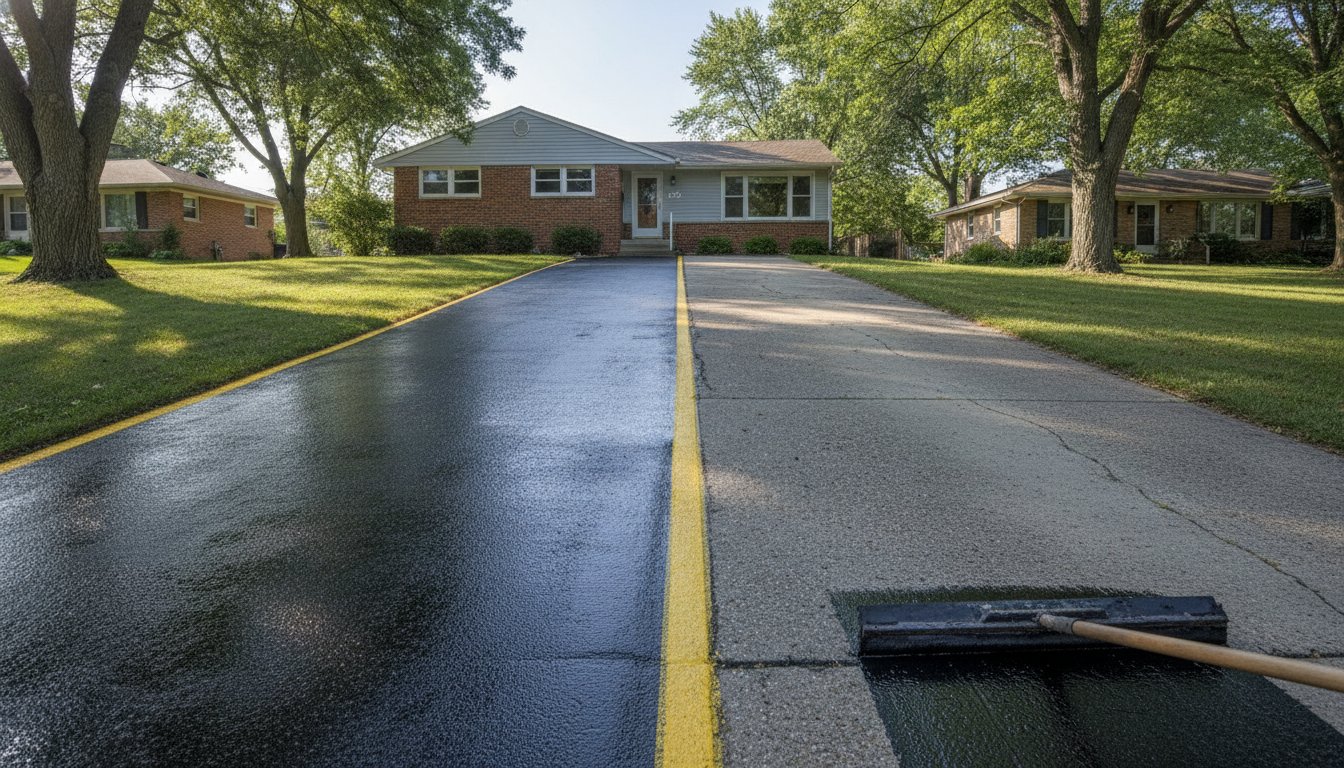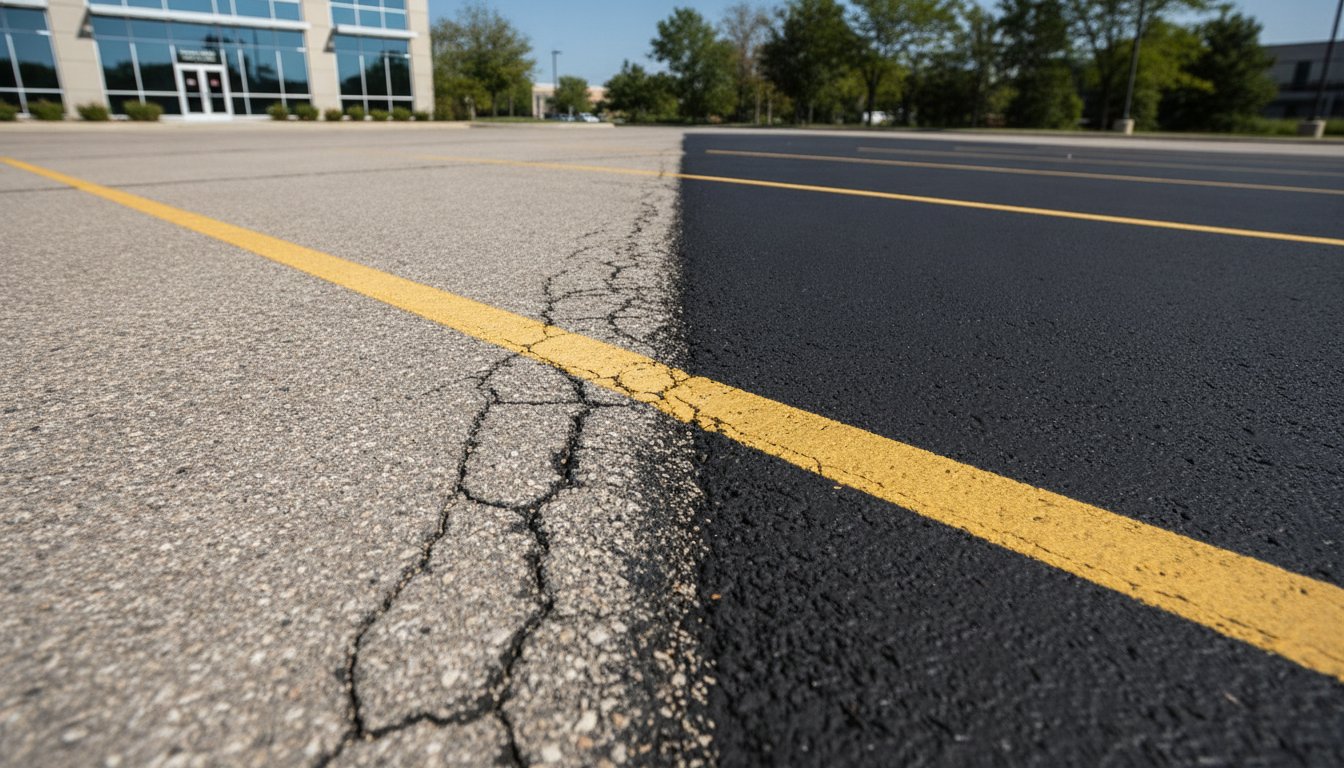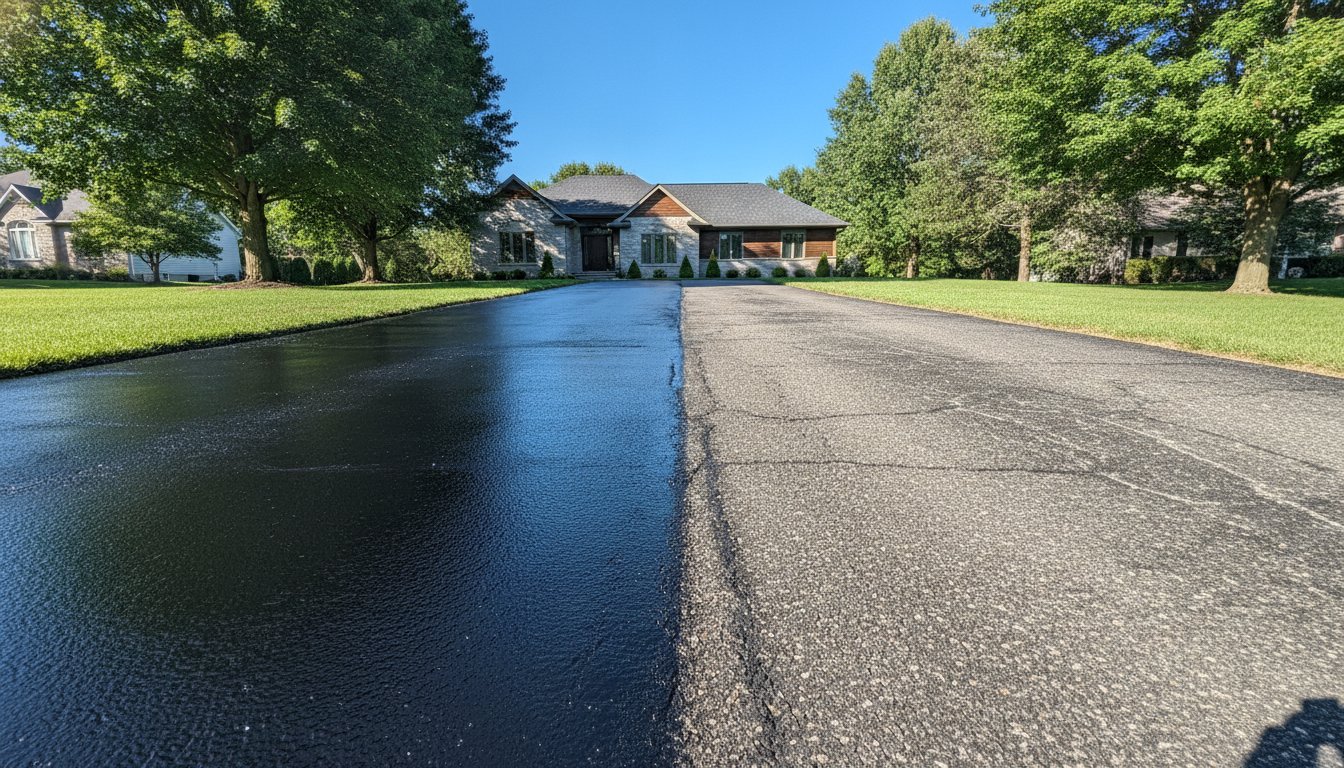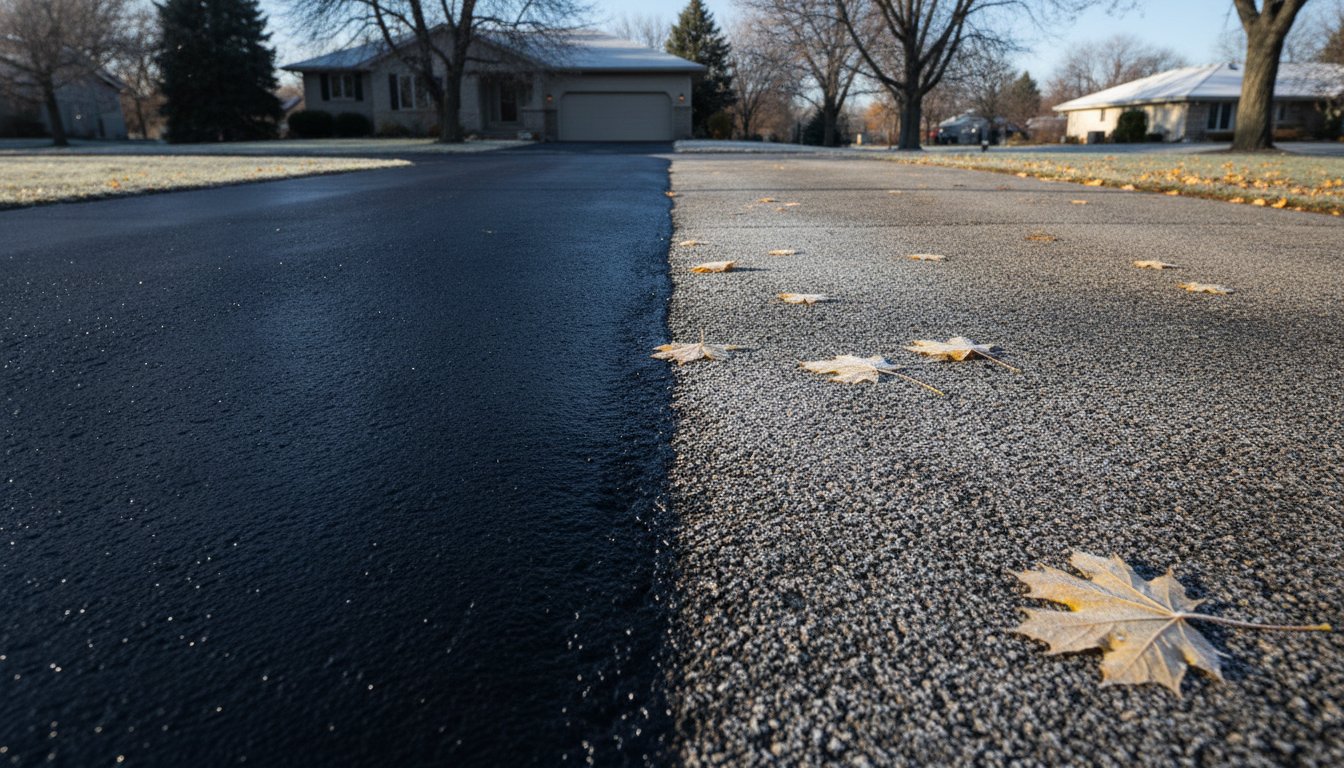
If you treat sealcoating like a simple coat of paint, you might be setting your driveway up for a costly failure this winter. It's a common mistake to think a late-season application is better than nothing, but the truth is that sealcoating is a complex chemical reaction that requires specific conditions to succeed. You've likely felt that familiar autumn anxiety as the temperature drops, wondering if you've waited too long to protect your asphalt from the coming road salt and ice. One of the most frequent questions we receive as the days get shorter is exactly when is it too late to sealcoat a driveway.
We understand that you want to be a good steward of your property and avoid the peeling or flaking that comes with a failed application. In this 2026 timing guide, you'll discover the hard temperature cut-offs and seasonal deadlines necessary for a proper cure before the Minnesota freeze sets in. We'll explain the science behind the 50 degree threshold, the specific risks of pushing the season too far, and the actionable steps you can take if the weather window has already closed for the year.
Key Takeaways
- Understand the 50-degree rule and why both air and pavement temperatures must remain steady for the sealant to bond effectively.
- Identify the specific October deadline for the Twin Cities to ensure your maintenance is completed before the first frost hits.
- Learn why environmental factors like falling leaves and shorter daylight hours help determine when is it too late to sealcoat a driveway.
- Discover how the Minnesota freeze-thaw cycle can shatter unsealed asphalt and why proactive stewardship is more cost-effective than major spring repairs.
- Explore alternative maintenance strategies, such as crack filling, to protect your driveway’s sub-base if you have missed the primary sealing window.
The Science of Timing: Why You Can’t Sealcoat in the Cold
Sealcoating is a chemical process, not a simple paint job. It involves an emulsion of liquids and solids that must undergo a specific transformation to protect your asphalt. To understand when is it too late to sealcoat a driveway, you have to look at the physics of evaporation. Because the sealer is water-based, it relies on the surrounding air and the pavement surface to pull moisture out of the material. This leaves behind the protective binder and aggregate that shield your driveway from the elements. When temperatures drop, this evaporation slows down or stops entirely, leaving the material vulnerable and unstable.
Applying sealer in cold weather is a recipe for immediate failure. Without the right thermal conditions, the material cannot bond to the asphalt. Instead of a durable shield, you end up with a brittle layer that will likely peel, flake, or wash away with the first snowfall. This isn't just a cosmetic issue; it's a waste of your maintenance budget and leaves your driveway unprotected during the harshest months of the year. As a property owner, your goal is stewardship of your investment. Forcing an application in sub-optimal conditions works against that goal.
Curing vs. Drying: Understanding the Process
It is helpful to distinguish between "drying" and "curing" when scheduling your service. Drying is the initial stage where the sealer becomes firm enough to walk on. Curing is the much longer process where the material reaches its full chemical hardness and structural integrity. Sealcoating creates a tenacious chemical bond with the oxidized asphalt by penetrating the surface pores and hardening into a monolithic protective layer. If cold air traps moisture within the sealer, it prevents these chemical chains from forming. This results in a "soft" cure that can be easily damaged by car tires or snowplows.
The 50-Degree Rule for Ambient and Surface Temp
The "too late" threshold is governed by the 50-degree rule. We require that both the air temperature and the pavement temperature be at least 50°F and rising for a successful application. This is a critical distinction because the ground often holds the cold much longer than the air does. If you apply warm sealer to a cold surface, it "shocks" the emulsion. This causes the water and solids to separate prematurely, which prevents a uniform bond. Nighttime lows are just as important as daytime highs. If the temperature dips below 50°F within the first 24 to 48 hours of application, the curing process is interrupted, and the durability of the sealcoat is compromised.
- Air Temperature: Must be 50°F and rising.
- Pavement Temperature: Must be 50°F or higher to prevent "thermal shock."
- The 24-Hour Window: Temperatures must stay above the 50°F threshold for at least a full day after the job is done.
Late-Season Hazards: Why Autumn Challenges Your Asphalt
The calendar might say it's still autumn, but the environment in Minnesota shifts rapidly after Labor Day. While the 50-degree rule is the primary technical barrier, several environmental hazards make the late season particularly treacherous for asphalt maintenance. Determining when is it too late to sealcoat a driveway requires looking past the thermometer and observing the trees and the sky. Factors like sunlight intensity and moisture levels play a massive role in whether your driveway survives the winter or begins to peel before the first snowplow arrives.
Shorter days in October mean your driveway receives significantly less ultraviolet (UV) radiation. Sunlight acts as a catalyst for the curing process; it provides the heat and energy needed to drive moisture out of the emulsion. When the sun sets earlier and hangs lower in the sky, the window for effective curing shrinks. If the sealer doesn't reach a stable state before nightfall, an early frost can be devastating. A single night of freezing temperatures on uncured sealer can cause the material to expand and shatter its bond with the asphalt. This leads to a total failure of the application, often resulting in a messy, gray residue that offers no protection against the winter.
The Problem with Falling Leaves and Debris
Minnesota’s vibrant foliage is beautiful, but it's a major obstacle for professional sealcoating. A successful bond requires a perfectly clean, debris-free surface. If a leaf lands on wet sealer, it creates a "pocket" of unsealed asphalt. Once that leaf decays or is blown away, it leaves behind a pockmark where water can easily penetrate. During peak foliage weeks, keeping a driveway clear long enough for the material to set is nearly impossible. These tiny entry points are exactly where winter salt and ice will begin their work of degradation, turning a small oversight into a major repair need by spring.
Humidity and the "Dew Point" Trap
Late September often brings a surge in humidity that complicates the drying process. High moisture levels in the air act like a lid, keeping the sealer in a liquid state for hours longer than intended. This increases the risk of "tracking," where residents or pets accidentally carry wet sealer into the house or garage. Understanding when is it too late to sealcoat a driveway often involves monitoring the dew point. Technical studies on Asphalt Seal Coat Treatments highlight how atmospheric conditions affect film formation. If heavy morning dew forms before the sealer has fully dried, it can actually wash the fresh coat right off the driveway. This creates a streaky, uneven finish that fails to defend your investment. If you're concerned about the timing of your project, you can consult with a specialist to see if a safe window still exists for your property.
The Minnesota Deadline: When to Stop in the Twin Cities
While summer feels endless in July, the window for effective asphalt care is surprisingly narrow in the North Star State. For homeowners in the Twin Cities, the "Goldilocks" zone, where temperatures are high enough and the sun is strong enough for a perfect bond, typically spans from May through September. After this period, the margin for error grows slim. Determining exactly when is it too late to sealcoat a driveway in our region requires a look at historical weather patterns rather than just today's forecast. As a local specialist, we track these shifts closely to ensure every application we perform has the best chance of survival through the winter.
In Minneapolis and Saint Paul, October 15th is widely considered the hard cut-off for safe applications. While you might occasionally see a warm "Indian Summer" day later in the month, the risk of a sudden overnight freeze is simply too high. If the sealer hasn't fully cured before the ground temperature drops below the threshold we discussed in the science section, the chemical bond is compromised. This results in a brittle surface that will likely shatter once the first snowplow scrapes across it. Beyond the weather, the "end of season rush" makes it difficult to find quality help in October. Many reputable contractors reach capacity by late September, leaving only the less experienced crews available for those risky late-season slots.
Twin Cities Frost Dates and Planning
Historical data shows that the first frost in the metro area often arrives between mid-October and early November. Because sealcoat requires 24 to 48 hours of temperatures above 50°F to cure, waiting until the week of the first frost is a significant gamble. We recommend consulting the Minnesota asphalt maintenance schedule to align your property care with these seasonal realities. To ensure a guaranteed spot on the calendar, most homeowners should aim to book their service by August. This proactive approach avoids the anxiety of watching the thermometer drop while waiting for an open appointment.
Why Northern Minnesota Residents Must Act Sooner
If you live outside the metro, your timeline moves even faster. Residents in Duluth, St. Cloud, or Brainerd should expect their window to close two to three weeks earlier than those in the Twin Cities. Northern Minnesota's geography often leads to ground frost even when daytime air temperatures seem acceptable. This is especially true for "shady" driveways nestled in wooded areas where the sun cannot reach the asphalt to assist in the curing process. Ground frost can occur even when air temperatures seem safe; if the sub-base of your driveway freezes, it will reject the sealer entirely. Knowing when is it too late to sealcoat a driveway in the north means stopping long before the first snowflake falls.

The Risk of Waiting: What Happens if You Don’t Seal Before Winter?
Deciding to skip a season might seem like a minor delay, but in the context of a Minnesota winter, it's a high-stakes gamble with your property's foundation. Homeowners often ask when is it too late to sealcoat a driveway because they fear the immediate cost, but the true expense lies in the damage caused by winter exposure. Without a protective barrier, your asphalt is left defenseless against the most aggressive environmental stressors our climate has to offer. This isn't just about how your driveway looks; it's about preserving the structural integrity of the bitumen and the sub-base beneath it.
Water is the primary catalyst for asphalt failure. In its liquid form, it seeps into the porous surface of unprotected pavement. Once winter arrives, that trapped moisture becomes a destructive force. If you miss the window for maintenance, you aren't just waiting for spring; you're allowing a cycle of decay to begin that can triple your repair bill by the time the snow melts. Stewardship of your investment requires understanding that a small expenditure now prevents a massive replacement cost later.
The Freeze-Thaw Cycle Explained
The freeze-thaw cycle is the physics of water expanding and shattering your driveway. When water enters hairline cracks and freezes, it expands by approximately nine percent. This expansion exerts incredible outward pressure, forcing those tiny fissures to grow into deep, jagged cracks. This is why fixing driveway cracks before the first freeze is such a critical maintenance step. Sealcoating acts as a waterproof shield, preventing that initial moisture entry and keeping the sub-base dry and stable through the coldest months.
Chemical Damage from Salt and Brine
Road salt and liquid de-icers are essential for safety, but they are incredibly corrosive to asphalt. These chemicals eat away at the bitumen, the "glue" that holds the sand and gravel together. As the bitumen degrades, the surface becomes brittle and begins to ravel, which is when the rocks start to come loose. Interestingly, the same asphalt sun damage protection that guards against UV rays in the summer also serves as a chemical-resistant barrier in the winter. Without this defense, your driveway is significantly more likely to develop potholes and severe surface erosion. If you're unsure if your pavement can withstand another season, you should contact us for a professional assessment of your driveway's condition.
Missed the Window? Your Winter Asphalt Survival Plan
Realizing that the calendar has slipped past the safe threshold can be frustrating for any property owner. If you have determined that when is it too late to sealcoat a driveway has already passed for your property, your focus must shift from preservation to damage control. While the window for a full chemical bond has closed, you aren't completely defenseless against the coming Minnesota winter. Taking a few strategic steps now can prevent minor surface wear from turning into a total driveway failure by April. Stewardship of your pavement doesn't stop just because the sealer can't be applied; it simply changes form.
The goal of a winter survival plan is to minimize the amount of water that reaches the sub-base and to reduce the chemical stress on the asphalt. Even without a fresh sealcoat, you can manage your driveway's health through smart maintenance and careful snow removal. This proactive approach ensures that when the ground thaws in 2026, you are dealing with routine maintenance rather than a full-scale reconstruction project. A little foresight in November can save thousands of dollars in repairs once the spring rains arrive.
Focus on Crack Filling if Sealing is Out
Crack filling is your primary line of defense if you've missed the sealing window. While sealcoating requires specific ambient temperatures for evaporation and curing, certain hot-applied crack fillers can sometimes be used in lower temperatures. Filling these gaps is the most effective way to stop winter sub-base failure. By preventing water from entering these fissures, you stop the freeze-thaw cycle from expanding hairline cracks into major potholes. Our team offers late-season inspections to identify these emergency repairs, ensuring your driveway has a fighting chance against the ice. If the cracks are open, the foundation is at risk, so addressing them is a non-negotiable step for winter readiness.
Managing Your Driveway Until Spring
How you handle snow removal can either protect or punish your unsealed asphalt. Avoid using metal snow shovels or aggressive metal plow blades, as they can catch on brittle edges and gouge the surface. We recommend using plastic shovels or ensuring your plow contractor uses a rubber cutting edge. Additionally, be mindful of the chemicals you use for traction. Traditional road salts are notoriously hard on unprotected bitumen. Consider using sand or birdseed for grip; these provide the necessary traction for vehicles without the corrosive side effects of salt. If we experience a mid-winter thaw, a quick rinse of the driveway can help remove any salt brine tracked in from the city streets, further protecting your pavement's "glue."
The smartest move you can make after missing the fall window is to secure your spot for the upcoming season. The spring rush in Minnesota is intense, and the best contractors often have their May and June schedules filled before the snow even melts. By planning ahead, you ensure your driveway is one of the first to receive protection as soon as the 50-degree rule is met in 2026. Contact Seal Team LLC to get a head start on your 2026 spring maintenance plan and ensure your property is ready for restoration as soon as the frost leaves the ground.
Securing Your Driveway’s Future Before the First Snow
Understanding the environmental science behind asphalt maintenance is the first step in being a responsible property owner. We have explored how the 50-degree rule and the specific October deadlines in the Twin Cities act as a safeguard for your investment. While the season for a perfect chemical bond may be drawing to a close, your strategy for stewardship simply shifts from prevention to active defense. Knowing when is it too late to sealcoat a driveway helps you avoid the high cost of a failed application while focusing on the repairs that matter most right now.
As local Minnesota freeze-thaw specialists, we are here to help you navigate these seasonal transitions with confidence. Even if the window for sealcoating has shut, our team provides expert crack filling to waterproof your pavement's foundation against the coming ice. By addressing these vulnerabilities today, you can secure priority scheduling for our Spring 2026 services and ensure your asphalt is the first to be restored when the warmth returns.
Take the guesswork out of your winter preparations. Get a Free Late-Season Driveway Assessment from Seal Team LLC to protect your pavement today. We look forward to helping you preserve the value and durability of your home for years to come.
Frequently Asked Questions
What is the absolute lowest temperature to sealcoat a driveway?
The absolute minimum temperature for a successful application is 50°F and rising. This requirement applies to both the ambient air temperature and the actual pavement surface. If the ground is colder than 50°F, the sealer won't bond correctly to the asphalt, which leads to premature flaking. We monitor local forecasts to ensure these conditions persist for at least 24 hours after the work is finished.
Can I sealcoat my driveway in October in Minnesota?
You can often sealcoat in early October, but the window closes rapidly as the month progresses. Most professionals in the Twin Cities consider October 15th the final safe date for residential projects. Beyond this point, the risk of overnight frost and shorter daylight hours makes it difficult to determine when is it too late to sealcoat a driveway with absolute certainty.
What happens if it rains or frosts right after sealcoating?
Rain within the first 24 hours can wash the liquid emulsion away, creating a messy runoff and leaving your asphalt completely unprotected. Frost is equally damaging because it causes the water inside the uncured sealer to expand and shatter the material's internal structure. If either occurs before the cure is complete, the entire application will likely need to be stripped and redone during the following spring.
Is it better to sealcoat in the morning or the afternoon?
Morning applications are generally superior because they allow the driveway to receive the maximum amount of sunlight during the day. UV rays and heat from the sun are essential catalysts for the evaporation process. If a driveway is sealed late in the afternoon, it may not dry sufficiently before the sun sets, leaving it vulnerable to evening dew or dropping temperatures.
How many days of dry weather are needed for sealcoating?
You generally need at least two days of dry weather for the best results. The first 24 hours are critical for the sealer to dry and become rain-resistant, while the second day allows the material to begin its deep curing process. We recommend checking a 48-hour forecast to ensure no precipitation is expected, as even a light drizzle can compromise the finish and durability of the coat.
Can I use a hair dryer or heater to help the sealer dry faster?
Using artificial heat sources like hair dryers or space heaters is not recommended for asphalt maintenance. These tools provide uneven heat that can cause the surface to dry too quickly while the bottom remains liquid, leading to "alligator" cracking or skinning. The chemical emulsion must dry naturally and uniformly across the entire surface to achieve its intended protective strength and long-term durability.
Does sealcoating in the fall take longer to dry than in the summer?
Sealcoating in the fall takes significantly longer to dry due to lower sun angles and higher atmospheric humidity. In the peak of summer, a driveway might be ready for foot traffic in a few hours, but October applications often require a full day or more to reach the same state. This extended drying time is a major factor in deciding when is it too late to sealcoat a driveway before the winter weather hits.
If I missed the fall window, when is the earliest I can sealcoat in the spring?
The earliest you can typically begin in the spring is late May. Even if the air feels warm in April, the ground often remains frozen or saturated with meltwater, which prevents the sealer from bonding to the pavement. We wait until the frost has completely left the soil and pavement temperatures consistently stay above the 50°F threshold to ensure your new coat lasts for several years.