Could a few hundred dollars spent today really be the only thing standing between your driveway and a $15,000 repaving bill? In Minnesota, where the ground shifts and the salt bites, your asphalt isn't just a surface; it's a significant investment under constant environmental siege. It's natural to feel some hesitation when you see a wide range of quotes for a professional sealcoating cost. You want to protect your property, but you also want to ensure you're not overpaying or, worse, hiring a "fly-by-night" contractor who will disappear before the first snow falls.
We understand that local property owners value transparency and long-term results over quick fixes. This guide provides a clear look at the real factors that drive pricing in the Twin Cities and explains why professional application is a necessary form of stewardship for your home. You'll learn how to evaluate contractor bids, understand the impact of Minnesota's strict sealant regulations, and discover how to budget for a driveway that survives the harshest freeze-thaw cycles. By the end, you'll have the logic and data needed to make an informed decision for your property's future.
Key Takeaways
- Identify how mobilization fees and minimum project sizes impact the final quote for smaller residential driveways compared to expansive commercial lots.
- Understand why the professional sealcoating cost reflects the use of commercial-grade sealants that offer superior durability over standard retail DIY products.
- Learn why Minnesota’s unique freeze-thaw cycle makes timing critical, with the ideal maintenance window falling between May and September for maximum material adhesion.
- Recognize the importance of transparent estimates that utilize precise measurements to ensure you are paying for actual surface area rather than rough contractor guesses.
- Discover how proactive maintenance through crack filling and sealcoating acts as a defensive barrier, preventing the water penetration that leads to structural asphalt failure.
Understanding the Factors Influencing Professional Sealcoating Cost
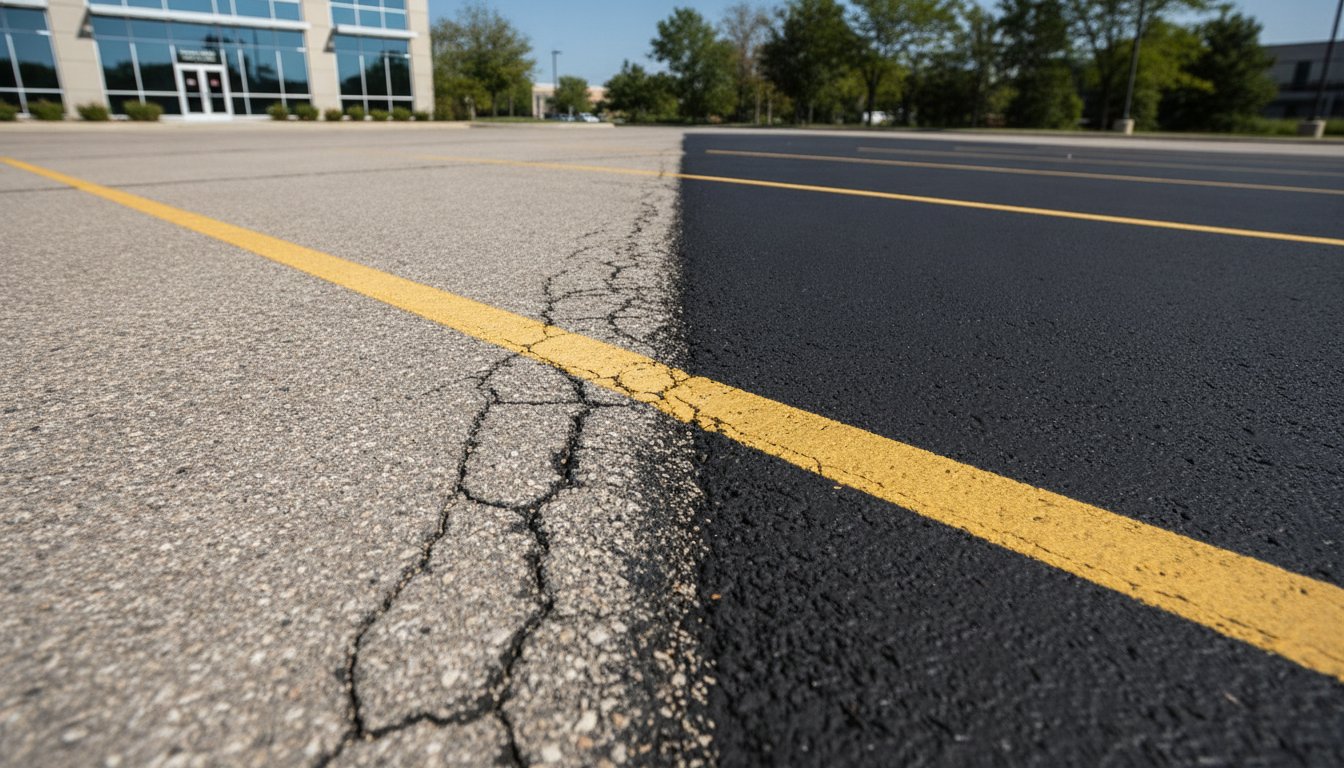
Think of your driveway as a structural investment that requires a protective shield. Sealcoating isn't just a cosmetic "black-out" for your asphalt; it's a defensive maintenance layer designed to take the brunt of UV rays, automotive fluids, and oxidation. Without this sacrificial barrier, the liquid asphalt binder that holds your driveway together begins to brittle and crack. When you evaluate a professional sealcoating cost, you're essentially paying for a specialized insurance policy against the premature failure of your pavement.
Several logistical factors influence the final quote you receive. One of the most significant is the mobilization fee. It costs a contractor a fixed amount in fuel, labor, and equipment transport to arrive at your property. Because these overhead costs remain constant whether the crew is sealing a small two-car driveway or a large parking lot, smaller residential projects often carry a higher price per square foot to account for the minimum project size. In the Minneapolis-St. Paul metro, local labor rates and the availability of asphalt-based materials also play a role. Since Minnesota has strictly banned coal tar-based sealants since 2014, contractors must source high-quality asphalt emulsions, which can fluctuate in price based on regional supply chains.
Surface Preparation: The Invisible Cost
The longevity of your sealcoat depends almost entirely on the bond created during application. If a surface is neglected or covered in heavy debris, the labor required for preparation increases significantly. Professional crews don't just use a garden hose; they utilize high-powered blowers and industrial wire brushes to clear every pore of the asphalt. We also have to account for oil spot priming. Because sealer won't stick to oil or gasoline stains, these areas must be chemically treated first. Overgrown edges that have crept onto the asphalt also require mechanical trimming to ensure the sealer protects the very edge of the pavement, where crumbling often begins.
Material Quality and Solids Content
Not all sealants are created equal. The professional sealcoating cost you see on a quote often reflects the "solids content" of the material. This refers to the volume of protective resins and minerals left behind after the water in the mix evaporates. Low-ball estimates often come from contractors who over-dilute their product with water. While it looks black and wet initially, it lacks the durability to survive a single Minnesota winter. High-performance additives are also mixed in to help the sealer dry faster and resist power-steering marks. Choosing a professional-grade asphalt emulsion ensures you're getting a material that remains flexible enough to expand and contract with the ground during our extreme temperature swings.
Residential vs. Commercial: Cost Breakdown by Square Footage
When evaluating a professional sealcoating cost, the first thing most property owners notice is the variance between residential and commercial pricing. This discrepancy is largely driven by the "economy of scale." For a commercial contractor, the time spent setting up equipment and mixing materials is spread across thousands of square feet. On a residential driveway, those same setup costs apply to a much smaller area. This is why a homeowner might see a higher rate per square foot than a property manager overseeing a retail strip mall. Understanding these variables helps you accurately budget for your professional sealcoating cost without surprises.
It's also vital to distinguish between surface protection and structural repair. While sealcoating provides a defensive layer, it doesn't fix existing damage. This is where crack filling comes in. If you have deep fissures in your asphalt, simply applying sealer won't stop water from reaching the base. Professional crack filling is a separate process that uses hot-applied rubberized material to bridge gaps. Combining these services ensures cost-effective pavement preservation, as filling cracks prevents the sub-base erosion that leads to costly repaving.
Residential Driveway Pricing Dynamics
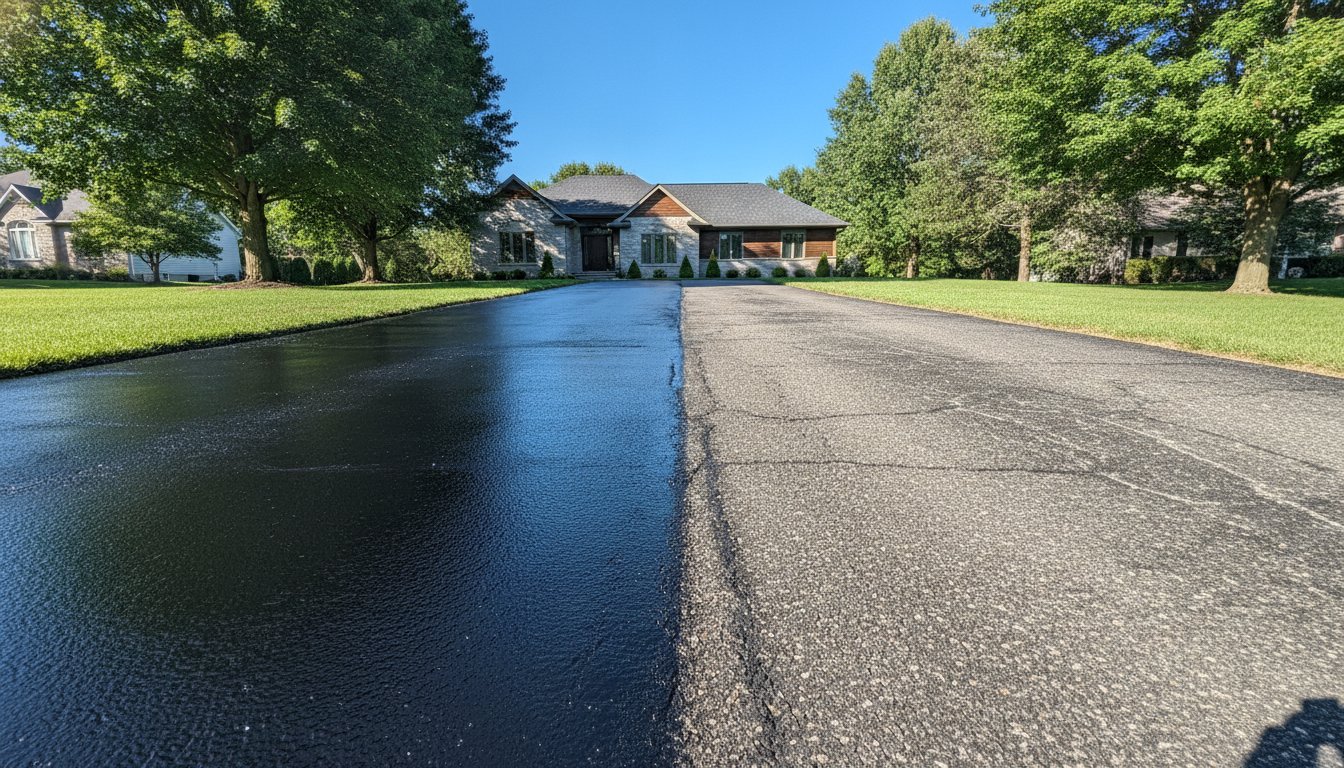
Most Twin Cities driveways range from 500 to 1,000 square feet. For these projects, the number of coats applied significantly impacts the total. While a single coat might suffice for a well-maintained surface, older asphalt often requires a double coat to ensure adequate coverage. Factors like asphalt sun damage protection also dictate how often you should schedule service. To lower the per-home cost, many neighbors choose to book together. These "neighborhood specials" allow crews to stay on one block, reducing travel time and passing those savings onto you.
Commercial Parking Lot Considerations
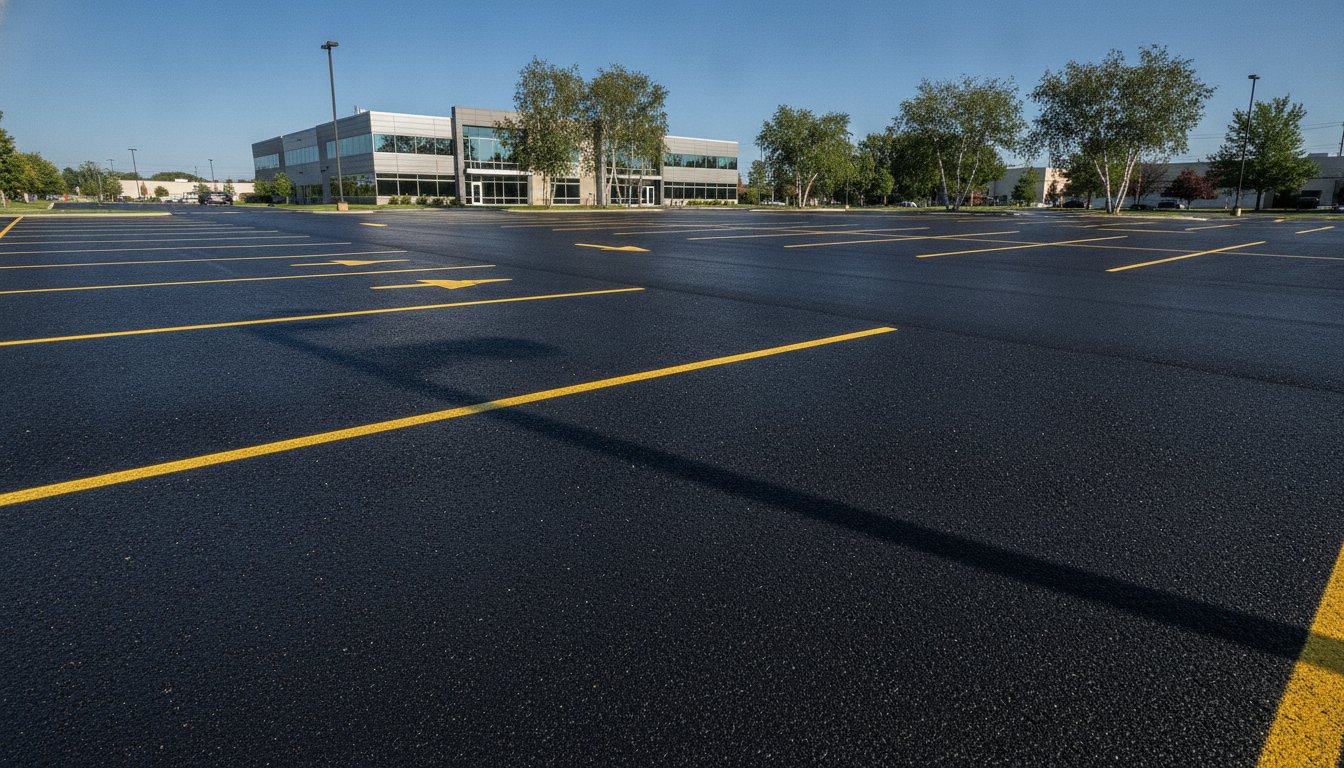
Commercial projects involve logistical hurdles that residential jobs don't face. Work often happens during overnight hours or weekends to prevent business downtime. Additionally, commercial quotes must account for line striping and pavement markings, which are essential for safety and ADA compliance. Implementing commercial asphalt maintenance plans is a strategic way for business owners to stabilize their budgets. By spreading out services like crack filling and sealing over several years, you avoid the massive capital expenditure of a full lot replacement.
If you're unsure which category your project falls into, you can always request a professional assessment to see which approach fits your specific property needs.
The Cost of Quality: Professional Application vs. DIY Realities
Many homeowners see the rows of five-gallon buckets at a local hardware store and assume they can slash their maintenance budget by handling the job themselves. This is often a misleading comparison. While the up-front price of retail sealer is lower, the material itself is fundamentally different from what a specialist uses. Retail products are typically formulated with lower solids content and higher water ratios to keep them shelf-stable for months in a warehouse. In contrast, a professional sealcoating cost covers commercial-grade asphalt emulsion that provides a thicker, more resilient barrier against the elements.
The hidden costs of a DIY project also add up quickly. You aren't just buying the sealer; you're buying specialized brushes, heavy-duty cleaners, and protective gear. There's also a significant liability risk. If you accidentally track wet sealer onto your concrete sidewalk or into your living room carpet, the cleanup costs will dwarf any initial savings. A professional contractor brings the experience to keep the site clean and the insurance to stand behind the work if something goes wrong. This peace of mind is a central component of the value proposition that retail buckets simply cannot offer.
Equipment and Technique Differences
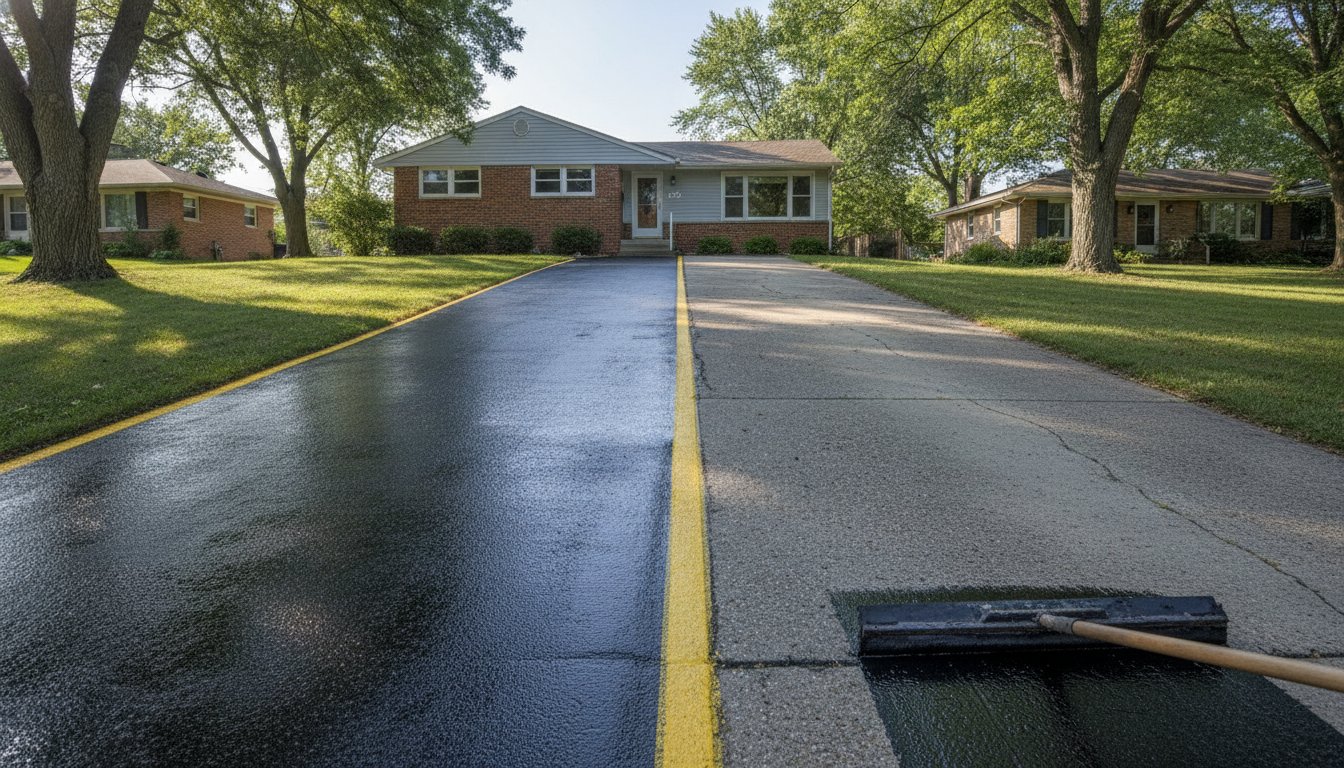
The method of application is just as important as the material itself. Professionals choose between spray and squeegee techniques based on the specific texture of your asphalt. Spraying allows for a highly uniform finish on smoother surfaces, while a hand-squeegee can force material into the pores of older, more oxidized pavement. Following Seal coating best practices, we also ensure the material is constantly agitated in the tank to prevent the heavier solids from settling. This mechanical consistency is impossible to achieve with a hand-stirred bucket. Additionally, we prioritize fixing driveway cracks with hot-applied rubber before the first drop of sealer touches the ground, a step many DIYers skip to their own detriment.
The Longevity Gap
The true value of a professional service becomes clear when you calculate the cost per year of life. A typical DIY application might only last 12 months before it begins to peel or fade under the stress of snowplows and salt. A professional job, however, is designed to protect your investment for three to five years. When you divide the professional sealcoating cost by its total lifespan, the annual expense is often lower than the yearly hassle of a DIY project. In the context of Minnesota traffic, wear life is defined as the duration the sealer remains bonded to the aggregate before friction and weather expose the bare asphalt beneath.

Budgeting for Minnesota Winters: Timing and ROI
Minnesota winters are notoriously hard on pavement, and the freeze-thaw cycle is the primary antagonist. When water enters an unprotected crack, it expands by approximately 9% as it turns to ice, exerting massive pressure on the surrounding asphalt. This cycle repeats dozens of times each season, eventually turning small fissures into deep potholes. Investing in a professional sealcoating cost during the warmer months creates a waterproof seal that keeps this moisture out of the sub-base. It's a proactive defense that prevents the underlying soil from softening and failing.
In the Twin Cities, the "sweet spot" for application runs from May through September. We look for consistent daytime temperatures and, crucially, nighttime lows that stay above 50 degrees Fahrenheit. If the temperature drops too low before the sealer has fully cured, the chemical bond is compromised. This is why late-season projects are often riskier; if the material doesn't set correctly, it won't survive the first pass of a snowplow. Following a structured asphalt maintenance schedule allows you to catch minor issues before they require emergency intervention during a January blizzard.
Preventing Structural Failure
A small investment in sealcoating prevents base-layer saturation, which is the leading cause of structural collapse. Road salt and ice melt are necessary for safety, but they are incredibly harsh on porous asphalt. These chemicals lower the freezing point of water, which actually increases the number of freeze-thaw cycles the pavement endures in a single week. Sealcoating acts as a sacrificial barrier, protecting the binder from these corrosive agents. Crack sealing remains the most cost-effective part of this budget because it addresses the entry points for water directly, stopping damage before it starts.
Curb Appeal and Property Value
There is a significant psychological component to property maintenance that shouldn't be overlooked. A "fresh black" driveway suggests a well-cared-for home, which can be a deciding factor in residential sales. For businesses, a clean, well-marked parking lot signals professionalism and safety to every customer who pulls in. For property managers, a consistent sealcoating schedule preserves the asset's lifecycle, effectively deferring capital-intensive repaving projects by a decade or more. Calculating the professional sealcoating cost as part of a long-term ROI strategy reveals that proactive care is always cheaper than reactive repair.
If you're ready to protect your asphalt before the next freeze, you can get a quote from our local specialists today.
Getting Your Estimate: The Seal Team LLC Approach
When you receive a quote for asphalt maintenance, you aren't just looking at a price tag. You're looking for a roadmap of stewardship for your property. A detailed estimate should provide full transparency, breaking down the specific preparation steps and material specifications. We believe that a professional sealcoating cost should be based on precision rather than guesswork. Our methodology begins with satellite measurement technology to establish an accurate footprint of your surface. We then follow up with on-site verification to identify specific wear patterns, oil saturations, or drainage issues that a camera might miss.
We never apply sealer over a compromised foundation. This is why we prioritize driveway crack filling as a non-negotiable prerequisite for every project. Filling these gaps with hot-applied rubberized material ensures that the subsequent sealcoat remains a decorative and defensive layer rather than a temporary mask for structural damage. On the day of your application, you can expect a methodical cleaning process followed by a precise application that protects your edges and keeps the material where it belongs: on your asphalt.
Questions to Ask Your Contractor
Before signing any contract, it's vital to vet the contractor's standards. Ask if they're using a commercial-grade asphalt emulsion or a thin, watered-down primer. You should also confirm that the quote includes full mechanical cleaning and crack preparation. Finally, ask about the specific drying time required before you can safely drive on the surface. A reputable specialist will provide clear, logical answers that reflect their experience with the local climate.
The Seal Team LLC Guarantee
Our commitment to the Twin Cities is rooted in locally owned and operated reliability. We don't use "one-size-fits-all" products; instead, we utilize high-solids additives specifically formulated for the Minnesota climate. These additives enhance the sealer's flexibility and bond strength, ensuring it can withstand the extreme temperature swings that characterize our region. We take pride in helping our neighbors avoid the headaches of premature asphalt failure through proactive, science-based care. Get your free sealcoating estimate from Seal Team LLC today!
Securing Your Property’s Future Against the Minnesota Winter
Maintaining your asphalt is a vital act of stewardship that prevents small fissures from becoming expensive structural failures. By understanding the various factors that influence a professional sealcoating cost, you can make a decision rooted in logic rather than guesswork. We've seen how commercial-grade materials and precise timing are the only ways to truly defend against the Twin Cities' relentless freeze-thaw cycles. Choosing a specialist means you aren't just buying a black coating; you're buying years of durability and peace of mind.
As a locally owned and operated team, we specialize in Minnesota freeze-thaw asphalt protection. We offer free, transparent estimates with no hidden fees, ensuring you have all the data needed to protect your investment. Our focus is on long-term results and honest communication, helping you avoid the pitfalls of "fly-by-night" contractors or ineffective DIY kits that simply don't hold up to our regional stressors.
Protect your investment—request a free professional sealcoating estimate today
Proactive maintenance is the most sensible way to preserve your property's value and curb appeal. We look forward to helping you fortify your driveway for many seasons to come.
Frequently Asked Questions
How much does professional sealcoating cost for a standard two-car driveway?
The total price for a standard residential driveway is determined by its total square footage and the amount of preparation needed to ensure a proper bond. Because contractors face fixed mobilization costs for equipment transport and labor, residential projects often have a different pricing structure than large-scale commercial lots. Your quote will reflect the size of the surface area and whether your asphalt requires specialized treatments like oil spot priming or extensive debris removal.
Is professional sealcoating worth the extra money compared to DIY?
Professional application provides a significantly higher return on investment because it utilizes commercial-grade asphalt emulsion that isn't available in retail stores. Retail buckets are often thinned with high water content to remain shelf-stable, which leads to premature peeling and a shorter lifespan. A professional job typically protects your driveway for three to five years, whereas DIY efforts often require annual reapplication, making the professional sealcoating cost lower when calculated on a per-year basis.
How often should I sealcoat my driveway in Minnesota?
Most local property owners should schedule service every three to five years to maintain an effective defensive barrier. In the Twin Cities, the frequency depends heavily on traffic volume and the amount of road salt used during the winter months. If you notice the asphalt turning a light gray or see the individual stones of the aggregate becoming exposed, it's a clear sign that the protective binder has oxidized and needs restoration.
Does the cost of sealcoating include filling the cracks in my asphalt?
Professional estimates typically treat sealcoating and crack filling as separate line items because they involve different materials and application processes. Sealcoating is a liquid surface treatment, while crack filling uses a hot-applied, rubberized sealant to bridge structural gaps. It's essential to address these fissures before sealing the surface to prevent water from reaching the sub-base and causing structural failure during freeze-thaw cycles.
Why are some sealcoating quotes so much lower than others?
A significantly lower professional sealcoating cost often indicates that a contractor is using a "watered-down" product with low solids content. These cheaper mixtures look dark initially but lack the resins needed to withstand Minnesota's climate. Low-ball quotes may also skip critical preparation steps, such as mechanical wire brushing or deep cleaning, which are non-negotiable for ensuring the sealer actually sticks to the pavement.
What happens if I skip sealcoating for a few years?
Skipping this essential maintenance allows UV rays to dry out the liquid asphalt binder, making the surface brittle and prone to cracking. Once the binder is gone, water easily penetrates the pavement and saturates the supporting soil beneath. In Minnesota, this moisture expands as it freezes, creating pressure that shatters the asphalt and leads to potholes that require much more expensive structural repairs or full replacement.
Can you sealcoat an older driveway that already has many cracks?
You can sealcoat an older driveway, provided the existing cracks are professionally filled first to stop water intrusion. However, sealcoating is a preventative measure, not a structural fix. If the asphalt is severely "alligatoring," which looks like a web of interconnected cracks, or if the base layer has collapsed, a surface coating will not provide a lasting solution. An on-site assessment is the best way to determine if your older asphalt is a candidate for restoration.
How long does a professional sealcoating job typically last?
A high-quality professional application typically lasts between three and five years under normal residential conditions. The exact duration depends on the "wear life" of the material, which is influenced by snowplow activity, chemical exposure from de-icers, and the amount of direct sunlight the surface receives. By using high-solids additives, we ensure the material remains flexible and bonded to the aggregate for as long as possible in our harsh regional environment.