Did you know that a neglected driveway in Minnesota can lose up to half of its service life in just a few seasons of aggressive freeze-thaw cycles? It's frustrating to watch your once-smooth pavement transform into a faded, gray eyesore riddled with spiderweb fractures. You've likely worried about those small gaps turning into deep, expensive potholes before the next snowplow arrives. Professional driveway sealcoating and crack filling isn't just a cosmetic luxury; it's a critical defense against the chemical breakdown of the asphalt binder itself.
We understand that your home is your most significant investment, and the driveway is its first impression. This guide explains how proactive rejuvenation services restore that deep jet-black finish while waterproofing your surface against ice damage. By following a structured maintenance plan, you can extend your pavement's lifespan by five to ten years and avoid the high cost of a total replacement. We'll walk through the technical requirements for Minnesota's climate, including the importance of applying sealants when temperatures stay above 50°F and why regular care is the best form of property stewardship.
Key Takeaways
- Understand the science of asphalt oxidation and how UV exposure depletes the essential bitumen binder that keeps your driveway flexible.
- Learn why a systematic approach to driveway sealcoating and crack filling is necessary to stop water infiltration and prevent structural decay.
- Identify the specific signs of "alligator cracking" to determine if your pavement can be saved through restoration or if full replacement is required.
- Discover how specialized maintenance strategies defend your property against Minnesota’s unique freeze-thaw cycles and corrosive de-icing chemicals.
- Develop a long-term stewardship plan that maximizes your investment and extends the service life of your asphalt by up to a decade.
What Are Driveway Rejuvenation Services?
Driveway rejuvenation is a comprehensive maintenance strategy designed to restore the flexibility and appearance of your asphalt before structural failure occurs. Many property owners view Sealcoating as an optional luxury. In reality, it's a necessary form of stewardship that protects one of your home's most visible assets. Asphalt is a mixture of stone aggregate and bitumen, an organic petroleum-based binder that holds everything together. Over time, environmental exposure causes this binder to dry out, leading to a brittle surface that can't handle the weight of vehicles or the stress of changing temperatures.
The primary culprit behind asphalt aging is oxidation. When UV rays hit your driveway, they trigger a chemical reaction that strips away the essential oils in the bitumen. This process leaves the pavement vulnerable to the elements. Professional driveway sealcoating and crack filling addresses this by sealing the surface and replenishing the protective barrier. Unlike thin, topical coatings found at retail stores, industrial-grade restorative sealants contain high-solids content that bonds deeply with the existing pavement. This proactive approach prevents the need for a full repave, which is significantly more expensive than regular maintenance.
The Goal of Asphalt Restoration
The main objective of a rejuvenation project is to stop the clock on asphalt decay. By applying a professional-grade sealant, we restore the deep black aesthetic that instantly improves your home's curb appeal. Beyond the visual benefits, the process replenishes the oils lost to years of sun exposure. This creates a non-porous barrier that prevents water, oil, and road salt from penetrating the asphalt pores. When these substances stay on the surface rather than soaking in, they can't cause the internal damage that leads to major structural issues. It's about defense as much as it is about beauty.
Signs Your Driveway is Ready for Rejuvenation
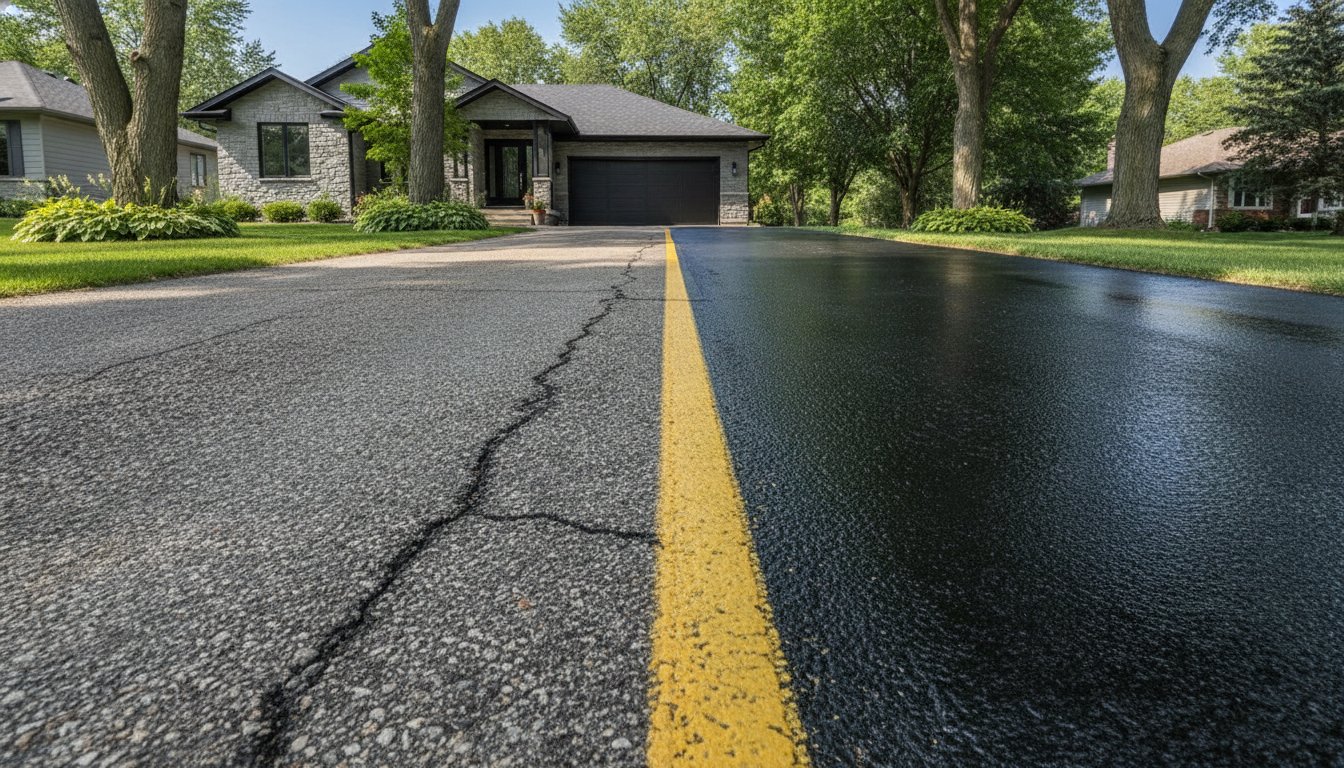
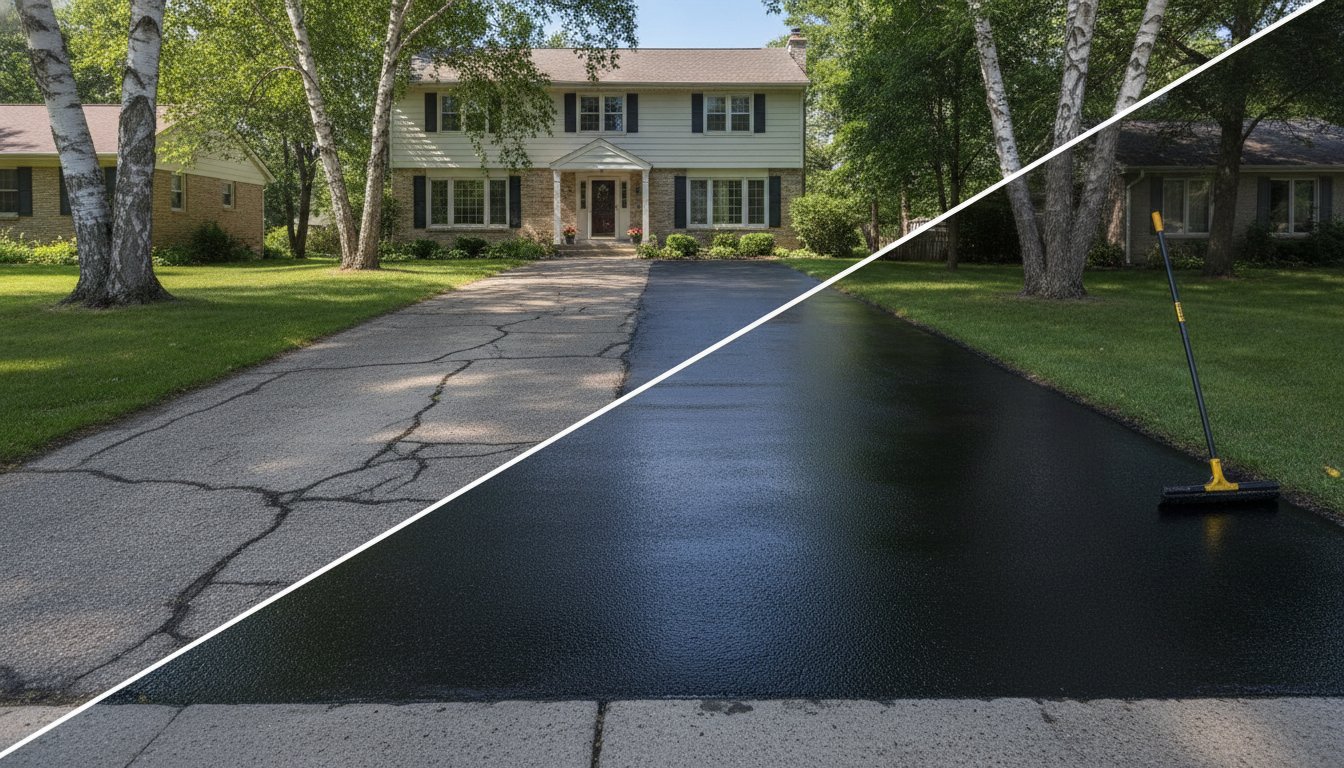
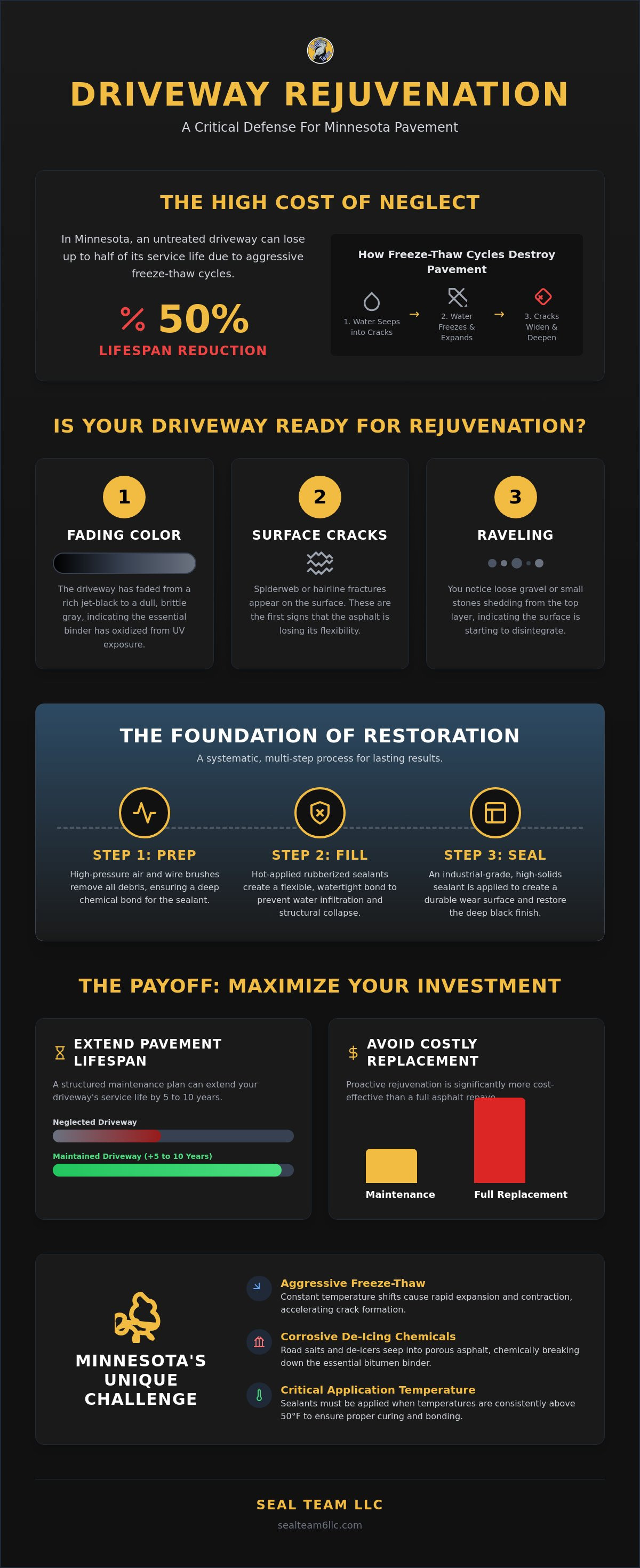
You don't have to be a specialist to know when your pavement needs attention. The most obvious sign is a color shift. When your driveway fades from a rich jet black to a dull, brittle gray, the bitumen has likely oxidized. You should also look for the appearance of spiderweb or hairline surface cracks. These small fractures are the first indicators that the asphalt is losing its flexibility. Finally, check for raveling, which is when you notice loose gravel or small stones shedding from the top layer of the driveway. If you see these signs, acting early can extend the life of your driveway by years.
The Foundation of Restoration: Professional Crack Filling and Sealcoating
Many property owners treat pavement maintenance as a simple, one-and-done task. However, effective driveway sealcoating and crack filling requires a multi-step system rather than a single product. A bucket of sealer from a retail store can't fix a failing driveway because true restoration must address both surface protection and structural integrity. Without a systematic approach, any new coating will eventually fail as the underlying issues remain unresolved.
Step one involves meticulous preparation. We use high-pressure air and industrial wire brushes to remove all vegetation, silt, and loose rocks from the surface. This isn't just about aesthetics; it's about chemistry. If the surface isn't perfectly clean, the sealcoat won't achieve a deep chemical bond with the oxidized asphalt pores. Once the surface is prepped, we move to professional crack filling to seal the foundation. Finally, a high-solids sealcoat is applied to provide a wear surface. This sequence is part of what engineers call Asphalt Surface Treatments, a proven method for extending pavement life.
Why Crack Filling is the Foundation
Think of cracks as open wounds in your driveway. When water enters these gaps, it seeps into the gravel sub-base beneath the asphalt. In cold climates, this water freezes and expands, pushing the pavement upward and eroding the foundation. This cycle eventually leads to structural collapse and the formation of deep potholes. While DIY liquid fillers often shrink or crack within months, professional hot-applied rubberized sealants create a flexible, watertight bond that moves with the pavement during temperature shifts. For a deeper look at this process, read our guide on how to fix driveway cracks.
The Role of Sealcoating in Surface Restoration
Once the foundation is secure, sealcoating acts as a high-performance sunscreen for your pavement. It blocks the UV rays that cause oxidation and prevents the chemical breakdown triggered by oil spills and gasoline. These fluids can quickly dissolve the bitumen binder, turning your driveway into loose gravel. A professional application ensures a uniform barrier that resists these contaminants and maintains the asphalt's flexibility. You can learn more about asphalt sun damage protection to see why this step is non-negotiable for long-term health. If you're ready to protect your investment, Seal Team LLC provides the industrial-grade materials needed for a lasting finish.
Rejuvenation vs. Repaving: Identifying the Most Cost-Effective Path
Deciding whether to invest in maintenance or commit to a full driveway replacement is one of the most important financial decisions a property owner faces. Asphalt typically has a 20-year design life, but this timeline isn't guaranteed. It depends heavily on how well you manage the oxidation process. Think of rejuvenation as a mid-life health plan for your pavement. If you implement a consistent cycle of driveway sealcoating and crack filling, you can often push the service life of your asphalt toward 30 years or more. This proactive stewardship effectively doubles the value of your initial paving investment.
The most critical factor in this decision is the condition of the sub-grade foundation. When a driveway is structurally sound, the cracks are usually linear and localized. These can be managed with professional intervention. However, when you see "alligator cracking", which are patterns that resemble the scales of a reptile, it indicates that the foundation has failed. In these cases, the asphalt is no longer supporting the weight of vehicles, and the sub-base has likely been compromised by water intrusion. If these patterns cover more than 25% of your driveway's surface, rejuvenation is no longer a viable solution.
When to Choose Rejuvenation Services
Rejuvenation is the ideal path when your asphalt is less than 15 years old and shows no signs of major shifting. It's the right choice if cracks are limited to specific areas and haven't caused the pavement to heave or sink significantly. Even if the surface looks gray and brittle, it can be restored as long as the underlying structure remains firm. In these scenarios, the primary goal is preservation. You're sealing out the elements to ensure the current material lasts as long as possible while instantly restoring the aesthetic value of the property.
When Full Replacement is Necessary
There are times when even the best maintenance can't save a driveway. If you notice deep potholes that expose the gravel base underneath, it means the structural integrity is gone. Widespread fatigue cracking across a large portion of the surface is another sign that the bitumen has lost all its binding properties. To help you weigh the financial impact of these options, we've outlined the current market factors in our guide on professional sealcoating cost in 2026. Understanding these technical indicators helps you avoid spending money on a surface that is beyond saving, ensuring your maintenance budget is used where it provides the most long-term protection.
Why Minnesota Climate Requires a Specialized Asphalt Rejuvenation Strategy
Minnesota property owners face a set of environmental challenges that most national asphalt guides simply ignore. Our state experiences some of the most dramatic temperature swings in the country, often shifting 40 degrees or more in a single 24-hour period. This volatility puts immense pressure on asphalt, which naturally expands and contracts. Without specialized driveway sealcoating and crack filling, these thermal movements quickly turn minor surface tension into deep structural fractures. The key to long-term preservation in this climate is ensuring that the materials used remain flexible even when temperatures drop well below zero.
Timing is also a critical factor in a successful rejuvenation strategy. For a sealant to bond correctly, both the air and pavement temperatures must consistently stay above 50°F during the curing process. In the Twin Cities, this typically limits the ideal maintenance window to late spring through early fall. Applying a protective layer too late in the season prevents the material from achieving its full chemical strength, leaving the driveway vulnerable when the first hard frost arrives. A proactive approach means scheduling these services while the weather is still warm enough to guarantee a durable finish.
Combatting the Freeze-Thaw Cycle
Water is the primary enemy of asphalt in cold climates. During a typical Minnesota winter, water from melting snow seeps into tiny pores and existing cracks in the pavement. When the sun goes down and the temperature drops, that water freezes and expands by approximately 9%. This expansion exerts incredible pressure, turning small fissures into major gaps overnight. Professional-grade crack fillers are specifically engineered to handle this stress; they are rubberized to stretch and compress without losing their seal. As we move toward the colder months, the window for effective application narrows. For a detailed breakdown of seasonal deadlines, consult our guide on when is it too late to sealcoat a driveway.
Protection Against Winter Chemicals
Chemical degradation is another often-overlooked threat. Road salt and liquid de-icers like magnesium chloride are essential for safety, but they are highly corrosive to unprotected bitumen. These chemicals accelerate the breakdown of the oils that keep your driveway flexible, leading to a surface that is prone to crumbling and raveling. A fresh rejuvenation layer acts as a non-porous shield, preventing these salts from reaching the underlying asphalt structure. After your rejuvenation service, practicing good stewardship by using sand for traction or choosing asphalt-safe ice melts can further extend the life of your sealcoat. If you want to ensure your pavement is ready for the next deep freeze, consider professional driveway restoration from Seal Team LLC to defend your investment.
Implementing Your Stewardship Plan with Seal Team LLC
Choosing a partner for your pavement maintenance is a decision that impacts your property's value for the next decade. At Seal Team LLC, we've built our reputation on local reliability throughout Minneapolis, Saint Paul, and the surrounding Twin Cities metro. We understand that Minnesota property owners aren't just looking for a temporary cosmetic fix; they need a long-term strategy. Our approach to driveway sealcoating and crack filling combines industrial-grade materials with a meticulous application process designed to withstand our region's specific environmental stressors. We don't just apply a coating. We execute a defense strategy.
We view every project through the lens of stewardship. This means we don't recommend services that your asphalt doesn't need, nor do we apply sealants to surfaces that are past the point of no return. By focusing on the science of preservation, we help you avoid the massive expense of premature repaving. Our team uses a combination of high-solids sealcoat and hot-applied rubberized crack fillers to ensure your driveway remains waterproof and flexible through every season. This philosophy of proactive care is why local homeowners trust us to protect their largest investment.
The Professional Stewardship Advantage
The difference between a professional application and a DIY project often comes down to the quality of the solids in the sealant. Hardware store buckets are frequently watered down, providing little more than a thin layer of black paint that wears off within a single winter. In contrast, our commercial-grade materials are engineered for maximum bonding and durability. We use expert techniques to ensure even coverage, which prevents the streaking and peeling often seen with amateur work. Our commitment is to extend your pavement's life, not just cover up existing problems with a fresh coat of black.
Ready to Restore Your Driveway?
If you've noticed the graying or cracking discussed in this guide, it's time for a professional assessment. We offer a free, no-obligation estimate process where we evaluate your asphalt's current condition and rejuvenation potential. We serve both residential and commercial clients across the entire Minnesota metro area, bringing the same level of diligence to every job site. For more insights on long-term care, explore our guide on protecting your asphalt investment. Contact us today to begin your driveway's restoration journey and secure your pavement for years to come.
Secure Your Property’s Foundation for the Future
Maintaining your asphalt is a commitment to the long-term health of your property. We've explored how oxidation and Minnesota's extreme freeze-thaw cycles can quickly turn a minor surface fade into a costly structural failure. By implementing a systematic approach to driveway sealcoating and crack filling, you aren't just improving curb appeal; you're creating a durable barrier against moisture and corrosive winter chemicals.
Success in our local climate depends on using high-solids, commercial-grade restorative sealants that maintain flexibility in sub-zero temperatures. Waiting too long often means moving from a manageable maintenance project to a full, expensive replacement. We specialize in these unique regional challenges and provide the expert guidance needed to extend your pavement's life by years. Our team provides free estimates for both residential and commercial properties to help you understand your options without any pressure.
If you're ready to take a proactive step in property stewardship, we're here to help. Protect Your Investment with Professional Driveway Rejuvenation from Seal Team LLC. Your driveway is a significant asset, and with the right care, it'll serve your home reliably for decades to come.
Frequently Asked Questions
How often should I invest in driveway rejuvenation services?
In Minnesota, property owners should schedule professional maintenance every 2 to 3 years. This frequency ensures that the asphalt binder remains flexible and protected from the state's extreme temperature swings. If you wait longer, the bitumen may become too brittle to accept the sealant properly. Regular care can extend your pavement's total lifespan to 30 years.
Is driveway rejuvenation the same as sealcoating?
While the terms are often used interchangeably, rejuvenation refers to a comprehensive strategy of restoration. Driveway sealcoating and crack filling are the specific services used to achieve this goal. Sealcoating provides the protective surface layer, while crack filling addresses structural vulnerabilities. Together, they replenish the essential oils in the asphalt and stop the cycle of environmental decay.
Can rejuvenation fix deep potholes or sunken areas?
Rejuvenation services cannot fix deep potholes or significant sunken areas that indicate a failed sub-grade foundation. These issues usually require asphalt patching or paving, which are separate from maintenance. Rejuvenation is a preventative measure designed to stop small cracks from becoming potholes. If more than 25% of your surface has failed, maintenance is no longer a viable solution.
How long do I need to stay off my driveway after a rejuvenation service?
You should typically wait 24 to 48 hours before driving vehicles onto the newly sealed surface. Foot traffic is usually safe after about 4 to 8 hours, depending on humidity and sunlight. Giving the material ample time to cure ensures the chemical bond is fully set. This prevents tire marks and ensures the waterproof barrier remains intact for the coming seasons.
What is the best time of year for asphalt rejuvenation in Minnesota?
The ideal window for maintenance in the Twin Cities is between late spring and early fall. Both the air and pavement temperatures must stay consistently above 50°F for the sealant to cure correctly. Applying these materials in colder weather prevents the necessary chemical bonding. Scheduling your service before the first hard frost ensures your driveway is ready for the winter freeze-thaw cycles.
Does driveway rejuvenation actually increase home value?
Yes, a well-maintained driveway significantly enhances curb appeal and perceived property value. A jet-black, smooth finish creates a positive first impression for potential buyers. Beyond aesthetics, it demonstrates to inspectors that the home has been cared for through diligent stewardship. Avoiding the high cost of a total asphalt replacement also makes your property more attractive to savvy investors.
Will rejuvenation make my driveway slippery in the winter?
Professional applications shouldn't make your driveway excessively slippery. We use high-solids sealants that include sand or aggregate additives to provide traction. While a fresh sealcoat is non-porous and sheds water effectively, it maintains a texture that is safe for walking and driving. This barrier actually makes snow removal easier because ice is less likely to bond with the asphalt pores.
Can I perform driveway rejuvenation myself with store-bought products?
You can attempt a DIY approach, but store-bought products often lack the high-solids content of commercial-grade materials. Professional driveway sealcoating and crack filling utilizes industrial-strength binders that bond more deeply with oxidized asphalt. While homeowners might save on initial labor, professional application often results in a finish that lasts twice as long. This ensures better protection against Minnesota's harsh environmental stressors.