Replacing a standard two-car driveway in Minnesota can now cost over $5,300, yet many property owners are forced into this massive expense years earlier than necessary. It's disheartening to watch your smooth, dark pavement fade into a brittle gray while "tenting" and spiderweb cracks begin to take hold. You likely feel the pressure of rising costs and the confusion of determining which services are essential. We believe that professional blacktop maintenance isn't just a cosmetic choice; it's a vital form of stewardship to protect your property from our state's punishing freeze-thaw cycles.
We agree that the fear of a looming repair bill is stressful, especially when you aren't sure if your asphalt is still savable. This guide promises to clear up that confusion by showing you how to identify damage early and implement a strategy that can double your pavement's lifespan. We will cover the specific steps needed to prevent potholes, manage structural risks, and keep your surface looking pristine for an additional 10 to 15 years.
Key Takeaways
- Understand how the Minnesota freeze-thaw cycle damages asphalt and why proactive preservation is the only way to avoid a total driveway replacement.
- Use our 5-point health inspection to spot signs of ravelling and oxidation before they compromise your pavement's structural integrity.
- Discover why professional blacktop maintenance using industrial-grade sealants offers superior protection and durability compared to standard retail products.
- Learn the specific roles of crack filling and sealcoating in creating a waterproof barrier that defends your sub-base from erosion.
- Implement a structured maintenance plan to extend your pavement's life by up to 15 years while keeping it looking pristine and dark.
Why Professional Blacktop Maintenance is Non-Negotiable in Minnesota
In Minnesota, your driveway isn't just a place to park your car; it's a structural investment that faces some of the harshest environmental conditions in North America. We view professional blacktop maintenance as a proactive form of stewardship. It's the difference between a surface that lasts thirty years and one that requires a full, expensive replacement after just ten. When you treat maintenance as a defense strategy rather than a cosmetic luxury, you're protecting the foundation of your property from inevitable decay.
The primary enemy of Minnesota pavement is the relentless "Freeze-Thaw" cycle. It's a simple but destructive process of physics. During our spring and autumn months, water from melting snow or rain seeps into microscopic hairline cracks. When temperatures drop overnight, that water freezes and expands by approximately nine percent. This expansion exerts thousands of pounds of pressure, literally pushing the asphalt apart and shattering the compacted gravel sub-base beneath. Once the sub-base is compromised, the surface loses its support, leading to the structural failure we call a pothole. If you wait until a pothole appears to take action, you've already lost the battle for your pavement's integrity.
Chemical degradation also plays a significant role in our region. While road salt and ice melt are necessary for winter safety, they accelerate the breakdown of the binder that holds your driveway together. Without a protective barrier, these chemicals penetrate deep into the surface, weakening the material from the inside out and making it more susceptible to water penetration.
The Chemistry of Asphalt Decay
To understand why blacktop fails, you have to understand its composition. Asphalt concrete is a mixture of stone aggregate and a petroleum-based binder called bitumen. Bitumen is what gives the surface its rich black color and, more importantly, its flexibility. However, constant exposure to UV rays causes a process called oxidation. This chemical reaction strips the bitumen of its essential oils, leaving the pavement gray, brittle, and prone to "alligator cracking." You can learn more about this process in our guide to asphalt sun damage protection, which details how to shield your investment from solar decay.
Minnesota Environmental Stressors
The Twin Cities metro experiences extreme temperature swings, often ranging from -20°F in the dead of winter to over 90°F in the summer. These fluctuations cause the pavement to expand and contract. Additionally, several factors contribute to rapid surface wear:
- Mechanical Stress: Heavy snow loads and the scraping of snowplow blades can gouge unsealed, brittle asphalt.
- Chemical Solvents: Oil and gasoline leaks dissolve the bitumen binder, creating soft spots that lead to structural failure.
- Water Penetration: Without a seal, the porous surface allows moisture to reach the sub-base, leading to "tenting" where the ground heaves upward.
Consistent professional blacktop maintenance ensures these stressors don't lead to premature failure. By addressing minor issues before they become structural catastrophes, you preserve both the curb appeal and the functional life of your pavement.
The 5-Point Blacktop Health Inspection Checklist
You don't need to be an engineer to understand the health of your pavement. Before scheduling professional blacktop maintenance, you can perform a simple visual audit to determine the urgency of care. This structured approach allows you to act as a diligent guardian of your investment, identifying minor issues before they evolve into structural failures. Walk your driveway or parking lot and evaluate these five critical areas.
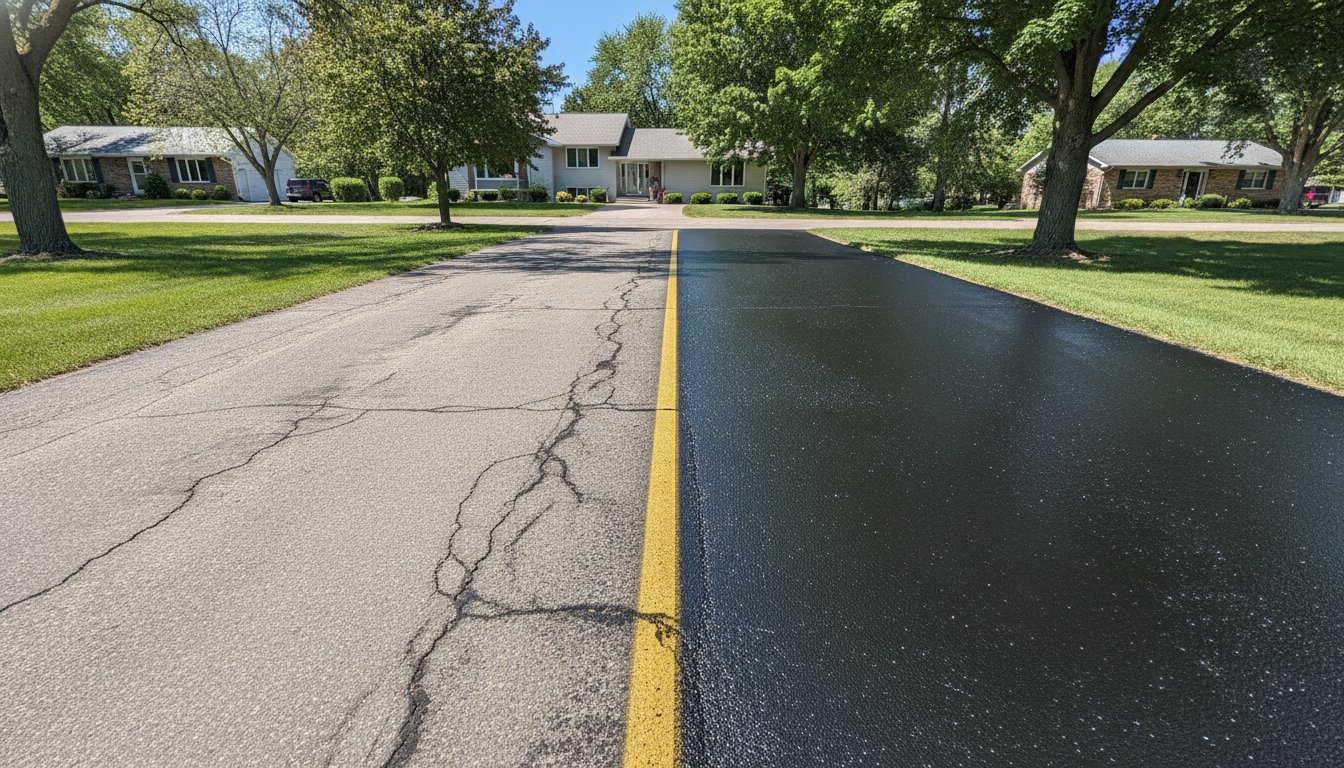
- Surface Color and Texture: Look for a shift from deep black to a dull, chalky gray. This color change indicates oxidation. If the surface feels rough or you notice loose stones (ravelling), the binder is failing.
- Crack Identification: Note the patterns of any breaks. While small gaps are common, their shape tells a story about the underlying soil and sub-base stability.
- Water Drainage: Check for "birdbaths," which are shallow depressions where water pools. Standing water is a primary catalyst for asphalt degradation.
- Edge Integrity: Examine the perimeter where the asphalt meets the grass or soil. Crumbling edges or heavy vegetation encroachment often signal that moisture is trapped against the pavement's side.
- Oil and Chemical Staining: Look for dark, tacky spots near parking areas. Automotive fluids act as solvents, dissolving the bitumen and creating soft spots that eventually collapse.
Identifying Different Crack Types
Understanding the difference between crack patterns is essential for prioritizing repairs. Linear cracks often run parallel or perpendicular to the driveway and usually result from natural thermal expansion or minor settling. However, spiderweb or "alligator" cracking consists of many small, interconnected blocks. This pattern is a warning sign of sub-base failure, meaning the foundation can no longer support the weight of vehicles. It's critical to fix driveway cracks when they are still linear to prevent them from evolving into these more serious structural issues. As noted in this Purdue University maintenance guide, timely intervention is the most cost-effective way to preserve a paved surface.
The "Water Test" for Pavement Health
A garden hose is one of the most effective diagnostic tools at your disposal. On a dry day, spray a significant amount of water across the highest point of your pavement and watch the flow. Healthy asphalt should shed water quickly toward the edges or a designated drain. If you see water lingering in "birdbaths" for more than an hour after the sun comes out, those areas are at high risk for potholes. Standing water saturates the asphalt, weakening the bond between the aggregate and the binder. Clearing debris from drainage paths and ensuring your lawn isn't "lip-high" above the pavement edge can help, but recurring pools usually require a professional evaluation. If your inspection reveals multiple warning signs, you might consider reaching out to a local specialist to discuss a preservation plan.
By conducting this 5-point inspection twice a year, usually in the spring and fall, you stay ahead of the Minnesota climate. This proactive stance is the cornerstone of professional blacktop maintenance, ensuring your property remains safe, attractive, and structurally sound for the long term.
Crack Filling vs. Sealcoating: Which Does Your Surface Need?
One of the most frequent questions we receive from property owners is whether they need a full sealcoat or just a few cracks filled. It's a common point of confusion, but these are two distinct services that play different roles in professional blacktop maintenance. Think of crack filling as a "Band-Aid" for structural wounds and sealcoating as the "Sunscreen" for the entire surface. While they serve different purposes, they work in tandem to provide a comprehensive defense against the elements.
Crack filling is your primary defense against water penetration. By sealing the gaps, you prevent moisture from reaching the dirt and gravel sub-base, which we've established is the leading cause of potholes. Sealcoating, on the other hand, provides a sacrificial layer that shields the bitumen from UV-driven oxidation and chemical spills. You should never sealcoat over open cracks because the sealer is not designed to bridge gaps; it will simply fall into the void, leaving the structure vulnerable. For the best results, we often recommend driveway sealcoating and crack filling as a combined rejuvenation service to ensure every square inch is protected.
When Crack Filling is the Priority
If you notice cracks wider than a quarter-inch, crack filling must be your immediate priority. We utilize professional hot-pour crack sealing, which involves heating a rubberized asphalt material to over 300°F. This allows the filler to bond deeply with the existing pavement walls. Many homeowners try "cold patch" products from big-box stores, but these often fail during the first Minnesota winter because they lack the flexibility to expand and contract with the ground. Before any material is applied, it's vital to clean out debris and vegetation from the cracks to ensure a long-lasting, watertight bond.
When to Schedule Your Next Sealcoat
For properties in the Twin Cities metro, the ideal maintenance window for sealcoating is every two to three years. This interval ensures the protective layer remains thick enough to ward off oxidation without causing excessive buildup. You'll know it's time for a refresh when you see these visual cues:
- The pavement has turned from a deep black to a faded, chalky gray.
- The surface feels increasingly rough or "bony" as the fine sand wears away.
- Water no longer beads on the surface but instead soaks into the pores.
Timing is everything in our climate. If you're unsure about the current season's window, you can consult our when to sealcoat driveway timing guide for specific advice on temperature and weather requirements. Staying consistent with these intervals is the most effective way to manage professional blacktop maintenance and avoid the high costs of total asphalt failure.

Professional Application vs. DIY: Evaluating the Real Value
It's easy to see why the DIY approach is tempting. Every summer, hardware stores stock their aisles with five-gallon buckets of sealer, promising an easy afternoon project. However, we've found that the perceived savings often disappear within twelve to eighteen months. True professional blacktop maintenance relies on materials and methods that simply aren't available to the average homeowner. When you evaluate the longevity of the work, the professional route almost always proves to be the more sensible investment in your property's value.
Industrial-grade materials are the first major differentiator. Professional crews use high-solids coal tar or asphalt emulsions that are specifically formulated for durability. In contrast, retail buckets are often watered down to make them easier to stir and apply by hand. This lack of solids means the coating is thinner and provides significantly less protection against UV rays and chemical spills. While the professional sealcoating cost might be higher upfront, the result is a finish that lasts twice as long as a DIY job.
The Problem with Retail-Grade Sealers
Retail sealers often fail because they lack the chemical "bite" needed to bond with old asphalt. It's common to see these coatings begin to peel or flake off in large sheets after just one Minnesota winter. Because these products have a lower solids content, they don't provide the same level of UV defense. Even worse, if the sealer is applied too thickly in an attempt to cover cracks, it can trap moisture underneath. This trapped water then freezes, expanding and causing the very damage you were trying to prevent.
Why Professional Prep is 70% of the Job
The success of any maintenance project depends on the surface preparation. A simple sweep with a push broom isn't enough to ensure a bond. Professionals use high-velocity power blowers and industrial wire brushes to remove every grain of sand and dirt from the pores of the asphalt. We also utilize heat lances to dry out deep cracks and kill any remaining vegetation. Oil spots are another critical hurdle; without specific chemical primers, the sealer will simply slide off the grease. Implementing proper driveway oil stain protection is a multi-step process that requires professional-grade cleaners and primers. Sealing over even a small amount of dirt or oil leads to immediate flaking and leaves the pavement exposed to the elements.
Consistency in application also matters. Depending on the age and porosity of your surface, a professional might choose a spray application for deep penetration or a squeegee method for a smooth, thick finish. This level of precision ensures that the entire surface is protected uniformly. If you're ready to move beyond the hardware store buckets and secure a long-term solution for your pavement, it's time to schedule a professional assessment of your property.
Partnering with a Local Minnesota Asphalt Maintenance Specialist
Adopting a stewardship approach to your pavement is the most effective way to protect your property's value. Rather than viewing your driveway as a static surface, it's better to see it as a dynamic system that requires periodic defense. Minor annual checks and timely professional blacktop maintenance can prevent the five-figure replacement costs that often catch property owners by surprise at the end of a decade. By investing in preservation today, you're ensuring that your asphalt remains a functional and attractive asset for years to come.
Local expertise is particularly vital in the St. Paul and Minneapolis metro areas. Our specific soil compositions and extreme temperature variations require a deep understanding of how different materials react to the environment. A specialist who understands the nuances of Minnesota's climate will select the right sealants and application methods to ensure maximum durability. When you're evaluating a potential asphalt maintenance company, prioritize those who can demonstrate adequate insurance coverage, positive local reviews, and the use of professional-grade equipment. We invite you to request a free estimate from Seal Team LLC to discuss your 2026 maintenance needs and secure your pavement's future.
The Seal Team LLC Maintenance Standards
We take pride in our role as guardians of your investment. Our commitment to professional blacktop maintenance starts with using high-solids, commercial-grade sealants that outperform anything found in a retail store. We also understand that your home's appearance matters. Our "No Mess" guarantee ensures that we protect your siding, garage doors, and landscaping from overspray or tracking. Most importantly, we never skip the foundation. Every job we perform focuses on thorough crack filling first, as we know that a waterproof seal is only as good as the repairs beneath it.
Next Steps for Your Driveway or Parking Lot
Taking the first step toward preservation is simple. You can schedule a free, no-pressure onsite assessment where we'll walk your property and provide a transparent plan based on your pavement's specific condition. Once your service is scheduled, preparing your lot is straightforward. We ask that you turn off all automatic sprinklers 24 hours in advance and ensure all vehicles are moved from the work area. For a complete overview of how to manage your asphalt long-term, you can explore our driveway preservation services guide. By acting now, you can stop the cycle of decay and enjoy a "like-new" finish that lasts.
Securing Your Pavement’s Future for 2026 and Beyond
Your asphalt is more than just a surface; it's a structural investment that deserves diligent care. By mastering the 5-point health inspection and understanding why professional-grade materials outperform retail buckets, you've taken the first step toward long-term preservation. We've seen how the right combination of crack filling and sealcoating creates a waterproof barrier that keeps your sub-base stable despite our state's harsh weather. Consistent professional blacktop maintenance is the only proven method to avoid the massive expense of a full tear-out and replacement.
As a locally owned and operated team in the Twin Cities, Seal Team LLC specializes in defending properties against Minnesota’s extreme freeze-thaw climate. We take pride in providing commercial-grade materials for residential prices, giving you the same protection used on major highways. It's time to stop worrying about graying pavement and looming repair bills. Protect your investment today—Get a Free Estimate from Seal Team LLC. We are ready to help you restore your driveway's finish and extend its life for another decade or more.
Frequently Asked Questions
How often should I perform professional blacktop maintenance in Minnesota?
You should schedule professional blacktop maintenance every two to three years in Minnesota. This specific interval allows the protective layer to shield the bitumen binder without causing excessive buildup that leads to surface cracking. Properties with heavy traffic or steep inclines may require more frequent attention to combat physical wear. Regular cycles ensure the asphalt remains flexible enough to survive our state's extreme temperature swings.
Can I drive on my driveway immediately after sealcoating?
No, you should typically wait at least 24 to 48 hours before driving your vehicle on a freshly sealed surface. While some advanced formulas dry to the touch in just a few hours, the material requires more time to cure fully and bond with the asphalt. Walking on the surface is usually safe after 4 to 8 hours, but heavy vehicle weight can leave permanent tire marks or ruts if applied too soon.
What is the best time of year to schedule asphalt maintenance in the Twin Cities?
The ideal window for asphalt maintenance in the Twin Cities runs from late May through September. Successful application requires consistent temperatures above 50°F, even at night, for the material to cure properly. Scheduling during these warmer months ensures the sealant bonds correctly before the first autumn frost. We recommend booking early in the season, as Minnesota's short paving window fills up quickly.
Does sealcoating fix cracks in my blacktop?
Sealcoating is a surface treatment and does not fix existing cracks. It is designed to protect the "skin" of the pavement from UV rays and water. If you apply sealer over an open gap, the material will simply sink into the void without providing a structural seal. This is why we always perform crack filling as a separate, essential step before any sealcoating application begins.
How long does professional sealcoating last compared to DIY?
A professional blacktop maintenance plan typically provides protection that lasts two to three times longer than a DIY application. While retail products often flake or peel within a single season, industrial-grade sealants contain higher solids and specialized binders that resist Minnesota's freeze-thaw cycles. The professional equipment used for deep cleaning and hot-pour crack sealing ensures a bond that hardware store buckets simply cannot replicate.
Is blacktop maintenance the same as paving?
No, blacktop maintenance and paving are different services. Paving involves the installation of new asphalt or a full replacement of the existing surface. Maintenance services, such as sealcoating and crack filling, are proactive measures designed to preserve your current pavement and delay the need for paving. Think of maintenance as the oil change that prevents a total engine replacement.
What happens if I ignore small cracks in my asphalt?
Ignoring small cracks allows water to reach the gravel sub-base, which leads to structural failure. In our climate, moisture in these gaps freezes and expands, widening the crack and eventually creating a pothole. What begins as a minor hairline break can quickly turn into a costly "alligator" pattern that requires extensive patching or a full driveway replacement within just a few seasons.
Can oil stains be removed during the maintenance process?
We treat oil stains during the preparation process using specialized primers to ensure the sealant adheres properly. While deep, saturated stains cannot always be fully removed, our priming process prevents the oil from eating through the new protective layer. Without this specific treatment, the new sealer would fail to bond with the asphalt, leaving a soft spot that remains vulnerable to further chemical damage.