What if the salt you use to keep your family safe is the same force that destroys your driveway by spring? It's a common concern for homeowners who dread the sight of new potholes and heaving once the snow melts. Most of us accept road salt as a winter necessity, yet we often overlook how its corrosive nature eats away at our asphalt surfaces. Learning the benefits of sealcoating before winter MN allows you to transition from reactive repairs to proactive preservation, ensuring your driveway remains a durable asset rather than a mounting liability.
In this article, you'll discover how a professional sealcoat acts as a vital waterproof shield against chemical erosion and the destructive freeze-thaw cycle. We'll break down the science of asphalt defense and explain why timing is critical, especially since sealcoating requires temperatures to remain above 50 degrees to cure properly. You'll gain the knowledge needed to protect your investment and significantly reduce your long-term maintenance costs before the first frost arrives. By understanding the "why" and "when" of seasonal maintenance, you can avoid the frustration of spring repairs and keep your pavement smooth for years to come.
Key Takeaways
- Understand how the Minnesota freeze-thaw cycle turns microscopic moisture into structural cracks and how a waterproof barrier halts this destructive process.
- Discover the benefits of sealcoating before winter MN to shield your asphalt from the corrosive effects of common de-icers like sodium and calcium chloride.
- Learn the "50/50 rule" for application timing to ensure your sealant cures correctly before autumn's overnight temperatures drop too low.
- Follow a practical pre-winter maintenance checklist to identify drainage issues and clear organic debris that traps moisture against your pavement.
- See how proactive stewardship can effectively double the lifespan of your driveway, saving you from the significant expense of a full asphalt replacement.
Why Minnesota’s Freeze-Thaw Cycle is Your Driveway’s Worst Enemy
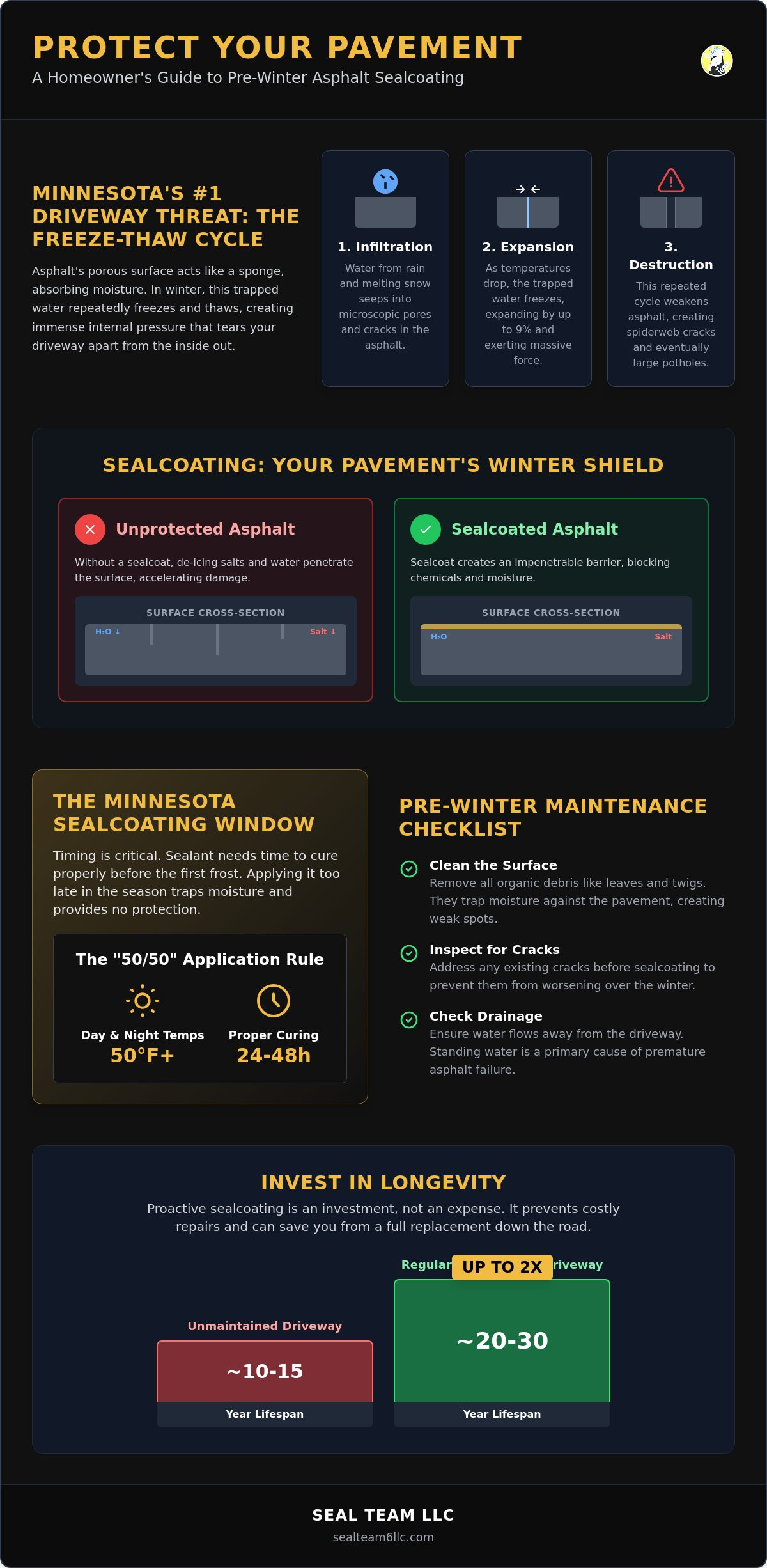
To understand why your pavement deteriorates, you have to look at the microscopic structure of asphalt. While a driveway looks like a solid, impenetrable slab, it's actually a porous material. These tiny pores and voids act like a sponge, drawing in moisture from rain, melting snow, and humidity. The freeze-thaw cycle is the process where this trapped water enters the asphalt's pores, freezes as temperatures drop, and expands with immense physical force. This cycle repeats hundreds of times throughout a typical Twin Cities winter, steadily weakening the internal structure of your driveway.
One of the primary benefits of sealcoating before winter MN is the creation of a non-porous, protective layer that blocks this moisture infiltration. When water is allowed to enter and expand, it creates "spiderweb" or alligator cracking. These small fractures eventually lose their structural integrity, leading to the formation of deep potholes by the time spring arrives. Focusing on preventing freeze-thaw asphalt damage through proactive care is significantly more affordable than paying for extensive spring repairs or a complete driveway replacement.
The Physics of Pavement Expansion
The damage caused by winter weather isn't just about the cold; it's about the physical expansion of water. When water turns into ice, it expands by approximately 9% in volume. This expansion exerts incredible internal pressure that ruptures the bitumen bond, the specialized "glue" that keeps the sand and aggregate together. Professional Sealcoating provides the necessary defense to keep this water out. Heaving is the specific process where frozen moisture in the sub-base or asphalt layers lifts the pavement upward, resulting in an uneven, bumpy surface that is prone to further cracking under the weight of a vehicle.
Minnesota-Specific Climate Stressors
Minnesota's climate is particularly harsh on asphalt because of the sheer frequency of temperature fluctuations. In many northern regions, the ground stays frozen all winter. However, in the Twin Cities, we often see "perfect storm" scenarios where a late-fall rainstorm is immediately followed by a sharp overnight freeze. This rapid transition doesn't give moisture time to evaporate, trapping it inside the asphalt just as it begins to expand. Maintaining a consistent asphalt maintenance schedule allows you to track these vulnerabilities and apply protection before the first major freeze of the season. This local expertise is vital for ensuring your driveway survives the specific environmental pressures of our region.
Driveway Protection from Road Salt: How Sealcoating Blocks Chemical Erosion
Minnesota winters require a heavy hand with de-icing agents to maintain safety on our roads and driveways. While these chemicals are essential for traction, they are remarkably aggressive toward asphalt. Most homeowners rely on a combination of Sodium Chloride (traditional rock salt), Calcium Chloride, and Magnesium Chloride to manage ice. While these substances are effective at melting frozen patches, they also lower the freezing point of water. This creates an artificial environment where moisture liquidizes during the day and refreezes at night more frequently than it would naturally. This increased frequency compounds the physical stress on your pavement by multiplying the number of freeze-thaw cycles it must endure.
One of the primary benefits of sealcoating before winter MN is the creation of a chemical-resistant shield. Without this protection, salt brine—a concentrated solution of salt and water—seeps into the asphalt's pores. Once inside, it begins a process of chemical erosion that can't be reversed by simply cleaning the surface in the spring. If you are noticing a grey, brittle texture on your driveway, it may be time for a professional seal coating application to restore its defenses before the first snowfall.
The Chemistry of Asphalt Degradation
Salt is a natural desiccant, meaning it actively draws moisture and essential oils out of the asphalt. These oils, known as maltenes, are what give your driveway its flexibility and deep black color. As salt strips these oils away, the asphalt undergoes rapid oxidation, becoming brittle, grey, and prone to "raveling," where the small rocks on the surface begin to break loose. The brine also acts as a vehicle, carrying dissolved dirt and corrosive chemicals deeper into the pavement structure. This targets the "binder," the specialized glue that holds the aggregate together; once the binder fails, the structural integrity of the entire driveway is compromised.
Sealcoating as a Waterproof Membrane
High-quality asphalt emulsion sealers act as a waterproof membrane for your property. This sealer creates a "sacrificial layer" that takes the brunt of chemical wear and UV radiation so the underlying asphalt remains untouched. Because the sealer is non-porous, it prevents salt brine from penetrating the surface. A sealed surface is also significantly smoother than raw asphalt. This texture allows salt, slush, and melting snow to wash away more easily, preventing the chemical "puddling" that often leads to deep-seated damage. By applying this protective coat, you ensure that the chemicals meant to keep you safe don't end up destroying your investment.
The Minnesota Sealcoating Window: When Is It Too Late Before Winter?
Timing your driveway maintenance is just as important as the materials used. In Minnesota, the application window is strictly dictated by the "50/50 rule." This means both the air and pavement temperatures must be at least 50°F and rising for the sealer to set correctly. One of the key benefits of sealcoating before winter MN is that it allows the material to cure while the ground still holds enough residual heat to facilitate a strong chemical bond. If you wait until the ground is cold, the sealer will simply sit on top of the asphalt without properly adhering to the pores.
Many homeowners focus only on the daytime high, but overnight temperatures are equally critical for a successful project. If the temperature drops below 50°F within the first 24 to 48 hours of application, the chemical curing process halts. This can lead to a "soft" finish that doesn't provide the promised waterproof barrier. Additionally, late September brings higher humidity and fewer sunlight hours. These environmental factors significantly extend drying times compared to the long, hot days of July. Before you commit to a late-season project, use this 3-step check:
- Review the 48-hour forecast for any overnight lows predicted below 50°F.
- Measure the pavement temperature in shaded areas; asphalt often stays cooler than the surrounding air.
- Ensure no rain or heavy dew is predicted for at least 24 hours after the application is finished.
The Risks of Late-Season Application
Applying sealer too late in the season often results in "tracking." This is when the uncured material sticks to tires and shoes, eventually being carried into your garage or home. Worse yet is the risk of "flaking." If frost hits a fresh coat before it has fully bonded, the moisture within the sealer expands as it freezes and shatters the layer from the inside out. In the Minneapolis and Saint Paul metro areas, the first frost typically arrives between October 1st and October 15th. Attempting a full sealcoat after the first week of October is a high-risk gamble that frequently leads to surface failure.
Contingency Plans: Crack Filling vs. Full Sealing
If you've missed the ideal window for a full sealcoat, don't leave your driveway completely defenseless. Focusing on preventing asphalt cracks from worsening in winter is a viable alternative for late-season care. Crack filling can often be performed in slightly cooler temperatures than full sealcoating, providing a localized barrier against the moisture expansion that causes potholes. If the window for a full application has closed entirely, it's best to prioritize professional crack filling now and schedule your full sealcoating for the following spring to ensure long-term durability.
Preparing Your Asphalt for the First Snow: A Maintenance Checklist
Before the first flurry hits the Twin Cities, a systematic walkthrough of your driveway is essential. Proper preparation ensures that your pavement isn't just surviving the winter, but actively resisting the elements. By following a structured checklist, you can identify small vulnerabilities before they turn into expensive spring repairs. Use the following steps to fortify your asphalt for the months ahead:
- Step 1: Inspect for Drainage Issues. Look for areas where water pools. Standing water is a precursor to ice patches and accelerated freeze-thaw damage.
- Step 2: Clear Organic Debris. Remove leaves, dirt, and grass clippings. These materials trap moisture against the surface, creating localized rot and preventing the asphalt from drying.
- Step 3: Stop the Leaks. Perform professional crack filling to seal off the sub-base from water infiltration before the first deep freeze.
- Step 4: Apply Protection. If the 50/50 temperature rule still applies, securing the benefits of sealcoating before winter MN will provide the ultimate chemical and moisture barrier.
- Step 5: Select Safe De-icers. Use pavement-safe products like Magnesium Chloride. Avoid any de-icers containing fertilizers, as these chemicals can be highly corrosive to asphalt binders.
The Importance of Crack Repair
Think of cracks as the "open wounds" of your driveway. Once water enters these gaps, it targets the foundation of your pavement. While many homeowners attempt to use DIY liquid fillers from big-box stores, these products often lack the flexibility needed for Minnesota's extreme temperature swings. They tend to become brittle and pop out during the first hard freeze. In contrast, professional-grade hot-pour rubberized filler creates a flexible, watertight bond that expands and contracts with the pavement. For a deeper look at your options, consult our driveway crack filling near me guide to ensure you're choosing the right long-term solution.
Snow Removal Best Practices
Mechanical damage from snow removal is a common cause of sealcoat wear. When shoveling, always use plastic shovels rather than metal ones, which can scrape and gouge the protective layer. If you hire a plowing service, ensure their blades are equipped with rubber shoes or "poly" edges to prevent direct metal-to-asphalt contact. Clearing snow promptly is also a form of maintenance; it reduces the number of freeze-thaw cycles occurring directly on your surface. A well-sealed driveway makes this task easier because ice doesn't "grip" the smooth, non-porous finish, allowing you to clear your path with significantly less effort. To get your driveway ready for the heavy snow, consider a professional seal coating application today.
Investing in Longevity: The ROI of Pre-Winter Asphalt Care
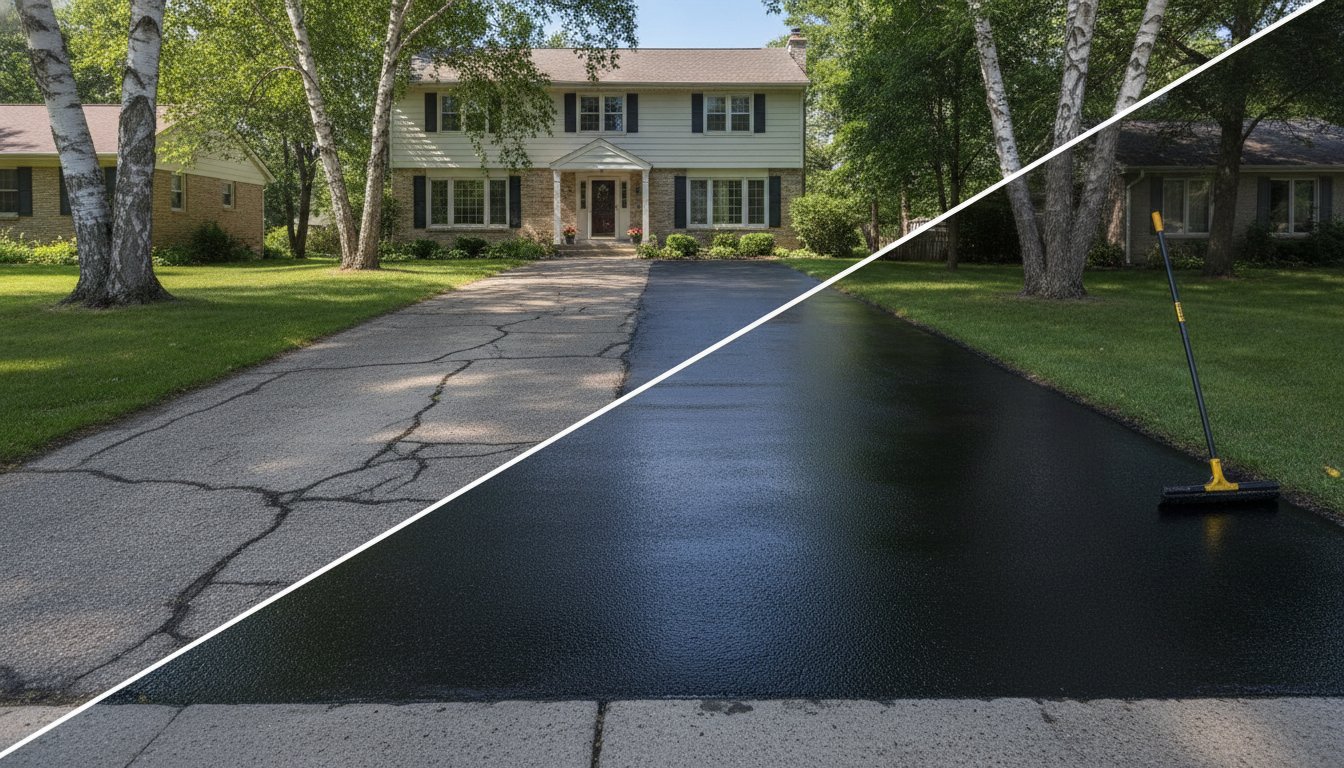
Maintaining a home requires a mindset of stewardship rather than just repair. Your driveway is one of the largest visible components of your property, and its condition directly reflects the value of your investment. One of the most significant benefits of sealcoating before winter MN is the preservation of your home's equity by preventing avoidable structural failure. When you apply a protective layer in the fall, you aren't just making the pavement look better; you're actively extending its functional life. In the harsh Minnesota climate, a regular maintenance cycle can effectively double the lifespan of a typical asphalt driveway, delaying the need for a total reconstruction by a decade or more.
Beyond the structural advantages, there is a clear aesthetic benefit. If you are planning to put your home on the market in the spring, a fresh, deep-black sealcoat provides immediate curb appeal that stands out against the grey, salt-stained neighborhood. It signals to potential buyers that the property has been meticulously cared for through the winter months. This proactive approach to maintenance ensures that your driveway remains a durable, attractive asset rather than a point of negotiation during a home inspection.
Cost-Benefit Analysis of Prevention
The financial logic for pre-winter care is straightforward: preventative sealcoating typically costs a small fraction of the price required for a full asphalt overlay or a complete driveway replacement. Avoiding just one major pothole repair or a significant section of "alligator" cracking can often pay for the entire sealcoating project itself. There is also the intangible value of peace of mind. Knowing that your pavement is fully "winterized" against chemical erosion means you won't have to face the frustration of discovering a crumbling surface once the snow finally melts in April.
Why Professional Application Matters
While the temptation to use retail-grade buckets from a hardware store exists, these products often lack the high-solids content and polymer modifiers found in commercial-grade sealers. Professional application involves specialized equipment and commercial resins that offer superior durability against the scraping of snowplows and the heavy application of de-icers. The key to a long-lasting bond is the preparation phase, which includes deep cleaning of the pores and priming of oil spots that a DIY approach often misses. This level of detail ensures the sealer remains bonded to the asphalt through the most extreme temperature swings.
Ready to protect your investment? Contact Seal Team LLC for a free pre-winter estimate today!
Secure Your Driveway for the Season Ahead
Protecting your pavement from the harsh Minnesota climate requires foresight and the right materials. The combination of aggressive de-icing chemicals and the relentless freeze-thaw cycle can quickly turn microscopic pores into major structural failures. By understanding the benefits of sealcoating before winter MN, you're choosing to be a proactive steward of your property's value. This seasonal defense prevents salt brine from leaching essential oils out of your asphalt and stops moisture from expanding within your driveway's foundation.
We specialize in these unique Minnesota-specific asphalt challenges and utilize professional-grade hot-pour crack filling to ensure your driveway remains watertight even as temperatures plummet. Our team is committed to A+ rated local stewardship, providing you with a durable surface that survives the winter without new damage. Don't wait for the first snowfall to discover vulnerabilities in your pavement.
Protect your driveway from the MN winter—get a free estimate from Seal Team LLC!
Taking these necessary steps now ensures you'll enjoy a smooth, worry-free driveway when the snow finally clears next spring.
Frequently Asked Questions
Does road salt really damage my asphalt driveway?
Yes, road salt is highly corrosive to unsealed asphalt. It acts as a desiccant, drawing out the essential oils that keep your pavement flexible and resilient. When these oils are stripped away, the asphalt becomes brittle and grey, a process known as oxidation. Additionally, salt lowers the freezing point of water, which artificially increases the frequency of freeze-thaw cycles and accelerates structural decay.
When is it too late in the year to sealcoat in Minnesota?
The sealcoating season typically ends when overnight temperatures consistently drop below 50°F. In the Twin Cities, this transition usually occurs by early October. Since the sealer requires a specific chemical reaction to cure, applying it in colder weather prevents the material from bonding to the asphalt. This often results in a failed application that flakes off or tracks into your home during the first frost.
Can I sealcoat my driveway if there is already snow on the ground?
No, sealcoating cannot be performed if there is any snow, ice, or standing moisture on the pavement. The asphalt surface must be completely dry and the temperature must be at least 50°F and rising. Snow indicates that the ground temperature is far too low for the sealer to adhere properly. Any melting snow would also wash away the uncured material before it has a chance to set.
How long does sealcoating need to dry before it can be rained or snowed on?
A professional sealcoat application requires a window of 24 to 48 hours of dry weather to cure correctly. If rain or snow falls on the surface within this timeframe, it can dilute the sealer or cause it to wash off entirely. During the late season, higher humidity and shorter sunlight hours can extend this drying period, making it vital to check the local forecast before scheduling service.
What is the best de-icer to use on a sealed driveway in MN?
Magnesium chloride is generally the safest and most effective de-icer for asphalt surfaces in our region. It is significantly less corrosive than traditional rock salt and remains effective at much lower temperatures. Homeowners should strictly avoid any de-icers that contain ammonium sulfate or ammonium nitrate. These fertilizer-based chemicals are known to attack the asphalt binder, leading to rapid crumbling and surface failure.
Is crack filling enough, or do I need a full sealcoat before winter?
Crack filling is the first line of defense for structural integrity, but it doesn't offer the comprehensive benefits of sealcoating before winter MN. While crack filling stops water from reaching the sub-base and causing heaving, it does nothing to protect the rest of the surface from salt-induced oxidation. For the best long-term results, we recommend a combination of both services to fully "winterize" your property.
How often should I sealcoat my driveway in the Twin Cities?
Most residential driveways in Minnesota benefit from a fresh sealcoat every two to three years. This schedule ensures that the protective sacrificial layer is replenished before the underlying asphalt begins to show signs of wear. If your driveway experiences heavy traffic or if we endure a particularly harsh winter with frequent salt applications, you may need to evaluate the surface condition more frequently to maintain protection.
Will sealcoating make my driveway slippery in the winter?
No, a professional application includes the addition of an aggregate, such as silica sand, to ensure the surface remains slip-resistant. While the finished product has a deep black, uniform appearance, the sand provides the necessary traction for both foot traffic and vehicles. This is a critical safety feature during Minnesota winters when thin layers of frost or ice can make untextured surfaces dangerous.