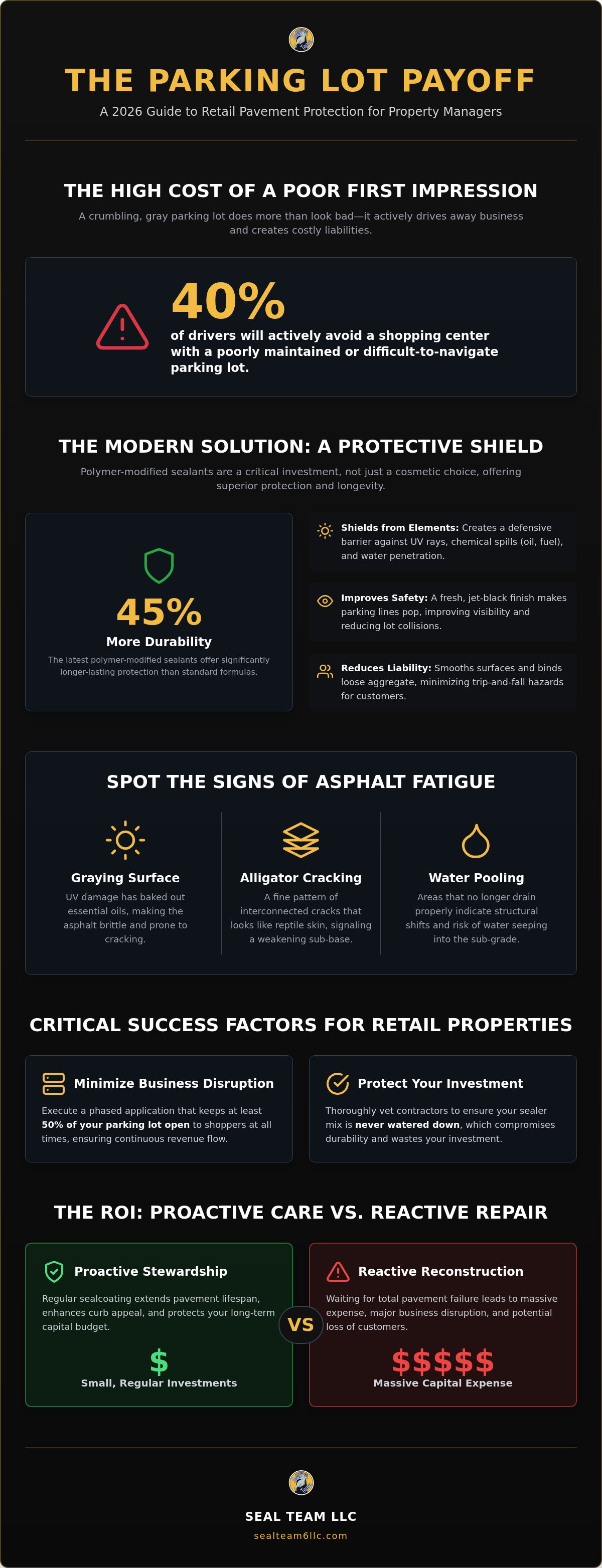
Did you know that up to 40% of drivers will actively avoid a shopping center simply because the parking lot looks difficult to navigate or poorly maintained? For property managers, sealcoating for retail parking lots isn't just a cosmetic choice; it's a critical strategy for customer retention and liability management. You likely already know that a crumbling, gray surface with fading lines sends the wrong message to shoppers. It suggests neglect and can even lead to costly trip-and-fall claims that impact your bottom line.
We're here to help you protect your asphalt investment and keep customers safe while ensuring maintenance doesn't shut down your storefront. This 2026 guide explains how to extend your pavement's lifespan to avoid the massive expense of full reconstruction. You'll learn about the latest polymer-modified sealants that offer 45% more durability, the logistics of phased applications to keep your business running, and how to maintain compliance with local environmental standards. By the end, you'll have a clear plan to maintain a fresh, professional appearance that invites shoppers in rather than driving them away.
Key Takeaways
- Understand how a well-maintained exterior serves as a silent marketing tool, building customer trust and preventing common safety liabilities.
- Learn how to execute sealcoating for retail parking lots using a phased approach that keeps at least 50% of your lot open to shoppers at all times.
- Discover the science of asphalt preservation and why defensive maintenance is the only way to survive Minnesota's harsh environmental stressors.
- Gain a checklist for vetting contractors to ensure your sealer mix is never watered down, protecting your investment from short-term fixes.
- Compare the costs of proactive stewardship versus total reconstruction to see how small, regular investments protect your long-term capital budget.
The Impact of Curb Appeal on Retail Business Success
Your parking lot is the very first touchpoint in the customer journey. Before a shopper even sees your storefront or interacts with your staff, they've already formed an impression based on the ground beneath their tires. Sealcoating for retail parking lots serves as a specialized protective layer designed for these high-turnover environments. It is a defensive barrier that shields the underlying asphalt from the constant stress of heavy traffic, chemical spills, and environmental decay.
When you invest in professional maintenance, you're signaling a sense of professional stewardship to every visitor. A clean, dark surface suggests that the property is well-managed and safe. Conversely, a gray, cracked lot can subconsciously deter customers, making them question the quality of the business inside. There is a direct correlation between the condition of your pavement and the perceived value of your entire property. Professional buyers and appraisers often look at the "hardscape" as a primary indicator of how well a building has been maintained over its lifespan.
First Impressions and Customer Safety
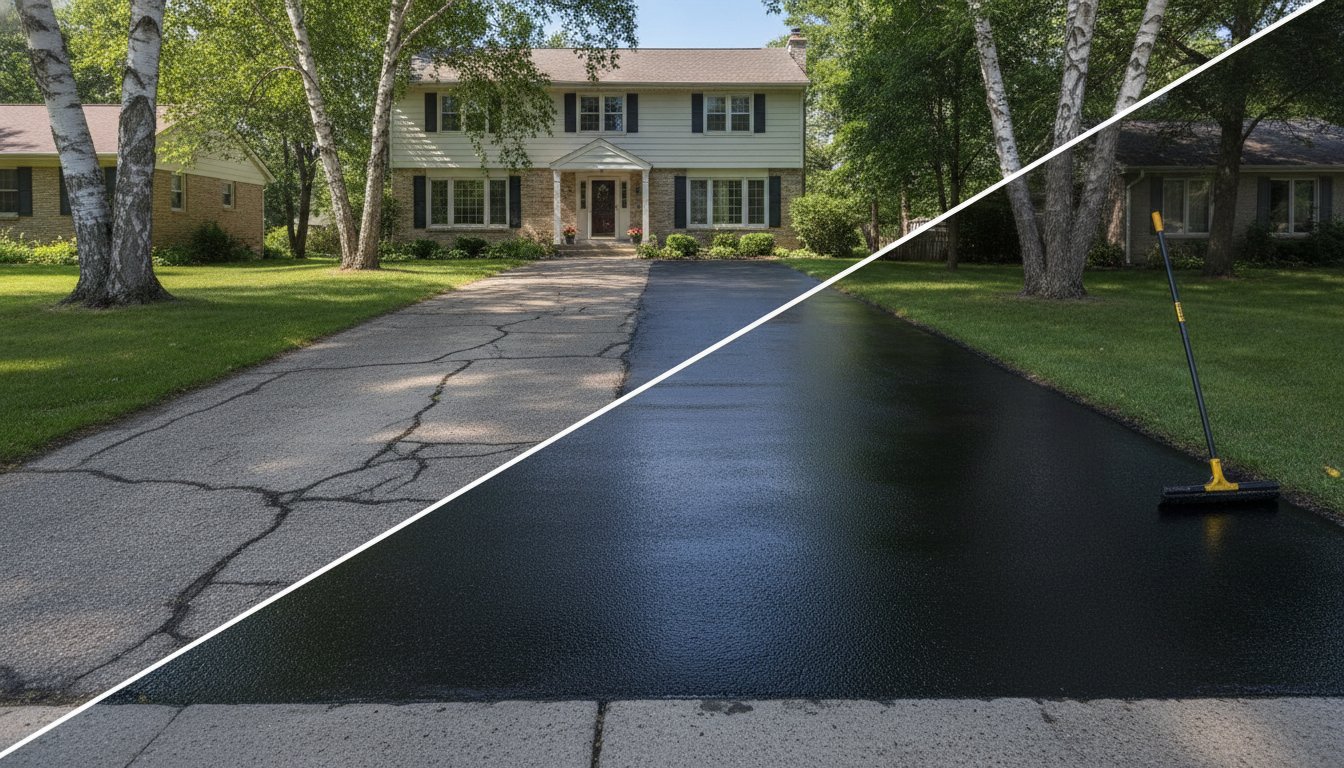
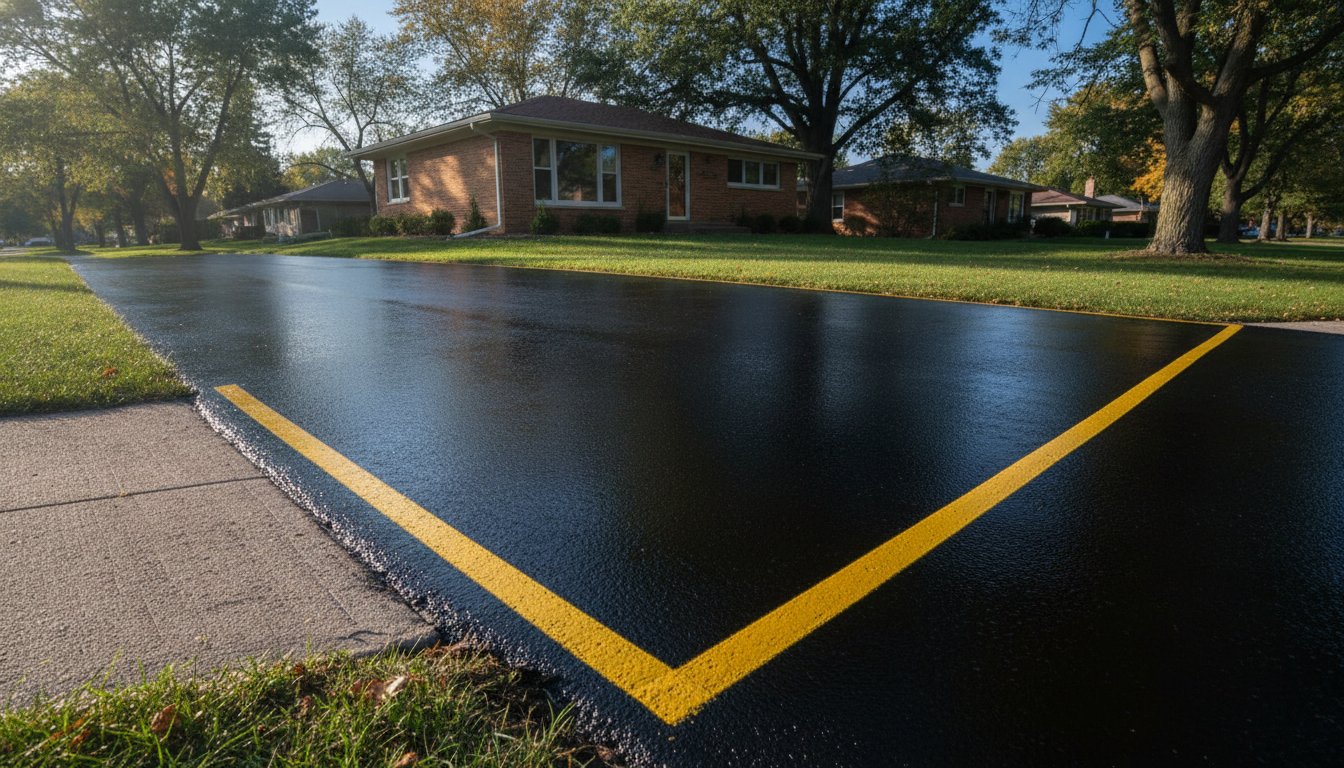
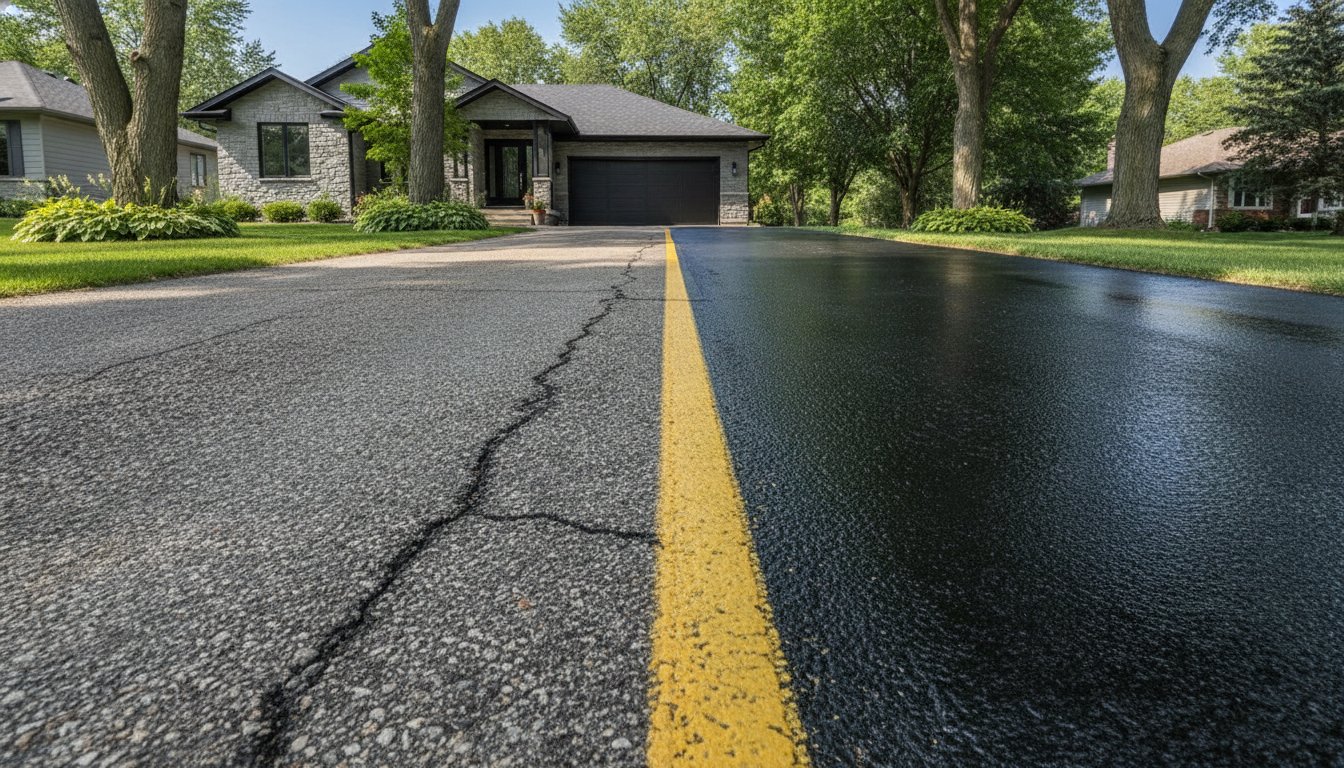
A fresh Sealcoating application provides a deep, jet-black finish that does more than just look good. It creates a high-contrast background that makes yellow or white parking lines pop. This visual clarity is essential for navigational safety, helping drivers find stalls quickly and reducing the likelihood of minor lot collisions. Beyond aesthetics, regular maintenance addresses surface degradation before it becomes a hazard. By smoothing out the surface and binding loose aggregate, you're actively reducing trip hazards and the risk of vehicle damage claims from loose stones or uneven patches.
Identifying Early Signs of Asphalt Fatigue
Knowing when to act is just as important as knowing what to do. Asphalt fatigue often starts subtly before accelerating into expensive failure. You should look for surface graying, which indicates that UV rays have baked out the essential oils that keep asphalt flexible. Another critical sign is "alligator cracking," which is a pattern of small, interconnected cracks that look like reptile skin. This is a clear signal that the pavement's sub-base is beginning to weaken.
Addressing these issues early is the most cost-effective way to manage your property. Utilizing services like driveway crack filling near me can prevent water from seeping into the sub-grade, which is the leading cause of retail potholes. If you notice significant surface wear or water pooling in areas that used to drain well, it's time for a professional assessment. Catching these signs early allows for a targeted maintenance plan that avoids the need for a total repave.
Protecting Retail Pavement from Minnesota’s Extreme Climate
Asphalt is not a static material; it is a flexible mixture of stone and oils that requires specific conditions to remain structural. In Minnesota, the sun’s UV rays act like a slow oven, baking essential oils out of the pavement surface. This process, known as oxidation, makes the asphalt brittle and prone to cracking. Sealcoating for retail parking lots acts as a non-porous shield, locking those vital oils in and keeping environmental stressors out. Without this protection, the surface becomes "dry" and loses the flexibility needed to support heavy vehicle loads.
High-traffic retail entrances and busy parking stalls are particularly vulnerable to structural failure. When vehicles turn, brake, and accelerate, they apply shear stress to the pavement. If the asphalt has been weakened by UV oxidation, the aggregate begins to break loose, a process called raveling. Additionally, retail stalls face constant exposure to oil and fuel drips. Because asphalt is a petroleum-based product, these fluids act as solvents that dissolve the binder on contact. A professional-grade sealer creates a defensive barrier that prevents these chemicals from penetrating and softening the asphalt base.
The Freeze-Thaw Cycle and Retail Lots
Minnesota winters represent the ultimate test of pavement durability. When water seeps into microscopic surface cracks, it freezes and expands by approximately 9%. This expansion exerts massive internal pressure on the asphalt, leading to the "heave" effect that creates dangerous trip hazards and deep structural cracks. Proactive sealing is the only effective way to stop this cycle before it starts. By following a consistent asphalt maintenance schedule, property managers can ensure their lots are sealed tight before the first 2026 frost hits, preventing water from ever reaching the sub-base.
Defending Against Road Salt and Chemical Spills
In the Twin Cities, road salt and de-icing agents are a winter necessity, yet they are incredibly corrosive to untreated asphalt. These chemicals accelerate the breakdown of the asphalt binder, leading to a pitted, rough surface that is difficult to plow and clean. Modern professional-grade sealants are engineered for chemical resistance. They provide a sacrificial layer that takes the brunt of the salt damage, preserving the integrity of the pavement underneath. When Calculating the ROI of these services, research suggests that preventive maintenance can significantly reduce long-term capital spending by avoiding premature failure. If you are concerned about how your lot will perform this winter, a professional seal coating evaluation can help identify vulnerabilities before the snow falls.
Minimizing Business Disruption: Logistical Planning for Retailers
The primary objection many retail managers have regarding pavement maintenance is the fear of business interruption. The idea of closing a lot for 24 to 48 hours can feel like turning customers away at the door, which is a risk most businesses cannot afford. However, professional sealcoating for retail parking lots is built on a foundation of logistical precision to prevent this exact scenario. We recognize that your parking lot is a revenue-generating asset, and any downtime must be managed with surgical care.
A successful project relies on dry-time optimization. By utilizing specialized fast-curing additives and industrial-grade mix designs, crews can significantly shorten the window during which the asphalt remains tacky. This allows for a much faster return to traffic without sacrificing the protective qualities of the sealer. Clear communication with tenants and customers also serves as a necessary form of stewardship. Providing advance notice through physical signage or digital updates ensures that everyone knows exactly where to park. This proactive approach reduces confusion and maintains a positive shopping experience throughout the duration of the project.
Phased Application and Nighttime Scheduling
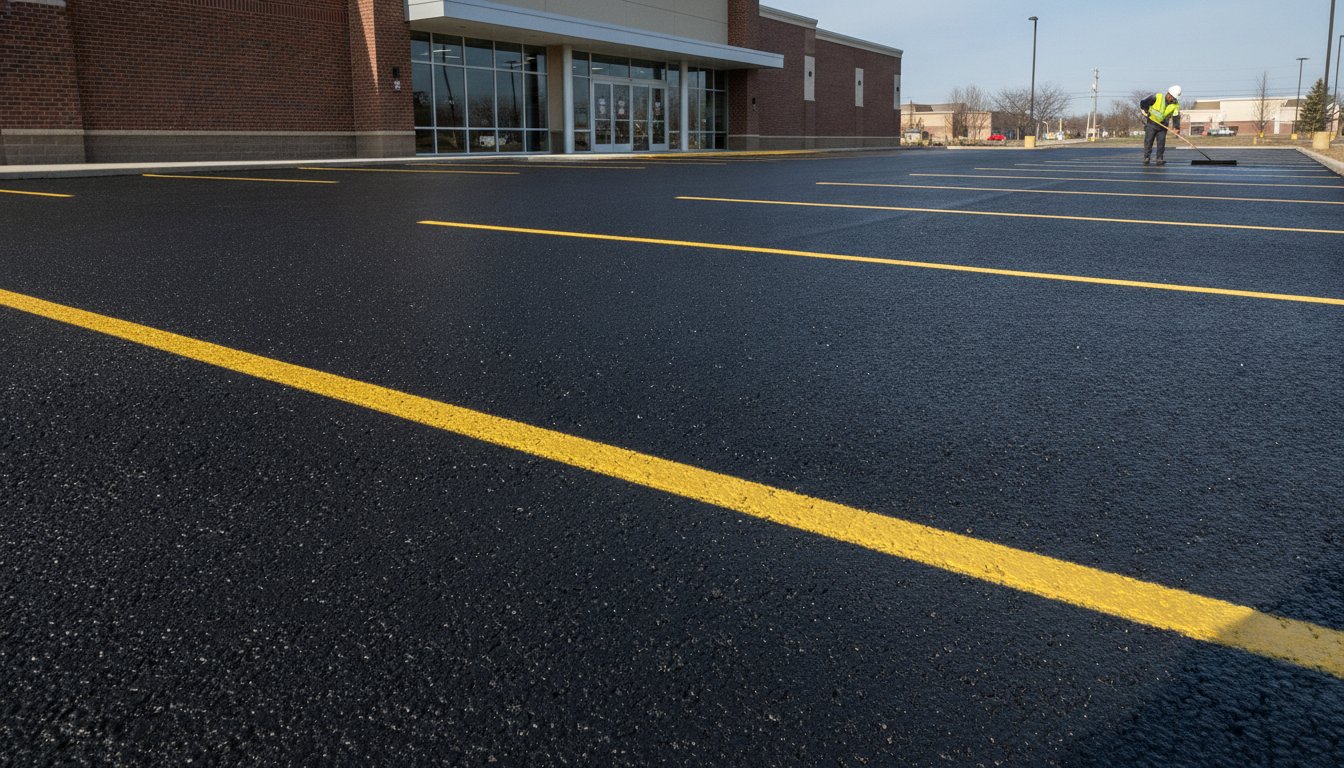
To keep your business running, we recommend a phased application strategy. This involves dividing the lot into distinct zones, allowing at least 50% of your parking capacity to remain open while the other half is being treated. Scheduling work for Sundays or overnight hours is another way to mitigate impact on high-volume centers. This meticulous planning also extends to loading docks and delivery routes. We coordinate with your logistics team to ensure that inventory flow remains uninterrupted while the pavement is being protected. This zone-by-zone approach ensures that no customer is ever left without a place to park, maintaining your revenue stream while the work is completed.
Traffic Control and Pedestrian Safety Measures
Safety and order are paramount when a portion of your lot is under construction. Professional contractors use high-visibility barricades and clear directional signage to guide shoppers safely around work zones. It is critical to maintain ADA-compliant pathways so that all customers can access your storefront without obstacles. Once the sealer has cured, fresh line striping is applied immediately. This restores organizational flow and ensures that your lot looks as professional as the services you provide inside. By prioritizing these safety measures, you protect your business from liability while showing customers that their safety is your top priority.
Evaluating Commercial Sealcoating Contractors: A Buyer’s Checklist
Selecting a partner for sealcoating for retail parking lots requires a focus on long-term durability rather than the lowest initial price. While a budget-friendly bid is always attractive, it often hides shortcuts that lead to premature surface failure. In the pavement industry, the quality of the work is dictated by the mix design and the integrity of the application. A common industry scam involves "watered-down" sealer, where a contractor over-dilutes the concentrate with water to stretch their materials. This creates a thin, cosmetic coating that looks black for a few months but lacks the solids content needed to actually protect the asphalt binder from decay.
Local experience is equally vital. Working with a team that specializes in parking lot sealcoating minnesota ensures that the contractor understands our specific environmental stressors. You should also evaluate the contractor’s equipment and crew size. Retail projects are high-scale and time-sensitive. A professional outfit should have high-volume tank systems and a crew large enough to handle phased applications without missing deadlines. If a contractor lacks the specialized equipment for commercial-grade application, your project may suffer from uneven coverage or extended downtime.
Material Quality: Asphalt Emulsion vs. Specialty Sealers
Retail managers must decide between standard asphalt emulsions and specialty polymer-modified sealers. For high-traffic drive lanes, specialty sealers offer enhanced resistance to the power-steering marks and heavy wear typical of retail environments. Another critical component is the inclusion of sand additives. These are not just fillers; they provide essential traction for both vehicles and pedestrians. In a retail setting, where foot traffic is constant, a sealer without proper sand loading can become dangerously slick when wet. High-solids content is non-negotiable for commercial protection, ensuring the layer is thick enough to withstand several seasons of use.
Verification of Insurance and Commercial References
Before any equipment arrives on-site, verify that the contractor carries adequate liability insurance specifically for commercial retail properties. This protects you from the financial fallout of accidental property damage or worker injuries during the project. Don't hesitate to ask for retail-specific references. You want to speak with other property managers who can verify the contractor's logistical performance. Did they maintain the agreed-upon schedule? Was their traffic control effective? A history of on-time completion is the best indicator that they can manage your lot without disrupting your sales. If you want to ensure your property receives this level of professional care, request a detailed seal coating proposal from a specialist who understands retail logistics.
Calculating the ROI of a Proactive Maintenance Plan
Understanding the financial logic behind pavement care is essential for any retail stakeholder. When you analyze the "Seal vs. Replace" math, the argument for proactive care becomes undeniable. Investing a small amount, often around $0.20 per square foot, in regular maintenance can prevent a total reconstruction that could cost upwards of $5.00 per square foot. Sealcoating for retail parking lots isn't just an expense; it's a capital preservation strategy. By committing to a consistent schedule, you can effectively extend the functional life of your asphalt from a mere 12 years to over 25 years. This longevity is the cornerstone of asphalt maintenance for property managers, as it stabilizes annual CAPEX budgets and prevents the budget shock of unexpected six-figure repaving projects.
There are also hidden savings that don't always appear on a maintenance quote. A well-maintained surface significantly reduces the likelihood of trip-and-fall incidents, which can lead to lower liability insurance premiums over time. Insurance adjusters and property inspectors look for signs of neglect; a parking lot with visible hazards is a red flag that can drive up your operational costs. When your lot is smooth and free of debris, you are actively managing the risk profile of your property and ensuring a safer environment for every shopper.
The True Cost of Deferred Maintenance
In the context of Minnesota's climate, waiting one more year is often the most expensive decision a manager can make. What starts as a series of small, manageable cracks can quickly evolve into base-layer failures after just two winters. Once water reaches the sub-grade, the repair costs rise exponentially. The water saturates the soil beneath the asphalt, causing it to lose its load-bearing capacity. This leads to deep ruts and massive potholes that cannot be fixed with a simple surface treatment. At that point, you are forced into structural repairs that are far more disruptive to your tenants and your customers.
Developing Your Commercial Asphalt Maintenance Plan
A professional stewardship plan involves a predictable 3-5 year rotation for sealcoating and crack filling. This ensures that the protective barrier is replenished before the previous layer wears through. Aligning your pavement care with a comprehensive commercial asphalt maintenance plan allows you to track the condition of your asset over time. When you prioritize sealcoating for retail parking lots, you're choosing a path of long-term value over short-term fixes. If you're ready to move from reactive repairs to proactive preservation, the next step is to request a site-specific evaluation from Seal Team LLC. Our specialists can provide a detailed assessment of your lot’s current health and help you map out a strategy that maximizes your ROI for years to come.
Securing Your Property’s Future with Strategic Maintenance
Maintaining a retail property involves more than just keeping the lights on; it requires a commitment to the stewardship of your largest physical asset. We've explored how sealcoating for retail parking lots serves as a vital defense against Minnesota's destructive freeze-thaw cycles and UV oxidation. By implementing a phased application strategy, you can protect your pavement without sacrificing sales or compromising customer safety. Choosing a partner with local expertise ensures that your sealer mix is never compromised and your logistical needs are met with precision.
Seal Team LLC is specialized in Minnesota asphalt preservation and understands the unique demands of high-traffic commercial environments. We offer expertise in phased retail logistics to minimize downtime and have local Saint Paul and Minneapolis commercial references available to verify our performance. Protecting your investment today prevents the avoidable expense of full reconstruction tomorrow. It's time to take the first step toward a more durable lot.
Request a Free Commercial Quote from Seal Team LLC
We look forward to helping you maintain a safe, attractive, and durable parking facility for your customers.
Frequently Asked Questions
How long must a retail parking lot be closed after sealcoating?
A retail lot typically requires 24 to 48 hours of cure time before vehicles can safely return to the surface. While the sealer may feel dry to the touch within a few hours, the chemical bond needs this window to harden against the weight of turning tires. Pedestrian traffic can often be allowed back on the lot sooner, but we recommend waiting until the final coat is fully stable to avoid tracking material into your storefront.
Can sealcoating be done in sections to keep my business open?
We frequently perform sealcoating for retail parking lots in sections to ensure your business remains operational throughout the project. This phased approach allows us to block off one portion of the lot while keeping the rest available for customers and deliveries. By coordinating with your management team, we create a logistical flow that minimizes the impact on your daily sales while still providing a uniform, protective layer across your entire asphalt surface.
How often should a high-traffic retail parking lot be sealcoated in Minnesota?
In the harsh Minnesota climate, high-traffic retail lots should be sealcoated every 2 to 3 years. The combination of heavy vehicle volume, snowplow blades, and extreme freeze-thaw cycles strips away the protective layer faster than on a standard driveway. Regular application ensures that the underlying asphalt binder remains flexible and resistant to water penetration, which is essential for preventing structural failure and expensive repairs during the winter months.
What is the best time of year to schedule retail sealcoating in the Twin Cities?
The ideal window for sealcoating in the Twin Cities is between May and September. For the material to cure correctly, the air and surface temperatures must be at least 50°F and rising. We avoid scheduling during periods of high humidity or forecasted rain, as moisture can interfere with the drying process. Planning your maintenance during these peak months ensures the most durable bond and the longest-lasting finish for your property.
Does sealcoating fill in existing potholes in a parking lot?
Sealcoating is a protective surface treatment and is not designed to fill potholes or repair structural damage. If your lot has existing potholes, they must be addressed with asphalt patches before the sealing process begins. However, we do offer crack filling as a complementary service. Filling cracks prevents water from reaching the sub-base, which stops new potholes from forming and preserves the integrity of your parking surface for years.
Will sealcoating make the parking lot slippery for customers?
Professional-grade sealants won't make your lot slippery because they are mixed with industrial sand additives. These additives are essential for providing the necessary traction for both pedestrian shoes and vehicle tires, especially during wet weather. We ensure our mix designs meet safety standards for retail environments, where slip-and-fall prevention is a top priority for property managers who want to protect their business from liability claims.
How soon after sealcoating can we repaint the parking lines and ADA symbols?
Parking lines and ADA symbols are usually repainted within 4 to 12 hours after the final coat of sealer is applied. The timing depends on how quickly the surface reaches a state where the paint won't bleed into the sealer. Fresh striping is the final step in our process. It restores organizational order and ensures your lot is fully compliant with safety regulations before we pull the barricades and reopen the lot.
Is there a difference between residential and commercial grade sealer?
Commercial-grade sealers are specifically engineered with higher solids content and specialized polymer additives that are not found in residential products. These additives allow the sealer to withstand the constant shear stress of heavy delivery trucks and high-volume customer traffic. Using a residential-grade product on a retail lot would lead to rapid peeling and surface wear, as it simply lacks the durability required for heavy-duty commercial environments.