Did you know that the Twin Cities area averages 55 to 60 freeze-thaw cycles every single winter? This relentless cycle of water entering small pores, freezing, and expanding is the primary reason local pavement fails prematurely. You likely worry about your driveway crumbling into a mess of loose gravel after a particularly harsh season. It's a valid concern, as unsealed asphalt driveway problems MN property owners encounter often lead to deep structural damage that requires an expensive, full replacement rather than a simple repair.
We believe in proactive stewardship of your property's exterior. This resource is designed to help you find the best local driveway sealing services while teaching you how to defend your asphalt investment against Minnesota’s extreme climate. You'll learn why professional-grade sealcoating is a structural necessity rather than a cosmetic luxury. We will also preview the 2026 standards for asphalt-based sealants and provide a clear roadmap for choosing a specialist who values long-term durability over quick, superficial fixes.
Key Takeaways
- Learn why sealcoating is a structural necessity in Minnesota to prevent the sub-base from collapsing during the spring thaw.
- Understand how unsealed asphalt driveway problems MN property owners face, such as brittle binders and oxidation, can be halted with professional-grade sealant.
- Identify the specific markers of a reputable local contractor to avoid unreliable door-to-door scammers who use inferior materials.
- Discover the critical steps in a professional application, including high-pressure cleaning and precise edging, that ensure a long-lasting bond.
- Explore why a proactive maintenance schedule every two to three years is the most cost-effective way to avoid the massive expense of a full driveway repave.
Why Professional Driveway Sealing is Essential for Minnesota Properties
Sealcoating is far more than a cosmetic upgrade for your home. It's a protective barrier engineered to shield your pavement from the elements. Asphalt isn't a permanent, unchanging surface. When you're understanding asphalt concrete, you realize it's a mix of stone and sand held together by a liquid asphalt binder. This binder is the "glue" that keeps your driveway flexible and waterproof. Over time, the sun's UV rays and Minnesota's harsh weather strip away these essential oils. This process, called oxidation, causes the binder to become brittle and lose its grip on the aggregate.
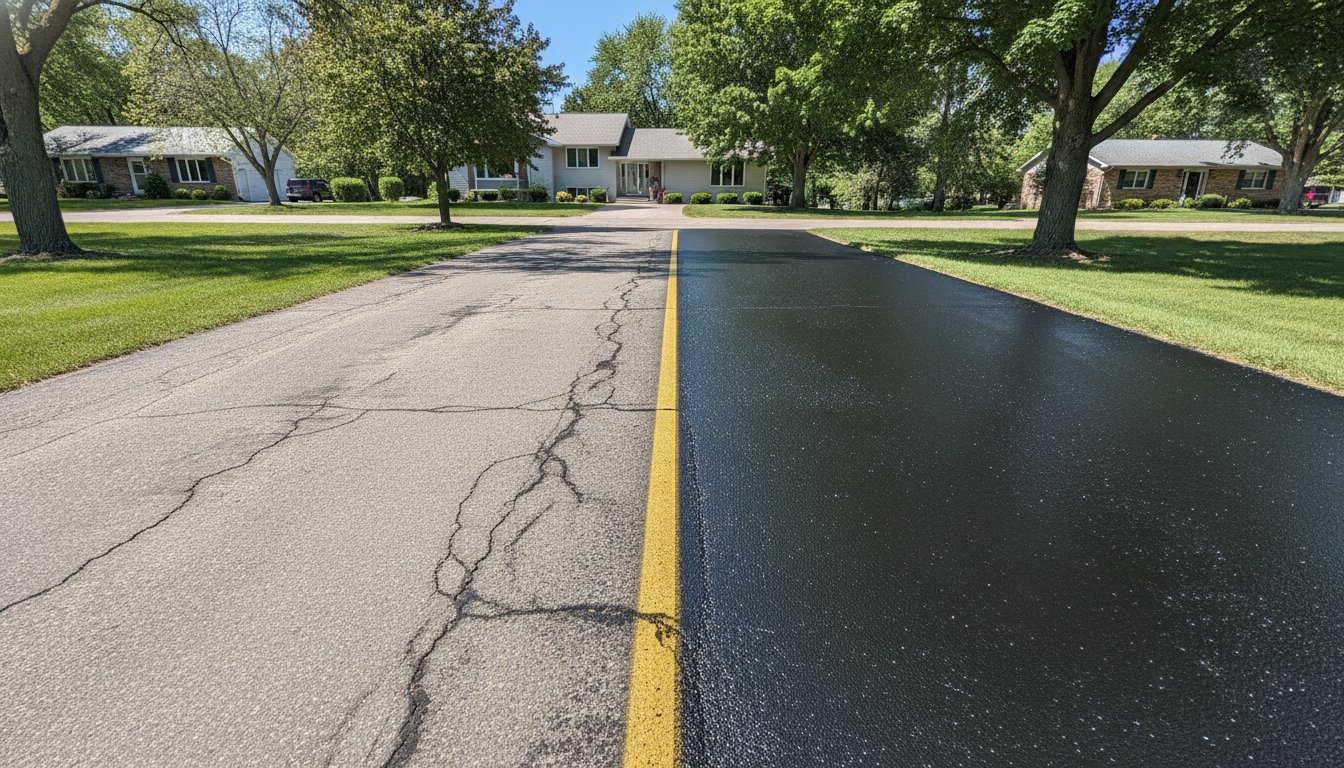
Without a professional sealcoat, your driveway loses its ability to flex under the weight of vehicles or shifting soil. You'll notice the surface transition from a rich, jet-black to a faded, thirsty gray. This isn't just a color change; it's a sign of chemical decay. Unlike hardware store driveway "paint," professional-grade sealers penetrate the surface to replenish lost binders and provide a durable wear layer. These unsealed asphalt driveway problems MN residents deal with often start small but quickly escalate into total pavement failure if left unaddressed.
The Financial Logic of Pavement Preservation
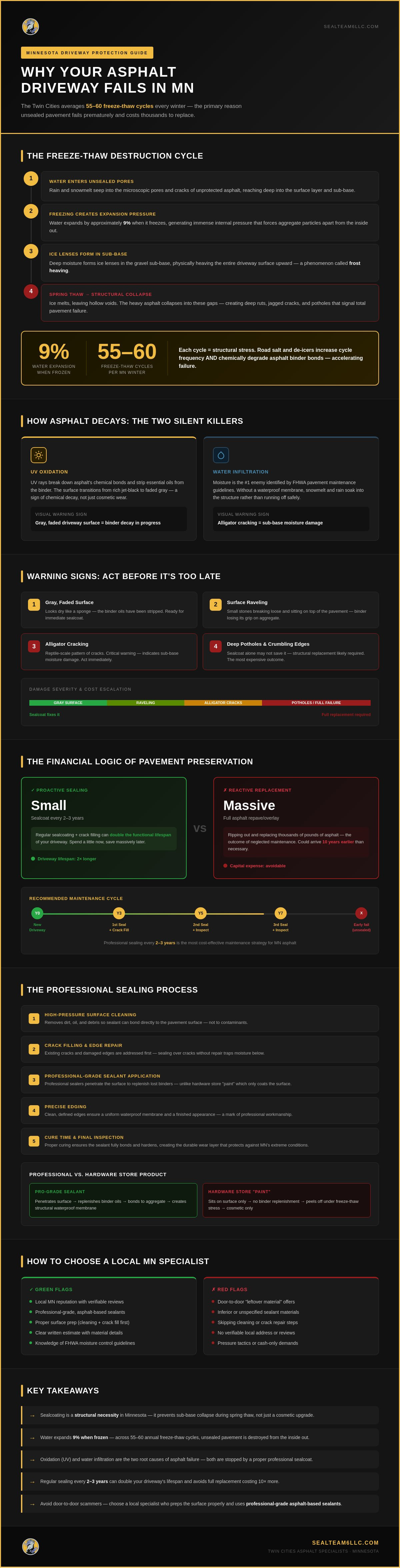
Think of driveway maintenance as a form of property stewardship. It's much cheaper to apply a protective layer every few years than it is to pay for a full asphalt overlay or a complete reconstruction. Regular sealcoating, combined with timely crack filling, can effectively double the functional lifespan of your driveway. By spending a small amount on maintenance today, you avoid the massive capital expense of ripping out and replacing thousands of pounds of asphalt ten years earlier than necessary. It's a simple calculation: proactive defense is always more affordable than reactive restoration.
Signs Your Driveway Needs Immediate Sealing
You don't need to be an engineer to spot the early warning signs of trouble. If your driveway looks like a dry sponge or has turned a light shade of gray, it's "thirsty" and ready for a fresh sealcoat. Look closely for surface raveling, which is when small stones begin to break loose and sit on top of the pavement. Another critical red flag is alligator cracking, which looks like the scales on a reptile's back. If you wait until these cracks turn into deep potholes or the edges start crumbling away, a simple sealcoat might not be enough to save the structure.
Defense Against the Freeze-Thaw Cycle: The Minnesota Specialist’s View
Minnesota's climate is uniquely punishing for pavement. While property owners in southern states primarily worry about heat, those in the Twin Cities deal with a dual threat of extreme cold and constant temperature fluctuations. The Twin Cities area experiences an average of 55 to 60 freeze-thaw cycles during a typical snow season. Each cycle represents a moment of extreme stress for your driveway. When water enters unsealed pores and freezes, it expands by approximately 9%. This expansion creates immense internal pressure that literally forces the asphalt aggregate apart from the inside out.
These unsealed asphalt driveway problems MN homeowners encounter often lead to a phenomenon known as frost heaving. When moisture penetrates deep enough to reach the gravel sub-base, it forms ice lenses. These lenses push the entire driveway upward. When the spring thaw arrives, the ice disappears, leaving behind a hollow void. Without the support of a solid base, the heavy asphalt collapses into these gaps, resulting in the deep ruts and jagged cracks that characterize a failing driveway. Road salt and chemical de-icers only worsen this process by increasing the frequency of these cycles and chemically degrading the binder bonds.
Water Infiltration: The Silent Driveway Killer
Sealcoating creates a vital waterproof membrane that prevents liquid moisture from migrating into the pavement's foundation. By sealing the surface, you ensure that snowmelt and rain run off into the soil or drains rather than soaking into the asphalt structure. This proactive approach follows established FHWA pavement maintenance guidelines, which identify moisture control as the most critical factor in extending the life of any paved surface. The freeze-thaw cycle is the primary cause of MN potholes. Keeping your foundation dry is the only way to stop them from forming on your property.
UV Protection and Oil Resistance
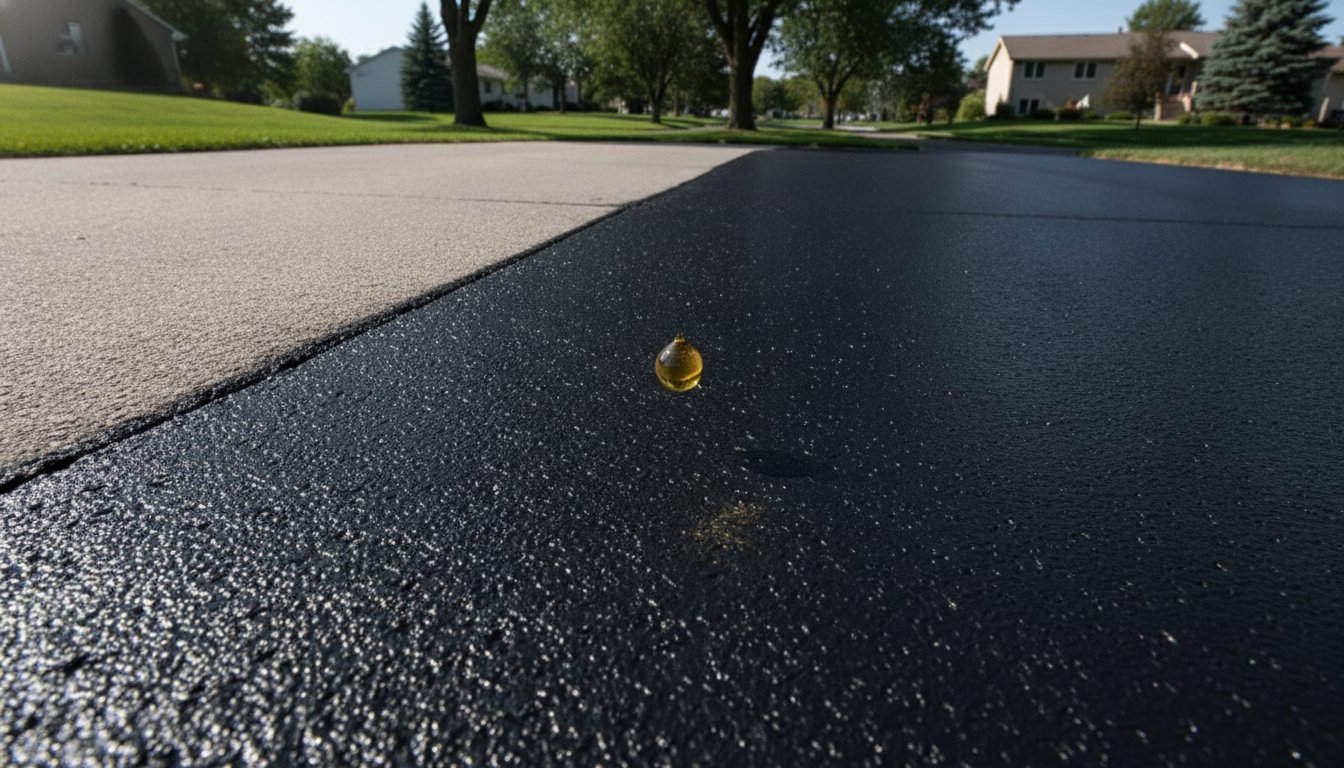
The sun also contributes to the steady decay of your driveway through a process similar to a slow-motion sunburn. UV radiation breaks down the chemical bonds of the asphalt binder, making the surface brittle and prone to "raveling," where small stones break loose. Once this binder is weakened, it becomes highly susceptible to oil and gasoline spills. These petroleum products act as solvents, quickly dissolving the asphalt glue and creating soft, mushy spots that eventually turn into holes. A professional sealcoat acts as a sacrificial shield, absorbing UV rays and resisting chemical spills so your main investment remains protected. If you're concerned about the current state of your pavement, you can request a local assessment to see if your defense is still holding strong.
Evaluating Driveway Sealing Near Me: How to Choose a Local Pro
Finding a contractor to protect your pavement requires more than a quick search for the lowest price. In the Twin Cities, "gypsy pavers" and door-to-door scammers often appear during the summer months, claiming they have leftover material from a nearby road project. These individuals typically use thinned-out, inferior products that look good for a few weeks but fail to provide any real structural defense. Legitimate local specialists maintain a physical address in Minnesota and provide references you can verify. A local presence is crucial because it ensures the contractor is accountable if the product doesn't withstand the following winter's freeze-thaw cycles.
The unsealed asphalt driveway problems MN property owners face are too severe to trust to an unbonded or uninsured crew. Professional results require commercial-grade equipment, such as high-pressure spray systems and mechanical heat-lances for crack preparation. If a contractor arrives with only hand-pushed squeegees and a few buckets from a big-box store, they aren't equipped to deliver a long-term solution. While the cheapest bid might seem attractive, it often indicates a watered-down sealer. This diluted mixture lacks the solids necessary to bond with the asphalt, leading to premature peeling and leaving your driveway vulnerable to moisture once again.
Questions to Ask Your Asphalt Contractor
Before signing a contract, you should conduct a brief technical interview to ensure the team understands local requirements. Since Minnesota banned coal tar-based sealants in 2014, confirm that they use high-quality asphalt emulsion. Ask the following questions to gauge their expertise:
- Do you use commercial-grade emulsion or a retail-grade product? Professional emulsions contain specialized polymers that retail buckets lack.
- How many coats are included in the estimate? For most residential driveways, a single heavy application or two lighter coats is the standard for durability.
- How do you handle crack filling before the sealer is applied? Sealer is not a crack filler; all gaps over a quarter-inch should be treated with hot-applied rubberized filler first.
Professional Sealing vs. DIY
Many homeowners consider tackling the job themselves to save money, but the trade-offs are significant. DIY products found at hardware stores are often thinner and contain more water than professional mixtures, which means they wear away much faster. You also have to factor in the cost of cleaning tools, brushes, and the time spent scrubbing oil spots. When you look at sealcoating diy vs professional results, the difference in both the jet-black finish and the years of protection is clear. A professional application provides a uniform sacrificial layer that is far more resilient against the salt and sand of a Minnesota winter.
The Step-by-Step Professional Sealing Process
A professional sealcoating job is a methodical restoration process rather than a simple paint job. Many unsealed asphalt driveway problems MN residents encounter stem from improper surface preparation before the sealer is even applied. If the foundation isn't perfectly clean, the protective layer will peel away within months. Our process begins with a deep cleaning using high-pressure air blowers and industrial wire brushes. This specialized equipment removes the embedded silt, sand, and organic matter that a standard garden hose simply can't reach.
Once the surface is clear, we perform precision edging. We pull back any encroaching grass or soil from the driveway perimeter to ensure the sealer reaches the very limit of the asphalt. This prevents moisture from seeping under the edges, which is where many structural failures begin. We then treat any existing oil or gasoline stains with specialized chemical primers. Because asphalt is petroleum-based, oil spills act as a solvent that prevents new sealer from bonding; these primers create a bridge that allows the sealcoat to adhere permanently to the affected area.
The final preparation step involves filling cracks with high-grade fillers. For larger fissures, we use hot-applied rubberized material that penetrates deep into the gap to block water from reaching the sub-base. After the prep is complete, we apply the commercial-grade sealcoat with precision techniques to achieve a uniform, jet-black finish. This provides the sacrificial wear layer discussed in previous sections, ensuring your pavement can withstand the traffic and weather of the coming year.
Why Preparation is 90% of the Job
You can't build a strong defense on a weak foundation. Pavement sealer is designed to bond with clean, oxidized asphalt, but it's physically impossible for it to stick to dirt, moss, or engine oil. Without the use of specialized primers and mechanical cleaning, the new layer will simply sit on top of the debris and flake off. For a deeper look at the technical requirements of this stage, read our guide on asphalt sealer application. If you're ready to see the difference professional prep makes, you can schedule your professional sealcoating estimate today.
Curing Time and Post-Service Care
A successful cure depends heavily on the Minnesota climate. For the sealer to harden correctly, the air and pavement temperatures must remain above 50 degrees Fahrenheit for at least 24 hours. We recommend keeping all foot traffic off the surface for at least 4 to 8 hours and avoiding vehicle traffic for a full 24 to 48 hours. This patience ensures the polymers have time to cross-link and form a durable shell. You can find a complete day-of timeline in our article on what to expect during driveway sealcoating.
Investing in Your Property with Seal Team LLC
Seal Team LLC operates with a clear mission: to provide Twin Cities property owners with a reliable defense against the elements. Our philosophy centers on stewardship through science and experience. We don't just apply a coating; we implement a preservation strategy designed to extend the life of your pavement. By addressing the common unsealed asphalt driveway problems MN homeowners experience, we help you avoid the premature structural failure that leads to total replacement. Our commitment to using high-quality materials specifically formulated for the Midwest ensures that your driveway remains flexible and protected through the coldest nights and the hottest summer afternoons.
A proactive maintenance plan is the most effective way to secure a high return on your property investment. When you choose to partner with a local specialist, you're investing in long-term durability. We take pride in our methodical approach, ensuring every crack is filled and every edge is treated with the care your property deserves. This isn't just about a jet-black finish; it's about the peace of mind that comes from knowing your asphalt foundation is secure against moisture and chemical erosion.
Free Estimates and Transparent Pricing
Our process begins with a thorough, on-site evaluation. Our local experts visit your property to assess the current condition of your asphalt and identify any emerging issues before they become expensive repairs. We believe in providing an honest assessment. If your driveway is still in excellent condition and doesn't require sealing yet, we'll tell you. For those planning their property budget, understanding the asphalt maintenance cost per square foot is a helpful starting point. This transparency allows you to make informed decisions about your home's exterior care without any high-pressure sales tactics.
Schedule Your 2026 Maintenance
The window for professional sealcoating in Minnesota is relatively short, typically running from late spring through early autumn. Because we rely on specific temperature and dry-weather windows to ensure a perfect cure, our schedule fills up quickly. Booking your service early in the 2026 season ensures you get a spot during the optimal weather months. We proudly serve Minneapolis, Saint Paul, and the surrounding metro areas, bringing local expertise to every neighborhood we visit. Don't wait until the first frost to think about pavement protection. You can request a professional estimate today to secure your place on our 2026 calendar and keep your driveway in peak condition.
Secure Your Pavement's Future Today
Proactive maintenance is the most effective way to ensure your driveway survives the punishing Minnesota winters. By choosing professional sealcoating, you aren't just improving your home's curb appeal; you're building a structural defense against moisture and oxidation. We've explored how professional-grade materials and meticulous preparation prevent the common unsealed asphalt driveway problems MN owners face, such as alligator cracking and foundation failure. Every freeze-thaw cycle presents a new risk, but a well-maintained surface acts as a resilient shield for your property's foundation.
As a local Minnesota specialist, Seal Team LLC is dedicated to helping you preserve your property through science-backed methods. Our process includes expert crack filling to stop water infiltration before it can destroy your sub-base. You don't have to guess about the current health of your asphalt. Protect your investment-get a free sealcoating estimate from Seal Team LLC. Our team provides free professional estimates to help you plan your property stewardship with confidence. Taking action today ensures your driveway remains a durable, high-value asset that stands strong against the elements for years to come.
Common Questions About Minnesota Driveway Maintenance
How often should I have my driveway sealed in Minnesota?
You should typically have your driveway sealed every 2 to 3 years to maintain optimal protection against the elements. This frequency accounts for the extreme temperature swings and high volume of snowmelt common in the Twin Cities. Regular application ensures the binder remains flexible and the surface stays waterproof. If you wait longer, you risk the development of unsealed asphalt driveway problems MN winters often trigger, leading to brittle pavement and structural decay.
Can I seal my driveway if it already has large cracks?
Yes, you can seal a driveway with cracks, provided those fissures are treated with a professional-grade filler before the sealcoat is applied. Sealer itself is a thin protective layer and is not designed to bridge gaps larger than a hairline. Filling these cracks with a hot-applied rubberized material prevents water from reaching the sub-base. Without this step, the new sealer will simply sink into the cracks, leaving the foundation vulnerable to erosion.
What is the best time of year for driveway sealing near me?
The ideal time for sealcoating in Minnesota is from late May through September when temperatures are consistently above 50 degrees Fahrenheit. The pavement needs to be warm and dry for the sealer to bond correctly and cure into a durable shell. Scheduling your service during these months ensures the material has enough daylight and warmth to cross-link. Avoid late-season applications if overnight frosts are expected, as freezing temperatures can ruin the uncured product.
How long does professional driveway sealcoating last?
A professional sealcoating application generally lasts between 2 and 4 years before it requires a fresh coat. Heavy vehicle traffic, frequent snow plowing, and the use of harsh de-icing salts can wear down the sacrificial layer more quickly. You'll know it's time for a re-application when the rich black finish fades to a dull gray. This color change indicates that the top layer has worn away, leaving the underlying asphalt exposed to UV rays and moisture.
Why is professional sealer better than the stuff at the hardware store?
Professional-grade sealers are superior because they contain a much higher concentration of solids and specialized polymer additives that increase durability. Retail products found in hardware stores are often heavily diluted with water to make them easier for a homeowner to spread with a brush. These thinner mixtures lack the chemical strength to resist oil spills or the abrasive force of snow blowers. Investing in professional application provides a thicker, more resilient barrier that lasts longer.
How long do I need to stay off my driveway after it is sealed?
You should stay off the driveway for at least 4 to 8 hours for foot traffic and 24 to 48 hours for vehicles. This timeframe allows the liquid emulsion to evaporate and the solids to harden into a tack-free surface. In humid or shaded conditions, the curing process may take slightly longer. Keeping cars off the fresh sealer prevents tire marks and ensures the material isn't pulled away from the asphalt aggregate before it has fully bonded.
Does sealcoating fix potholes or sinking asphalt?
No, sealcoating cannot fix existing potholes or areas where the asphalt has begun to sink. These issues indicate a failure in the sub-base or a deep structural break that requires patching or replacement. Sealcoating is a preventative stewardship tool designed to keep healthy asphalt in good condition. If your driveway has significant unsealed asphalt driveway problems MN residents often see after a decade of neglect, we will recommend repairs before proceeding with the sealer.
Is crack filling included in a standard sealcoating estimate?
Most professional estimates list crack filling as a separate line item because the amount of filler needed varies significantly between properties. It is an essential part of the process that should never be skipped. Our team assesses the linear footage of cracks during the free estimate to provide a transparent total cost. Combining these services ensures that the entire pavement structure is defended against moisture, rather than just covering up surface-level oxidation with a thin layer of sealer.